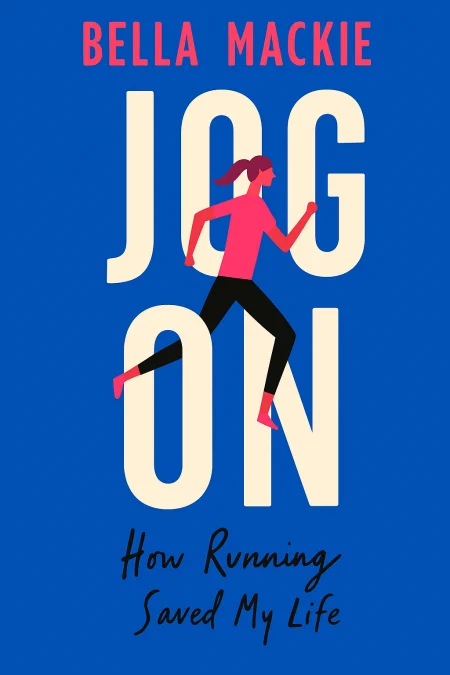
Jog On
How running saved my life
Book Edition Details
Summary
In the chaos of her crumbling world, Bella Mackie found solace in the unlikeliest of places: the rhythm of her own footsteps pounding the pavement. "Jog On" is her raw and humorous tale of transformation, where running morphs from an alien concept to a lifeline. With brutal honesty and a touch of irreverence, Bella navigates the tumult of anxiety and depression, all while refusing to part with her beloved vices—booze, cigarettes, and ice cream. Her journey is peppered with insights from a colorful ensemble of experts and friends, proving that sometimes, the simplest acts can propel us toward healing. For anyone feeling trapped in their own mind, this book is a beacon of hope, demonstrating that the path to recovery may start with a single, defiant step.
Introduction
Picture a woman lying on her sitting room floor, watching her husband's feet walk toward the door for the last time. In that moment of complete devastation, as her marriage crumbles around her, she makes a choice that will transform her life forever. This isn't a story about athletic achievement or marathon victories. This is a story about survival, hope, and the extraordinary power of putting one foot in front of the other when everything else falls apart. Mental illness can make the world feel impossibly small. Anxiety builds invisible walls that keep us trapped in safe spaces, while depression drains the color from life's possibilities. For millions of people, each day becomes a careful negotiation with fear, a delicate balance between managing symptoms and trying to live. But what if the path to freedom was as simple as stepping outside your front door and running for three minutes? What if the cure for a racing mind was to make your heart race for a different reason entirely? Through raw honesty and gentle wisdom, this exploration reveals how one woman discovered that running wasn't just exercise—it was medicine, therapy, and salvation rolled into one. Her journey from the floor of that sitting room to the streets of London, from panic attacks to peaceful miles, offers hope to anyone who has ever felt trapped by their own thoughts. This is an invitation to discover that sometimes the most profound healing happens not in a therapist's office or a pill bottle, but in the simple act of moving forward, one step at a time.
From the Floor to the Streets: First Steps Into Running
The first run lasted three minutes and felt like a lifetime. After years of avoiding anything that might trigger anxiety, stepping into that dark alley felt like entering foreign territory. The author had spent decades perfecting the art of avoidance—skipping PE classes, taking buses instead of walking, finding elaborate excuses to stay safely indoors. Exercise belonged to other people, confident people, people whose minds didn't constantly whisper warnings about invisible dangers lurking around every corner. But heartbreak has a way of shattering our carefully constructed limitations. When your world collapses, when your marriage ends before you've even celebrated your first anniversary, the old rules no longer apply. Lying on that floor, surrounded by the debris of broken promises, something fundamental shifted. The familiar walls of anxiety suddenly felt more suffocating than the unknown territory beyond the front door. For the first time in years, the fear of staying the same outweighed the fear of trying something new. Those initial attempts were clumsy and desperate. Three minutes of shuffling down an alley, pausing to catch breath, feeling ridiculous in old tracksuit bottoms. But something extraordinary happened in those brief moments of movement. The constant chatter of anxious thoughts—the endless loop of "what if" scenarios that had dominated every waking moment—finally quieted. For three precious minutes, the mind found something else to focus on: the rhythm of footsteps, the burn in untrained muscles, the simple act of forward motion. Each night brought a choice: retreat to the safety of the sofa and familiar misery, or lace up those trainers and step back into uncertainty. Slowly, tentatively, those three-minute experiments began to stretch. First to five minutes, then ten, each extension feeling like a small victory against the forces that had held life hostage for so long. The pain in muscles became a welcome distraction from the pain in the heart, and gradually, something that started as escape began to feel like discovery.
Breaking Through Barriers: Conquering Anxiety One Mile at a Time
The breakthrough came not through dramatic transformation but through quiet persistence. Week after week, the same dark alley welcomed those tentative footsteps. What had once felt like a prison of safety—the narrow radius of "acceptable" places—began to expand with each small journey. The local high street, previously a source of panic attacks, became just another stretch of pavement to navigate. The crowds at Camden Market, once overwhelming enough to trigger rapid heartbeats and sweaty palms, transformed into merely interesting obstacles to weave through. Each run brought its own revelation about the relationship between mind and body. When legs were working hard, when lungs were demanding oxygen, when heart was pumping for healthy reasons, there simply wasn't space for anxiety's familiar patterns. The physical symptoms that had once signaled impending panic—rapid heartbeat, shortness of breath, heightened alertness—took on new meaning. These same sensations, when earned through effort rather than feared through worry, became badges of accomplishment rather than warnings of danger. The Tube journey that had been avoided for years suddenly became possible. Standing on that platform, heart racing from a good run rather than rising panic, the old fears seemed smaller, more manageable. The underground didn't feel like a trap when you knew your own legs had just carried you across the city. The crowds didn't feel threatening when you'd just navigated busy streets at running pace. Each conquered route became evidence that the world was larger and more navigable than anxiety had ever allowed. But perhaps most importantly, these daily expeditions began to rewire the brain's relationship with fear itself. Instead of avoiding the physical sensations that anxiety produced, running taught a new response: lean into the discomfort, breathe through the intensity, trust that the body could handle more than the mind had ever believed possible. This lesson, learned one mile at a time, began to ripple outward into every other area of life, offering a template for facing challenges that had once seemed insurmountable.
The Science and Spirit: Why Running Transforms Mental Health
The magic wasn't imaginary—it was measurable. Scientists have documented how aerobic exercise literally rewires the brain, creating new neural pathways that support resilience and emotional regulation. When we run, our brains flood with chemicals that naturally combat depression and anxiety: endorphins that ease pain, serotonin that stabilizes mood, GABA that calms overactive neural networks. But the research, however compelling, could never fully capture what it feels like to experience this transformation from the inside. For someone trapped in anxiety's endless loop, running offers something precious: a reset button for the nervous system. The fight-or-flight response that misfires so catastrophically in panic attacks finds its proper purpose in physical exertion. The body learns to associate rapid heartbeat and heightened awareness with positive challenges rather than imaginary threats. Over time, this retraining helps differentiate between real danger and false alarms, reducing the frequency and intensity of panic episodes. The rhythmic nature of running creates a meditative state that many traditional anxiety treatments struggle to achieve. Unlike the frustrating attempt to force a worried mind to be still, running gives anxious thoughts something to do. The brain becomes occupied with monitoring pace, navigating terrain, maintaining form. This focused attention, sustained over time, builds the same mindfulness muscles that meditation cultivates, but in a way that feels natural and sustainable for restless minds. Perhaps most powerfully, running offers irrefutable proof that we are more capable than our fears suggest. Every mile completed becomes evidence against anxiety's fundamental lie—that we are fragile, vulnerable, unable to handle life's challenges. When you can run for an hour despite your mind's initial protests, when you can navigate unknown streets without catastrophe, when you can push through discomfort and find strength on the other side, the anxious voice loses much of its authority. This isn't positive thinking or wishful optimism; this is lived experience that anxiety cannot argue away.
Finding Your Own Pace: Lessons for Life Beyond Running
The most important discovery wasn't about pace or distance—it was about persistence. Running taught that progress isn't always linear, that some days feel harder than others, that the goal isn't perfection but simply showing up. These lessons proved invaluable when applied to the broader project of healing from mental illness. Just as running fitness builds gradually, emotional resilience develops through consistent practice, small daily choices, and patience with the inevitable setbacks. The freedom to run anywhere brought an unexpected gift: the ability to be alone without feeling lonely. For years, solitude had been anxiety's playground, a space where worried thoughts could multiply unchallenged. But running transformed solitude into an adventure, a chance to explore, discover, and connect with the world in new ways. Whether navigating London's hidden canals or conquering hills in unfamiliar cities, each solo journey built confidence in self-reliance and independence. Perhaps most surprisingly, running revealed the importance of listening to the body's wisdom. After years of viewing physical sensations as potential threats, learning to interpret muscle fatigue, hunger signals, and energy levels as useful information rather than cause for alarm created a healthier relationship with embodied experience. This body awareness became a valuable tool for managing anxiety—recognizing early warning signs, understanding the difference between physical and emotional distress, and trusting the body's capacity for recovery and strength. The practice also illuminated the crucial difference between healthy challenge and harmful punishment. Learning to push through appropriate discomfort while respecting genuine limits became a metaphor for approaching all of life's difficulties. Not every painful feeling needs to be avoided, but not every struggle needs to be endured alone. Finding this balance—knowing when to persist and when to rest, when to seek help and when to rely on inner resources—became one of running's most valuable teachings.
Summary
The journey from that sitting room floor to confident city runner represents something universal: the human capacity to transform our darkest moments into sources of strength. Running didn't cure mental illness, but it provided something equally valuable—a reliable tool for managing symptoms, a daily practice of courage, and proof that we are more resilient than we dare imagine. The woman who once couldn't make it to the corner shop without panic attacks eventually found herself exploring foreign cities on foot, approaching each new street with curiosity rather than dread. This transformation reveals a profound truth about healing: sometimes the most effective medicine doesn't come in a bottle or require a prescription. Sometimes it simply requires the willingness to put one foot in front of the other, to step outside our comfort zones, and to discover what becomes possible when we stop running away from our problems and start running toward our potential. The path forward isn't always clear, but movement itself creates clarity, momentum builds confidence, and every step taken is a victory worth celebrating. For anyone feeling trapped by anxiety, depression, or life's overwhelming challenges, this story offers a simple but powerful invitation: you don't need to run a marathon or achieve athletic greatness. You just need to be willing to try something new, to start where you are with what you have, and to trust that the path forward will reveal itself as you take each tentative step. The street outside your door isn't just a route to somewhere else—it's the beginning of a journey back to yourself.
Related Books
Download PDF & EPUB
To save this Black List summary for later, download the free PDF and EPUB. You can print it out, or read offline at your convenience.
By Bella Mackie
