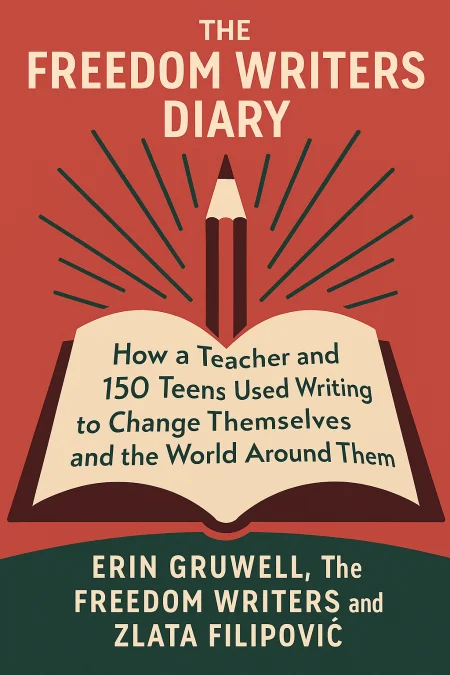
The Freedom Writers Diary
How a Teacher and 150 Teens Used Writing to Change Themselves and the World Around Them
byErin Gruwell, The Freedom Writers, Zlata Filipović
Book Edition Details
Summary
In the heart of Long Beach, California, a rookie teacher named Erin Gruwell dared to rewrite the narrative for a group labeled "unteachable." Confronted by the harsh realities of racial prejudice and ignorance, she transformed her classroom into a battleground for understanding, armed with nothing but the power of literature. "The Freedom Writers Diary" captures this metamorphic journey through the raw, unfiltered voices of her students, whose words leap from the page to challenge and inspire. Celebrating its twentieth anniversary, this edition not only revisits these unforgettable stories but also sheds light on the ongoing journeys of these once-lost voices, now guiding the next generation. For anyone who holds faith in the transformative power of education, this is more than a book—it's a testament to resilience and hope.
Introduction
In the halls of Woodrow Wilson High School in Long Beach, California, a remarkable transformation began to unfold in the mid-1990s. What started as a classroom filled with skeptical teenagers—many carrying the weight of gang violence, poverty, and academic failure—evolved into something extraordinary. Under the guidance of a young, determined teacher named Erin Gruwell, 150 students who had been written off by the educational system discovered the power of their own voices through writing. These students, who would eventually call themselves the Freedom Writers, found strength in sharing their stories and hope in the pages of their journals. Their journey reveals how education, when combined with genuine care and high expectations, can bridge the deepest divides of race, class, and circumstance. Through their collective experience, we witness the transformative power of believing in young people, the importance of making learning relevant to students' lives, and the profound impact that occurs when individuals find their voice and use it to create positive change in their communities and beyond.
Finding Voice Through Literature and Writing
The transformation began with books that reflected the students' own experiences. When Gruwell introduced her class to "The Diary of Anne Frank" and later "Zlata's Diary: A Child's Life in Sarajevo," something powerful happened. Students who had never seen themselves in literature suddenly recognized their own struggles with persecution, violence, and survival in these young voices from different times and places. The parallel between Anne Frank hiding from Nazis and students hiding from gang violence became a bridge to understanding and empathy. Writing became the catalyst for change. Initially reluctant to put pen to paper, students gradually began documenting their own experiences in journals. They wrote about drive-by shootings, domestic violence, homelessness, and discrimination. But they also wrote about dreams, hopes, and small victories. The classroom became a safe space where stories could be shared without judgment, where pain could be transformed into purpose through the act of writing. The power of their collective voice grew as students realized they were not alone in their struggles. Reading each other's entries created bonds that transcended racial and cultural boundaries. Students who had been enemies in the hallways found common ground in their shared experiences of trauma and resilience. Through literature and writing, they discovered that their stories mattered and that their voices had the power to create change. The act of documenting their experiences also provided therapeutic value. Writing became a way to process trauma, express emotions, and envision different futures. Students who had felt voiceless in traditional academic settings found confidence and purpose through their written words, setting the stage for their emergence as advocates and leaders.
Building Community Across Racial Divides
The classroom that Gruwell inherited was deeply segregated along racial lines, with Latino students on one side, Asian students on another, African Americans in the back, and white students clustered together in front. This physical separation reflected the broader tensions in Long Beach, where gang violence often followed racial boundaries and mistrust ran deep between communities. Breaking down these barriers required intentional effort and creative approaches. Gruwell used literature to help students see beyond surface differences. When they read about the Holocaust, students began to understand how prejudice and hatred could escalate to devastating consequences. The study of other genocides and conflicts helped them recognize patterns of dehumanization and violence that existed in their own community. Shared experiences outside the classroom further solidified these new relationships. Field trips to museums, meetings with Holocaust survivors, and eventually travel to Washington D.C. and New York created memories and bonds that transcended racial boundaries. Students began to see each other as individuals rather than representatives of enemy groups. The formation of the "Freedom Writers" identity provided a unifying force that superseded racial divisions. Taking their name from the Freedom Riders of the Civil Rights Movement, these students found common purpose in fighting intolerance and promoting education. They developed rituals and traditions that celebrated their diversity while emphasizing their shared commitment to positive change. The classroom became a model of integration and cooperation that stood in stark contrast to the segregated environment they had inherited.
From Local Impact to National Recognition
What began as a classroom experiment in tolerance education gradually gained attention beyond the walls of Room 203. The students' dedication to their studies and their powerful personal stories caught the eye of local media, leading to newspaper articles and eventually national television coverage. Their academic transformation was remarkable—students who had been labeled "unteachable" were now reading college-level texts and writing with sophistication about complex social issues. The Freedom Writers' commitment to sharing their message led them to Washington D.C., where they met with Secretary of Education Richard Riley and presented their collected writings to government officials. This trip represented a profound shift from their earlier experiences with authority figures, who had often viewed them as problems to be managed rather than voices to be heard. Their story gained further national prominence through appearances on television programs and recognition from prestigious organizations. The Spirit of Anne Frank Award from the Anne Frank Center USA validated their work fighting discrimination in their community. Major corporations began supporting their mission, providing scholarships and opportunities that many of the students had never imagined possible. The publication of their diary entries as a book brought their message to an even wider audience. Their success challenged stereotypes about urban students and demonstrated the potential that exists when young people are given appropriate support and high expectations. The Freedom Writers became living proof that education could be transformative and that students from challenging backgrounds could achieve remarkable things when their experiences were valued and their voices were heard.
Legacy of Hope and Educational Transformation
The impact of the Freedom Writers extended far beyond their high school graduation. Nearly all 150 students went on to college, with many becoming the first in their families to pursue higher education. Their success challenged long-held assumptions about the potential of students from disadvantaged backgrounds and demonstrated the power of high expectations combined with genuine support. The educational approach pioneered in Room 203 became a model for teachers around the country. The Freedom Writers Method emphasized the importance of making curriculum relevant to students' lives, creating safe spaces for honest dialogue, and using writing as a tool for both academic and personal development. Educators began to understand that addressing students' emotional and social needs was not separate from academic instruction but integral to it. The ripple effects extended into the broader community as well. Former gang members became advocates for peace, parents who had never finished high school began pursuing their own education, and community organizations found new ways to engage with young people. The Freedom Writers demonstrated that transformation was possible not just for individuals but for entire communities when people were willing to see past surface differences and work together toward common goals. Years after graduation, many Freedom Writers continued to work in education, social services, and advocacy, carrying forward the lessons they learned about the power of voice, the importance of community, and the possibility of change. Their legacy serves as a reminder that every student has a story worth telling and potential worth nurturing, regardless of the circumstances they face outside the classroom walls.
Summary
The Freedom Writers' journey from at-risk students to agents of change illustrates the transformative power of education when it honors students' experiences and empowers their voices. Their story reminds us that behind every "difficult" student is a human being with dreams, struggles, and untapped potential waiting to be discovered. By creating a classroom environment built on respect, high expectations, and genuine care, one teacher and 150 students proved that academic achievement and social healing can happen simultaneously when learning becomes personally meaningful and collectively empowering. Their legacy challenges educators and communities to look beyond labels and statistics to see the promise that exists in every young person, and to create educational experiences that not only prepare students for tests but for life as engaged, thoughtful citizens capable of creating positive change in their world.
Related Books
Download PDF & EPUB
To save this Black List summary for later, download the free PDF and EPUB. You can print it out, or read offline at your convenience.
By Erin Gruwell
