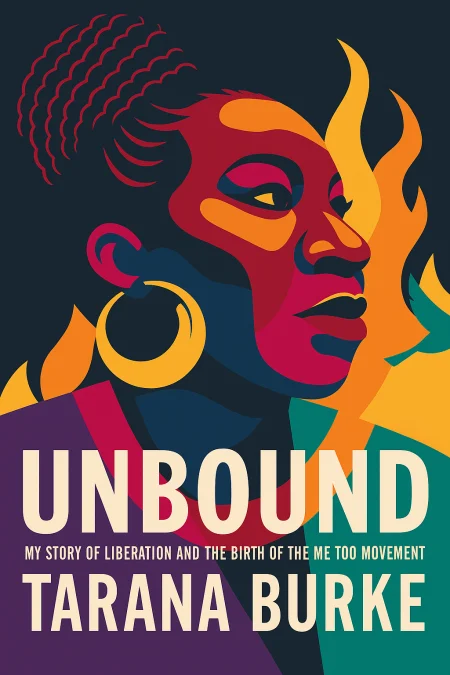
Unbound
My Story of Liberation and the Birth of the Me Too Movement
Book Edition Details
Summary
In the quiet aftermath of a long day, Tarana Burke lay awake, haunted by memories and driven by an unyielding question: How does one mend what feels irreparably broken? Her answer, born from a storm of personal revelation and pain, was the simple yet powerful phrase "me too." In "Unbound," Burke unveils the raw and intimate journey that transformed her own trauma into a catalyst for global change. This memoir does more than recount the origins of a movement; it offers a testament to resilience, the power of empathy, and the courage required to face one's past. Burke's narrative is a call to confront our hidden selves and to embrace healing through shared humanity.
Introduction
In the fall of 2017, a simple phrase typed into social media would ignite a global awakening. Yet behind those two words—"me too"—lay decades of quiet courage, community building, and personal healing that began long before the hashtag went viral. The woman who first spoke these words understood intimately the silence that surrounds sexual violence, particularly in communities of color, where speaking out often feels like an impossible choice between personal healing and community loyalty. Born and raised in the Bronx during the 1970s, this civil rights organizer and activist would transform her own journey from trauma to healing into a movement that reached millions of survivors worldwide. Her path wound through the complexities of Black identity, family dynamics, and the intersection of personal pain with social justice work. From her early days as a teenage organizer inspired by the legacy of the civil rights movement to her years working with young women in rural Alabama, she developed an understanding that healing could not happen in isolation. Through her story, we witness how individual courage can spark collective transformation, how empathy becomes a tool for social change, and how the most profound movements often begin not in boardrooms or political chambers, but in the quiet moments when one person decides to break their silence. Her journey reveals the power of centering the experiences of marginalized voices and demonstrates that true liberation requires both personal healing and systemic change.
From Silence to Survival: Early Trauma and Self-Discovery
The seeds of a global movement were planted in the harsh reality of childhood trauma experienced on the streets of the Bronx. At age seven, a trusted community member led this young girl away from her friends and into a dark stairwell, forever altering the trajectory of her life. The assault itself was devastating, but perhaps even more damaging was the silence that followed—a silence born from a child's desperate attempt to protect the adults she loved from consequences she couldn't fully understand. Growing up in a household anchored by strong Black women and a beloved stepfather who served as neighborhood patriarch, she learned early that speaking her truth might destroy the very foundation of protection she depended upon. Her seven-year-old mind calculated that revealing what happened could send her stepfather to prison, leaving her family vulnerable and broken. This impossible choice between personal healing and family preservation would echo throughout her life, shaping not only her own journey but her later understanding of why so many survivors remain silent. The trauma manifested in ways both visible and hidden. Outwardly, she excelled academically and threw herself into activities that proved her worth—track, student government, and eventually social justice organizing. Inwardly, she constructed elaborate compartments to store her pain, developing what she would later recognize as a sophisticated survival mechanism that allowed her to function while carrying an enormous emotional burden. These early experiences of violation and subsequent silence created a profound understanding of how shame operates in the lives of survivors, particularly young women of color. The internal narrative that she was somehow responsible for what happened to her, combined with society's messages about Black girls being "fast" or deserving of mistreatment, created layers of self-blame that would take decades to unravel. Yet within this pain lay the seeds of empathy that would eventually bloom into a movement centered on letting survivors know they were not alone.
Finding Voice Through Leadership and Community Building
The transformation from survivor to leader began in a hotel conference room in Washington, D.C., where teenage activists from across the country gathered for a youth leadership retreat. Surrounded by other young Black organizers who spoke passionately about justice and community power, she encountered for the first time a vision of herself as someone with inherent worth and leadership capacity. The experience was revelatory—suddenly, her intelligence, her anger at injustice, and her deep love for her community were not just acknowledged but celebrated as leadership qualities. This introduction to the 21st Century Youth Leadership Movement became the foundation for everything that would follow. Under the mentorship of powerful Black women attorneys and activists in Alabama, she learned to channel her personal pain into community action. The organization's philosophy that young people were already leaders, not leaders-in-training, gave her permission to step fully into her power while still healing from her own wounds. Moving to Alabama to work full-time as a community organizer, she found herself drawn particularly to work with young women and girls. In the rural Black Belt communities where she lived and worked, she witnessed how sexual violence operated as a tool of oppression that kept families fractured and young women from reaching their potential. She began developing programming specifically designed to build self-worth in Black girls, understanding intuitively that prevention required more than just teaching girls to say no—it required teaching them that they deserved to have their "no" respected. Her work with organizations like Just Be, Inc. allowed her to create the kind of supportive community she had longed for as a young survivor. Through after-school programs, leadership camps, and mentorship initiatives, she built spaces where young women could explore their identities beyond the limiting narratives society imposed on them. These experiences taught her that healing happened in community, and that empathy—both receiving it and giving it—was essential to breaking cycles of trauma and silence.
The Birth of Me Too: Healing Through Empathy
The phrase that would eventually reach millions was born from a moment of profound personal failure and subsequent revelation. During a summer leadership camp, a twelve-year-old girl named Heaven confided her experience of sexual abuse, seeking comfort and understanding from the adult she had come to trust. Instead of meeting the child's courage with her own, the future founder of Me Too found herself overwhelmed by her own unhealed trauma and directed the girl to speak with someone else. The aftermath of this encounter forced a devastating reckoning with her own compartmentalized pain. For the first time in decades, she allowed herself to fully remember her own experiences of sexual violence, working through flashbacks and emotional flooding that left her physically and emotionally drained. Yet from this breakdown came breakthrough—she finally understood that her survival and healing were not separate from her work but central to it. In her darkest moment, sitting in her apartment surrounded by the debris of her emotional unraveling, she grabbed a notebook and wrote two words at the top of a page: "me too." These words captured everything she wished she could have said to Heaven and to her younger self—a simple acknowledgment that the girl was not alone in her experience, that someone understood her pain, and that healing was possible. The concept that emerged from this experience was deceptively simple yet profoundly radical: that empathy could serve as a pathway to healing for survivors of sexual violence. Rather than focusing solely on the details of trauma or jumping immediately to justice and accountability, Me Too created space for the fundamental human need to be seen and believed. She began incorporating this approach into her youth programs, watching young women transform when they realized they were not isolated in their experiences.
Breaking Chains: From Personal Liberation to Global Movement
The years following her personal breakthrough were marked by steady, grassroots organizing that built the foundation for what would become a global phenomenon. Working primarily with young women of color in the South, she refined her understanding of how sexual violence intersected with racism, poverty, and other systems of oppression. Her programs grew from serving dozens to hundreds of young women, each carrying the core message that healing was possible and that no one had to carry their burden alone. When the hashtag #metoo exploded across social media in 2017, it represented both vindication and challenge for the work she had been doing for over a decade. Millions of survivors suddenly found language for experiences they had never named publicly, creating an unprecedented moment of collective disclosure and mutual support. Yet the viral nature of the movement also threatened to flatten its complexity, reducing years of careful community building to a simple social media trend. The global reach of Me Too revealed both the universal nature of sexual violence and the vastly different ways survivors are received when they speak their truth. While white women in Hollywood found platforms and support for their stories, women of color—particularly Black women—continued to face skepticism, victim-blaming, and retaliation when they disclosed abuse. This disparity reinforced her conviction that centering marginalized voices was not just morally right but strategically necessary for creating lasting change. Her continued leadership of the movement reflects a sophisticated understanding of how social change happens over time. Rather than being satisfied with viral moments or celebrity endorsements, she has insisted on building infrastructure for long-term survivor support, policy change, and cultural transformation. Her vision extends beyond individual healing to encompass community accountability, transformative justice, and the creation of systems that prevent sexual violence from occurring in the first place. Through her journey from survivor to movement leader, she has demonstrated that the most powerful social movements are often led by those who have experienced the problems they seek to solve, and that personal healing and collective liberation are inseparable processes.
Summary
The journey from a traumatized child in the Bronx to the leader of a global movement demonstrates that our greatest wounds can become sources of profound service to others, but only when we have the courage to face them honestly and the wisdom to transform them into tools for healing. Her story reveals that movements for social change are not built through viral moments alone but through decades of patient community building, personal growth, and an unwavering commitment to centering the voices of those most marginalized by systems of oppression. The two simple words she wrote in a notebook during her darkest hour became a rallying cry for millions because they emerged from authentic experience and genuine empathy rather than abstract ideology or political calculation. Her life offers a roadmap for anyone seeking to transform personal pain into collective power, showing that healing happens in community and that the most revolutionary act is often simply believing someone when they tell you they have been harmed.
Related Books
Download PDF & EPUB
To save this Black List summary for later, download the free PDF and EPUB. You can print it out, or read offline at your convenience.
By Tarana Burke
