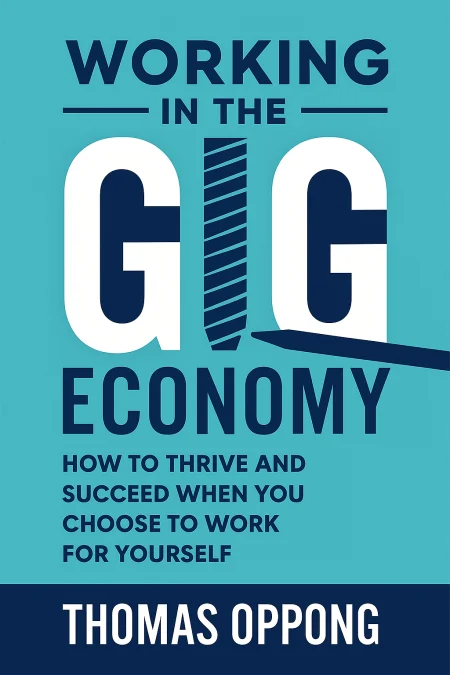
Working in the Gig Economy
How to Thrive and Succeed When You Choose to Work for Yourself
Book Edition Details
Summary
Ready to cast off the corporate shackles and navigate the uncharted waters of the gig economy? Thomas Oppong’s "Working in the Gig Economy" is your indispensable compass, guiding you through the exhilarating yet unpredictable world of self-employment. As traditional career paths crumble, discover how to forge your own with flexible hours and a life that works for you, not the other way around. This book dives deep into the heart of freelance challenges, from maintaining momentum and managing client expectations to crafting a personal brand that commands respect. Oppong’s expert insights reveal how to thrive amidst chaos, ensuring your passion remains a sustainable career. Whether you’re a seasoned freelancer or contemplating the leap, this guide equips you with the tools to transform gig work into a purposeful journey.
Introduction
The traditional career path is crumbling before our eyes. Gone are the days when loyalty to a single employer guaranteed security and steady advancement. Today's workforce faces unprecedented disruption, yet within this chaos lies extraordinary opportunity. Technology has democratized work, enabling talented individuals to bypass corporate gatekeepers and connect directly with clients worldwide. The gig economy isn't just a trend—it's a fundamental shift toward a more flexible, empowering way to work. Whether you're seeking freedom from the nine-to-five grind, pursuing creative fulfillment, or building multiple income streams, the independent path offers possibilities that previous generations could never imagine. However, success in this new landscape requires more than just talent; it demands strategic thinking, business acumen, and the courage to take control of your professional destiny. This transformation isn't without its challenges, but for those willing to embrace change and develop the right skills, the gig economy represents the ultimate form of career insurance.
Building Your Independent Brand and Finding Clients
Personal branding has evolved from corporate buzzword to survival necessity in the gig economy. Your brand represents how the world perceives your expertise, values, and unique value proposition. It's the compelling story that convinces clients to choose you over countless competitors vying for the same opportunities. Paul Jarvis, a designer and author who has built a thriving independent career, discovered early on that business success flows from authentic human relationships. After working for himself for nearly twenty years, Jarvis learned that every significant business opportunity came through personal connections—not cold outreach or fancy marketing campaigns. When he landed contracts with Fortune 500 companies, it wasn't because of his impressive portfolio alone, but because someone in his network knew him personally and trusted his abilities. His breakthrough came when he stopped trying to be a "horrible sales person" and instead focused on being a genuine listener who understood what people truly needed. Jarvis transformed his approach by creating valuable content consistently, launching a weekly newsletter that now reaches over 30,000 subscribers. This platform became his primary business development tool, keeping his brand top-of-mind for potential clients while providing genuine value to his audience. Rather than chasing every opportunity, he focused on serving others well, understanding that sustainable business success comes from helping people solve real problems. To build your independent brand effectively, start by defining your unique positioning in clear, benefit-focused language. Instead of saying "I'm a graphic designer," try "I help small businesses attract customers through compelling visual stories." Develop a content strategy that showcases your expertise while addressing your target audience's biggest challenges. Consistency matters more than perfection—regular, valuable content builds trust and authority over time. Invest in professional online presence through LinkedIn optimization, a simple website, and strategic networking both online and offline. Remember that authentic branding takes time to develop. Focus on delivering exceptional results for early clients, as their testimonials and referrals become your most powerful marketing tools. Your reputation is your greatest asset—protect it by underpromising and overdelivering consistently.
Managing Your Business and Staying Productive
Independent work demands exceptional self-management skills. Without traditional office structures and supervisors, freelancers must create their own systems for productivity, organization, and business operations. The freedom that attracts many to gig work can become overwhelming without proper frameworks and discipline. Jessica Greene, a freelance writer who transitioned from a decade of corporate employment, initially struggled with the unlimited freedom of self-employment. During her early freelancing years in college, she lacked the discipline necessary for sustained success. However, after developing strong work habits through traditional employment, she returned to freelancing with a completely different approach. Greene now maintains strict office hours from 8 AM to 5 PM, working primarily from her home office with the same dedication she once brought to corporate roles. Greene's transformation came through implementing robust systems for organization and financial management. She uses QuickBooks Self-Employed to automatically track business transactions and calculate quarterly tax obligations, eliminating the stress of forgotten expenses or surprise tax bills. For project management, she relies on Trello to visualize her work pipeline and collaborate effectively with clients. These tools transformed her from a scattered freelancer into a systematic business operator who could predict income, manage deadlines, and maintain professional standards consistently. Her disciplined approach extends to financial planning, where she maintains a strict budget using Mint, saves specifically for irregular quarterly taxes, and ensures she always has enough recurring work to cover essential expenses. This systematic foundation allows her to take on exciting one-off projects without financial anxiety. Create your own productivity framework by establishing consistent work hours and treating your freelance career like the serious business it is. Invest in simple but effective tools for project management, time tracking, and financial organization. Develop templates for common tasks like proposals, contracts, and follow-up emails to streamline routine activities. Most importantly, build emergency funds equivalent to six months of expenses, giving yourself the security to make strategic decisions rather than desperate ones. The key to sustainable productivity lies in treating yourself as both employee and manager, setting clear expectations and holding yourself accountable to professional standards.
Overcoming Challenges and Planning Your Future
Every independent professional faces moments of doubt, financial uncertainty, and the temptation to return to traditional employment. These challenges are natural parts of the entrepreneurial journey, but they need not derail your progress toward building a thriving independent career. Joe Mullich, a copywriter whose work appears in prestigious publications like the Wall Street Journal and Harvard Business Review, understands that freelance success requires treating yourself as a complete business operation. With twenty years of self-employment experience, Mullich learned that many freelancers fail because they excel at their craft but struggle with the business side of independent work. He observed that talented writers often starve financially because they focus on enjoyable but low-paying work while avoiding the systematic approach needed for sustainable income. Mullich's breakthrough came from understanding marketplace dynamics and positioning himself strategically. Rather than competing on crowded platforms with terrible pay rates, he developed direct relationships with high-value clients who needed consistent, quality work. His unique marketing approach includes provocative direct mail campaigns and a humorous blog about his Starbucks office experiences, which helps potential clients see his personality and communication skills before they even discuss projects. His financial stability stems from diversifying both client types and project categories while maintaining frugal personal spending habits. Mullich recognizes that financial insecurity isn't limited to self-employed individuals—even traditional employees can lose jobs unexpectedly. The key difference is that successful freelancers build multiple income streams and maintain control over their professional destiny. To overcome common freelancing challenges, develop a clear understanding of your target market and their actual needs rather than what you assume they want. Create multiple income streams through diverse client relationships, avoiding over-dependence on any single source of work. Build substantial emergency funds and live below your means to reduce financial stress during slower periods. Invest in continuous learning and skill development to stay relevant as markets evolve. Most importantly, approach your independent career with entrepreneurial thinking. Instead of just trading time for money, consider how to build assets like recurring revenue streams, intellectual property, or systematic processes that can generate income with less direct time investment.
Summary
The gig economy represents far more than a temporary shift in employment patterns—it's a fundamental reimagining of how valuable work gets done in our interconnected world. As Dorie Clark wisely notes in building expert authority, "Developing a personal brand as expert attracts people who want to hire you, do business with you and your company, and spread your ideas. It's the ultimate form of career insurance." This transformation requires courage to abandon outdated career models and embrace the uncertainty that comes with self-direction. Success belongs to those who combine technical expertise with business acumen, building systems and relationships that sustain long-term growth. The most thriving independent professionals understand that they're not just selling services—they're building businesses that serve others while creating the lifestyle and impact they desire. Your first step begins with a simple decision: choose one skill you can monetize, create a basic online presence showcasing that expertise, and reach out to five potential clients this week. The future of work isn't waiting for permission—it's already here for those bold enough to seize it.
Related Books
Download PDF & EPUB
To save this Black List summary for later, download the free PDF and EPUB. You can print it out, or read offline at your convenience.
By Thomas Oppong
