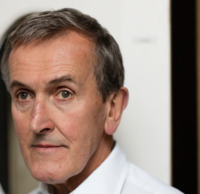
Neil MacGregor
Neil MacGregor, a distinguished figure in the realm of art history and museology, hails from Glasgow, where he was born to a family of medical professionals. His formative years were marked by an encounter with Salvador Dalí's Christ of Saint John of the Cross at the Kelvingrove Art Gallery, igniting a passion for art that would shape his illustrious career. Educated at the Glasgow Academy and later at New College, Oxford, where he honed his proficiency in modern languages, MacGregor's academic pursuits led him to further studies in philosophy at Paris's École Normale Supérieure during the tumultuous May 1968 events. He then transitioned to Edinburgh University to study law, yet his heart remained tethered to art history—a field he formally embraced at the Courtauld Institute under the tutelage of Anthony Blunt, who esteemed MacGregor as his most brilliant pupil. MacGregor's literary contributions are epitomized by his work "Germany: Memories of a Nation," a profound exploration of the cultural and historical identity of Germany. This book, acclaimed for its insightful narrative and comprehensive analysis, delves into the complex tapestry of German history, intertwining art, politics, and national identity. His scholarship often extends beyond the written word, evident in his influential BBC television series that examined art's societal role and religious representations. These endeavors have solidified his reputation as a preeminent historian, adept at bridging the past with contemporary discourse. In a career marked by transformative leadership, MacGregor's tenure as director of London's National Gallery and the British Museum was characterized by his commitment to accessibility and education. His refusal of a knighthood in 1999 underscored his dedication to public service, while his strategic vision for the British Museum emphasized the institution's universal mission over nationalistic interests. MacGregor's eloquent advocacy for cultural diplomacy and his innovative curatorial projects have left an indelible mark on the global cultural landscape, affirming his status as a leading voice in the preservation and interpretation of world heritage.


by Paul J. Zak
by Rory Vaden
by Robert C. Solomon, Fernando Flores
by Brett Gardner
by Dennis S. Reina
by Julian Baggini
by Larry Downes, Omar Abbosh, Paul Nunes
by Jacqueline Woodson
by Kevin Oakes
by Lindsey Pollak, Kimberly B. Cummings, Kimberly Brown
