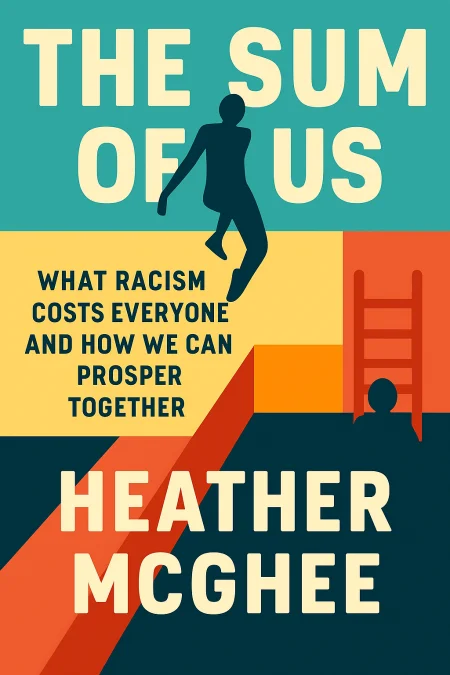
The Sum of Us
What Racism Costs Everyone and How We Can Prosper Together
Book Edition Details
Summary
In "The Sum of Us," Heather McGhee dissects the intricate web of systemic racism entwined with America's economic woes, revealing an unseen burden shared by all. As she journeys across the nation, McGhee listens to the voices of those often unheard—white citizens grappling with the fallout of policies rooted in division and exclusion. Her exploration unveils the painful truth: the zero-sum mindset, which pits progress against progress, leaves everyone poorer. Yet, amidst this grim reality, McGhee discovers a beacon of hope—the Solidarity Dividend—a testament to the power of unity across racial lines. With empathy and insight, she challenges us to imagine a society where collective prosperity is not a dream but a shared destiny, urging us to confront the true cost of racism and embrace a future of genuine equality.
Introduction
America operates under a profound misconception that racial progress functions as a zero-sum game, where advances for communities of color necessarily diminish opportunities for white Americans. This flawed framework has become so deeply embedded in national discourse that it shapes policy debates, electoral outcomes, and individual worldviews, creating artificial scarcity where abundance could flourish through cooperation. The reality reveals a starkly different dynamic: racial hierarchy systematically drains prosperity from all Americans by preventing the kind of inclusive investments and collaborative approaches that generate shared economic growth. Through rigorous analysis combining historical investigation, economic research, and policy evaluation, the evidence demonstrates how discrimination and segregation function as structural impediments to collective advancement rather than protective mechanisms for white advantage. The investigation traces specific mechanisms by which racial exclusion creates inefficiencies, wastes human capital, and blocks the formation of political coalitions capable of challenging concentrated wealth and power. By examining concrete examples from housing policy to labor organizing, readers discover how moving beyond zero-sum thinking unlocks what can be termed a "solidarity dividend" - measurable benefits that accrue to entire communities when barriers are removed and cooperation replaces competition.
Deconstructing Zero-Sum Racial Competition: Historical Origins and Psychological Mechanisms
The zero-sum racial mindset represents a deliberate historical construction rather than a natural human tendency, engineered by economic elites to prevent cross-racial alliances that might challenge concentrated power. From the colonial period forward, wealthy landowners and merchants systematically created artificial competition between racial groups by granting symbolic privileges to poor whites that distinguished them from enslaved Africans, even when material conditions remained harsh for both groups. This manufactured hierarchy served the crucial function of preventing unified resistance to exploitative labor practices while maintaining the fiction that racial status provided meaningful economic advantage. The psychological investment in relative racial position became self-reinforcing as white Americans learned to measure their wellbeing comparatively rather than in absolute terms. Research reveals that white Americans increasingly view racial progress through a competitive lens, perceiving advances in Black prosperity as corresponding declines in white status, regardless of actual economic conditions. This cognitive framework operates independently of material reality, suggesting that zero-sum thinking functions as a perceptual filter that distorts understanding of social and economic dynamics. The post-Civil War expansion of Jim Crow laws institutionalized zero-sum competition through legal structures that created the appearance of white advantage while actually constraining regional economic development. Northern cities implemented residential segregation and employment discrimination that prevented the economic dynamism that integration would have generated, demonstrating how racial exclusion limited overall growth rather than protecting white prosperity. The system taught Americans to view racial groups as inherently competitive rather than recognizing shared interests in challenging structural inequalities. Contemporary manifestations of zero-sum thinking appear in policy debates where investments in communities of color are framed as taking resources away from white communities rather than expanding opportunities for all. This framework ignores the mathematical reality that addressing racial disparities often requires universal solutions that benefit majority populations, preventing recognition of shared interests and blocking the formation of effective political coalitions around common economic concerns.
The Economic Drain of Segregation: Quantifying Costs to All Communities
Racial segregation imposed massive economic inefficiencies on American society by requiring duplicate systems that wasted resources while delivering inferior outcomes across all communities. The maintenance of separate schools, hospitals, transportation networks, and recreational facilities demanded enormous expenditures that produced no corresponding increase in quality or capacity, with Southern states that invested most heavily in segregation consistently lagging behind integrated regions in educational attainment and economic development. The systematic exclusion of Black Americans from higher education, professional occupations, and business ownership represented a catastrophic misallocation of human capital that constrained innovation and productivity growth. Talented individuals were deliberately barred from contributing their skills to fields where they could have driven economic advancement, while the concentration of Black workers in low-wage positions reflected policy constraints rather than natural ability distributions. This artificial limitation of human potential created drag effects that slowed economic growth for entire regions. Public goods suffered under segregation as white taxpayers proved unwilling to fund high-quality services that might also benefit Black residents, leading to systematic underinvestment in infrastructure, education, and social services. Rather than creating excellent institutions for white communities, segregation often produced mediocre outcomes for everyone as political coalitions for public investment fragmented along racial lines. The zero-sum mentality prevented recognition that robust public goods serve all residents who need them, regardless of race. Metropolitan areas with higher levels of racial segregation continue to demonstrate reduced economic productivity, lower educational attainment across all groups, and increased public safety expenditures compared to more integrated regions. Housing markets in segregated areas create inefficient resource allocation where prices reflect demographic composition rather than educational quality or economic opportunity, generating affordability crises that price out middle-class families of all backgrounds while failing to deliver superior outcomes for anyone.
The Solidarity Dividend: Evidence for Multiracial Coalition Benefits
Contemporary research reveals substantial economic and social benefits when communities transcend zero-sum racial competition in favor of inclusive cooperation, generating what can be termed a "solidarity dividend" that expands prosperity rather than merely redistributing existing resources. Regions with greater racial integration consistently outperform segregated areas on measures of economic mobility, educational achievement, and overall community wellbeing, demonstrating the practical advantages of diversity and collaboration. Educational integration provides compelling evidence for these benefits, as students of all backgrounds demonstrate improved academic outcomes, enhanced critical thinking skills, and better preparation for diverse workplaces when learning in integrated environments. White students in diverse schools show increased creativity, reduced prejudice, and stronger problem-solving abilities compared to peers in homogeneous settings, while all students develop cultural competencies essential for success in globalized economies. These individual advantages compound to create more innovative and adaptable communities. Economic data supports the integration advantage across multiple sectors, with companies featuring diverse leadership teams consistently outperforming homogeneous organizations in profitability, innovation, and market responsiveness. Cities that successfully integrate housing, employment, and educational opportunities experience faster economic growth and greater resilience during economic downturns, as the collaborative advantages of diversity create virtuous cycles of innovation and prosperity that benefit all residents. Political coalitions that bridge racial divides prove more effective at advancing policies benefiting working families across demographic lines than efforts organized around single-group interests. The Fight for $15 movement succeeded where previous labor campaigns failed precisely because it explicitly addressed racial dynamics while building coalitions around shared economic concerns, demonstrating how solidarity-based organizing generates concrete material benefits that zero-sum competition cannot match.
Beyond False Scarcity: Policy Frameworks for Inclusive Prosperity
Moving beyond zero-sum racial thinking requires policy frameworks that recognize how inclusive approaches generate superior outcomes for all Americans while addressing historical inequities through universal programs with targeted implementation. Healthcare expansion, educational investment, and infrastructure development create shared benefits while removing specific barriers that have historically excluded communities of color, building broad coalitions for transformative change rather than narrow interest group politics. Housing policy exemplifies the potential for inclusive approaches that transcend zero-sum limitations by increasing homeownership opportunities for historically excluded groups while simultaneously expanding overall housing markets, creating construction jobs, and stabilizing neighborhoods. Rather than displacing existing residents, well-designed inclusive housing policies increase property values and community investment while addressing historical inequities, demonstrating how equity and prosperity reinforce rather than compete with each other. Labor organizing across racial lines shows how solidarity can advance economic interests that benefit all participants while building political power necessary for broader reforms. When workers unite around shared concerns about wages, benefits, and working conditions rather than allowing employers to divide them along demographic lines, they achieve gains that improve conditions for everyone while creating models for cross-racial cooperation that extend beyond workplace issues. Environmental and climate policies provide another arena where inclusive approaches generate superior outcomes compared to zero-sum frameworks, as addressing the disproportionate environmental burdens facing communities of color through clean energy investment and pollution reduction benefits entire regions while advancing racial equity. The transition to sustainable energy systems requires full participation and leadership from all communities to succeed, making inclusion a practical necessity rather than merely a moral imperative for achieving collective environmental and economic goals.
Summary
The zero-sum delusion that racial progress requires white sacrifice represents one of the most destructive myths in American society, obscuring how racial hierarchy systematically undermines collective prosperity by creating artificial scarcity, wasting human potential, and preventing the inclusive investments that generate shared economic growth. The evidence reveals that racial exclusion and segregation function as drains on economic efficiency and democratic capacity rather than protective mechanisms for white advantage, while the solidarity dividend demonstrates the tangible benefits that emerge when communities move beyond competitive frameworks toward cooperative approaches that harness the full potential of all residents. This analysis provides essential insights for understanding how racial justice and economic progress reinforce rather than compete with each other, revealing transformative possibilities that transcend the false choices imposed by zero-sum thinking and pointing toward policies that can deliver unprecedented prosperity through inclusive cooperation rather than divisive competition.
Related Books
Download PDF & EPUB
To save this Black List summary for later, download the free PDF and EPUB. You can print it out, or read offline at your convenience.
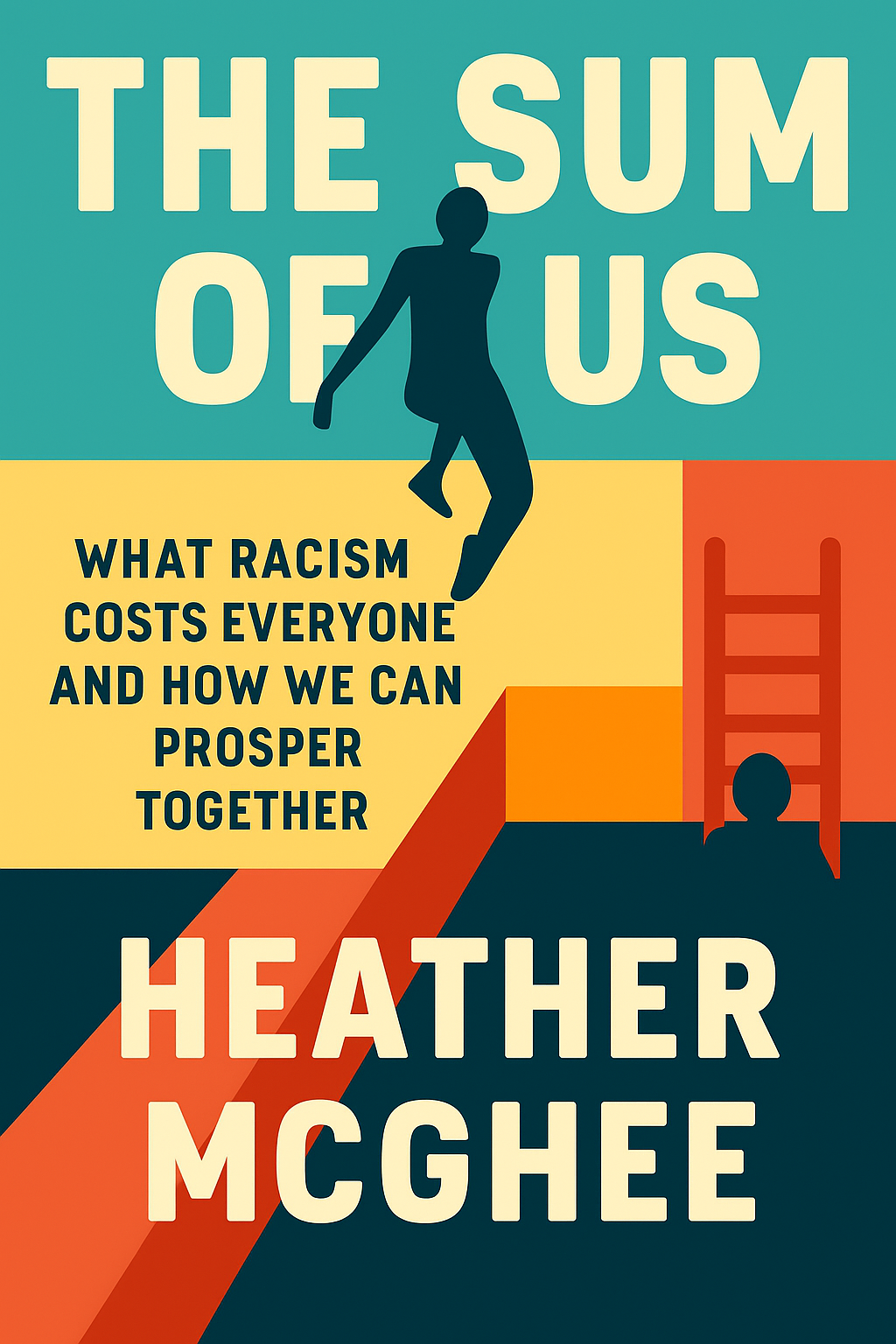
By Heather McGhee
