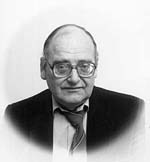
Stuart Sutherland
Norman Stuart Sutherland, a distinguished figure in the realm of psychology, was born on March 26, 1927, and left an indelible mark until his passing on November 8, 1998. Renowned for his pioneering work, Sutherland's academic journey began at King Edward's School in Birmingham, progressing to Magdalen College, Oxford, where he immersed himself in Psychology, Philosophy, and Physiology. His intellectual pursuits led him to earn a DPhil in zoology under the tutelage of J. Z. Young, a venture that laid the foundation for his illustrious career. Appointed as the founding Professor and head of the Laboratory of Experimental Psychology at the University of Sussex in 1964, Sutherland was instrumental in establishing the institution's esteemed reputation in experimental psychology. Among his scholarly contributions, Sutherland's work in comparative psychology stands out, particularly his research on visual pattern recognition and discrimination learning. The two-factor theory of discrimination learning he developed with Nicholas Mackintosh marked a significant shift towards a cognitive understanding of animal learning, breaking away from the rigid confines of behaviorism that dominated earlier decades. His 1992 publication, "Irrationality: The Enemy Within," garnered considerable attention, offering an insightful exploration into cognitive biases and the frequent lapses in human judgment, making complex psychological concepts accessible to a broader audience. Sutherland's writing is characterized by its clarity and depth, weaving intricate psychological theories with a narrative that is both engaging and enlightening. His autobiography, "Breakdown," published in 1976 and revisited in a 1995 edition, offers a poignant account of his struggles with manic depression, further humanizing the scientific discourse he so greatly influenced. Sutherland's enduring legacy lies in his profound contributions to understanding the intricacies of both animal and human cognition, solidifying his status as a venerated scholar in the field of psychology.


by Paul J. Zak
by Rory Vaden
by Robert C. Solomon, Fernando Flores
by Brett Gardner
by Dennis S. Reina
by Julian Baggini
by Larry Downes, Omar Abbosh, Paul Nunes
by Jacqueline Woodson
by Kevin Oakes
by Lindsey Pollak, Kimberly B. Cummings, Kimberly Brown
