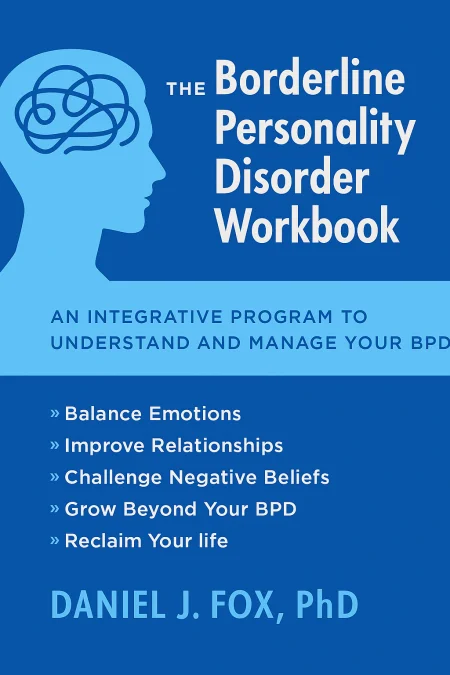
The Borderline Personality Disorder Workbook
An Integrative Program to Understand and Manage Your BPD
Book Edition Details
Summary
Turbulent waters of emotion often define the journey with borderline personality disorder (BPD), but imagine transforming that tumult into a powerful force for change. This invigorating workbook stands out with its integrative approach, harnessing the strengths of dialectical behavior therapy, acceptance and commitment therapy, cognitive behavioral therapy, and interpersonal therapy. It's your personalized compass through the storm, guiding you to understand the intricate dance of thoughts and feelings that BPD orchestrates. As you work through this compassionate guide, you'll unlock the clarity needed to rewrite your life's narrative, emerging from shadows of self-doubt into a space of empowerment and healing. Begin to harmonize the inner chaos and reclaim your story, one insightful exercise at a time.
Introduction
Have you ever felt like you're trapped in a whirlwind of intense emotions, struggling to maintain stable relationships while battling an inner voice that whispers you're not good enough? If you've been diagnosed with borderline personality disorder, or recognize these patterns in yourself, you're not alone in this experience. The journey ahead isn't about fixing what's "broken" within you, but rather about discovering the powerful tools that can help you reclaim control over your emotional landscape. This path requires courage, self-compassion, and a willingness to challenge long-held beliefs about yourself and your relationships. While the road may seem daunting, countless individuals have walked this path successfully, transforming their lives from chaos to clarity, from reactive patterns to intentional choices. The skills you're about to learn aren't just theoretical concepts, they're practical, evidence-based strategies that can help you build the life you truly deserve.
Understanding Your BPD Patterns and Triggers
Understanding your borderline personality disorder begins with recognizing that BPD isn't a life sentence, but rather a treatable condition that affects how you perceive yourself, others, and the world around you. At its core, BPD creates a lens through which you view life, often distorting reality and intensifying emotional responses to everyday situations. Consider Betty, a twenty-two-year-old woman who struggled with maintaining friendships and romantic relationships. She would fall head-over-heels in love instantly, demanding constant communication from her partners, then break up with them when they didn't respond to texts quickly enough. When her boyfriend Steven was late responding to a gift she'd left on his doorstep, Betty immediately labeled him "the devil" and ended the relationship, despite having called him the love of her life just hours earlier. Betty's story illustrates the intense emotional swings characteristic of BPD. After breaking up with Steven, she felt overwhelmed by feelings of abandonment and emptiness, leading her to cut herself for emotional relief. This cycle of idealization, devaluation, and self-harm represents the complex interplay of symptoms that keep BPD patterns active. The path forward involves mapping your specific symptom patterns and identifying your triggers. Start by tracking your emotional responses throughout the day, noting what situations or interactions tend to activate intense reactions. Pay attention to the eight trigger categories: emotional states like anxiety or anger, physical sensations such as restlessness, the presence of certain people, environmental factors, social pressures, daily activities, and specific thoughts or memories. Create a personal trigger journal where you record not just what happened, but how your body felt, what thoughts arose, and what actions you took in response. This awareness-building practice helps you recognize patterns before they escalate into crisis situations. Remember that understanding your patterns is the first step toward freedom. Each trigger you identify and each pattern you recognize gives you back a piece of control that BPD has taken from you.
Building Healthy Coping and Response Skills
Building healthy coping mechanisms starts with understanding that your current responses, while potentially destructive, served a purpose in helping you survive difficult circumstances. The goal isn't to judge these responses harshly, but to develop more effective alternatives that serve you better in the long term. Tony's story demonstrates this principle beautifully. Growing up with a mother who prioritized her boyfriends and alcohol over her son, Tony learned that love came through suffering and that he had to prove his worthiness through extreme efforts. When dating Pam, he would text her constantly and show up unannounced at her workplace, desperately trying to prove his love. These behaviors, while understandable given his background, ultimately pushed Pam away, reinforcing his belief that he wasn't worthy of love. The transformation began when Tony learned to recognize the gap between trigger and response. While this gap might feel like milliseconds, it's actually where choice lives. He started practicing mindfulness techniques, learning to pause when he felt the familiar urge to frantically contact Pam. Instead of immediately reaching for his phone, he would take three deep breaths and ask himself what he truly needed in that moment. Tony discovered that underneath the compulsive texting was a deeper need for reassurance and connection. Armed with this understanding, he learned to communicate these needs directly rather than through desperate actions. He practiced saying, "I'm feeling insecure right now and could use some reassurance" instead of sending twenty texts in a row. The key to building these skills lies in consistent practice during calm moments, not just during crisis. Set aside time daily to practice self-soothing techniques like deep breathing, progressive muscle relaxation, or grounding exercises that engage your five senses. Create a toolkit of healthy alternatives you can access when triggered, such as calling a trusted friend, taking a walk, or engaging in creative expression. Most importantly, celebrate small victories. Each time you choose a healthy response over an old pattern, you're literally rewiring your brain and building the foundation for lasting change.
Reconstructing Your Self-Image and Relationships
Reconstructing your self-image requires examining and challenging the core beliefs that have shaped your identity, many of which were formed during difficult early experiences. These beliefs often operate below conscious awareness, silently influencing how you interpret situations and interact with others. Betty's core beliefs centered around abandonment and emptiness, rooted in childhood experiences of being left alone while her mother prioritized her romantic relationships. These experiences created an internal narrative that she was unworthy of consistent love and care. As an adult, Betty would unconsciously test her relationships, pushing people away before they could abandon her, then using their departure as evidence that her negative beliefs were true. The reconstruction process began when Betty learned to separate her current reality from her past experiences. She practiced what we call "authentic view" exercises, learning to see situations without the distortion of her BPD lens. Instead of automatically assuming Steven's delayed text response meant he was rejecting her, she learned to consider alternative explanations such as poor cell service or being busy at work. Betty started challenging her negative self-talk with evidence-based thinking. When her inner critic whispered "nobody will ever love you," she countered with concrete examples: "Sarah has been my friend for three years despite my difficulties," and "Michael continues to show care and patience even when I'm struggling." This practice helped her build a more balanced and realistic self-image. Relationship reconstruction involves learning to engage with others from a place of wholeness rather than emptiness. Begin by identifying the qualities you bring to relationships, your strengths, talents, and the ways you've grown through your challenges. Practice expressing your needs clearly and directly rather than through testing behaviors or emotional manipulation. Develop what researchers call "secure functioning" by learning to self-soothe when distressed, communicate openly about your feelings, and maintain your sense of self even when relationships face difficulties. Remember that healthy relationships involve two complete individuals choosing to share their lives, not two halves desperately trying to become whole through the other person. Set boundaries that protect your growth while remaining open to genuine connection. This might mean limiting contact with people who trigger your most destructive patterns while investing more energy in relationships that support your healing journey.
Maintaining Progress and Preventing Relapse
Maintaining progress requires understanding that recovery from BPD isn't a linear journey, but rather an ongoing process of growth that includes setbacks, breakthroughs, and continuous learning. The key lies in building robust systems that support your continued development while preparing for the inevitable challenges that life will present. Betty's long-term success came from recognizing that different types of stress would test her new skills in different ways. Time-limited stressors like being stuck in traffic were manageable with her breathing techniques, while continuous stressors like work pressure required more comprehensive strategies. She learned to identify which type of stress she was facing and match it with appropriate coping mechanisms. The foundation of lasting change rests on maintaining self-acceptance, which means recognizing your inherent worth regardless of your struggles or past behaviors. Betty created daily practices that reinforced this self-acceptance, including morning affirmations that acknowledged both her strengths and her ongoing growth areas. She learned to speak to herself with the same compassion she would offer a dear friend facing similar challenges. Building a strong support network proved crucial for Betty's continued progress. She surrounded herself with people who understood her journey and could provide encouragement during difficult times. This included maintaining regular therapy sessions, participating in support groups, and cultivating friendships with individuals who supported her growth rather than enabling old patterns. Create your own relapse prevention plan by identifying early warning signs that you might be slipping back into old patterns. These might include increased irritability, social isolation, black-and-white thinking, or neglecting self-care routines. Develop specific action steps for each warning sign, such as reaching out to your therapist, practicing extra mindfulness exercises, or temporarily reducing stressful commitments. Establish non-negotiable daily practices that support your mental health, such as regular sleep schedules, physical activity, healthy nutrition, and stress management techniques. These form the foundation that makes you more resilient to life's inevitable challenges. Most importantly, view setbacks as information rather than failure. Each time you slip back into an old pattern, it provides valuable data about your triggers and areas that need additional attention. Use these experiences to refine your coping strategies rather than as evidence that you can't change.
Summary
Your journey to authentic living represents one of the most courageous undertakings a person can embark upon. As this comprehensive exploration has shown, breaking free from borderline patterns requires understanding your unique triggers, developing healthy coping mechanisms, reconstructing your self-image and relationships, and creating sustainable systems for long-term growth. The path isn't about achieving perfection, but rather about developing the skills to navigate life's complexities with greater self-awareness and emotional regulation. Remember that with proper treatment, skill building, and enhancement of insight, you can put yourself on a path to reducing BPD's impact and growing beyond it. Your healing journey matters not just for yourself, but for everyone whose life you touch. Take the first step today by practicing one self-soothing technique, challenging one negative belief about yourself, or reaching out to someone who supports your growth. Your authentic self is waiting to emerge, and every small step forward is a victory worth celebrating.
Related Books
Download PDF & EPUB
To save this Black List summary for later, download the free PDF and EPUB. You can print it out, or read offline at your convenience.
By Daniel J. Fox
