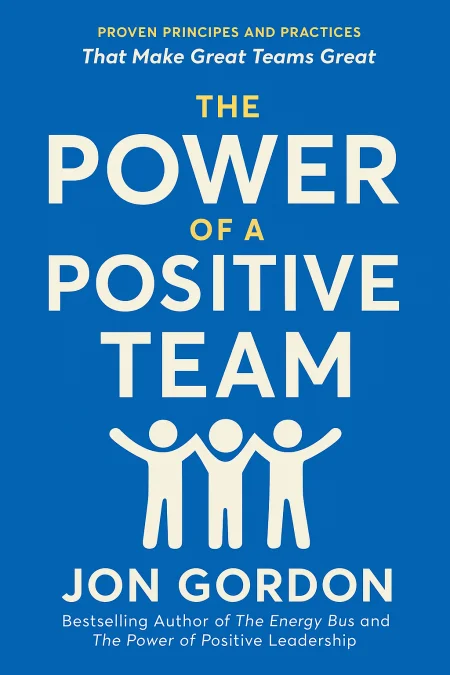
The Power of a Positive Team
Proven Principles and Practices that Make Great Teams Great
Book Edition Details
Summary
In the high-stakes world of team dynamics, Jon Gordon's "The Power of a Positive Team" delivers a masterclass in transforming groups into cohesive powerhouses. Drawing on his extensive experience with championship teams—from the gridiron triumphs of Clemson Football to the strategic brilliance of Apple and Ford—Gordon distills the art of fostering unity and resilience. This book is a treasure trove of actionable insights and innovative strategies, designed to obliterate negativity and spark unparalleled collaboration. With vivid anecdotes and practical exercises, Gordon guides teams through the minefields of complacency and discord, arming them with the tools to build trust, inspire creativity, and fuel relentless growth. Ideal for teams seeking not just to survive, but to thrive and excel, this is a manual for collective greatness, crafted to be read, absorbed, and acted upon together.
Introduction
Picture a struggling sports team where talented individuals play as isolated stars, each focused solely on personal statistics while their organization crumbles around them. Now imagine that same team transformed—players encouraging teammates, celebrating each other's successes, and moving as one unified force toward a shared goal. The difference isn't talent; it's the power of positive teamwork. Throughout history, the most extraordinary achievements have emerged not from individual brilliance alone, but from teams that discovered how to harness their collective energy toward something greater than themselves. Whether it's a startup revolutionizing technology, a hospital team saving lives, or educators transforming students' futures, the magic happens when people stop working alongside each other and start working as one. This exploration reveals the fundamental truth that positive teams don't happen by accident. They are built through intentional culture creation, shared vision, unwavering optimism, meaningful communication, genuine care, and relentless commitment to growth. When teams embrace these principles, they don't just achieve better results—they transform the very experience of working together, creating environments where individuals flourish while contributing to something magnificent. The journey from a collection of individuals to a positive, powerful team begins with understanding that together, we can accomplish what seems impossible alone.
Building Culture: From Clemson Championships to One Ford Vision
When Alan Mulally took the helm of Ford in 2006, the company was hemorrhaging billions and seemed destined for failure. Rather than focusing solely on financial metrics or restructuring, Mulally understood that the path to recovery required something more fundamental: creating a unified culture. He introduced the "One Ford" philosophy, bringing together fragmented departments, competing divisions, and disconnected teams under a single banner. Everyone had to know the plan, embrace the plan, and work relentlessly toward the plan. The transformation wasn't immediate, but as teams began communicating openly about problems instead of hiding them, sharing resources instead of hoarding them, and supporting each other instead of competing internally, something remarkable happened. Ford not only survived the economic crisis but emerged stronger than its competitors. Mulally's approach demonstrated that culture isn't just about having shared values written on walls—it's about creating an environment where people naturally support each other's success. Similarly, the Clemson University football team experienced their own cultural revolution under coach Dabo Swinney. When Swinney arrived, the program was known for "Clemsoning"—losing games they should have won. He brought two signs to his first team meeting: one saying "I can't" with the 't' crossed out, and another simply stating "Believe." This wasn't mere positive thinking; it was about building a culture where belief became contagious, where players supported each other through adversity, and where the team's success mattered more than individual recognition. Culture, these leaders discovered, isn't static—it's dynamic and constantly being created through daily interactions, decisions, and behaviors. When teams intentionally cultivate positive cultures, they create environments where excellence becomes the natural expectation, where people energize rather than drain each other, and where challenges become opportunities for collective growth. The foundation of every great team achievement rests not on individual talent alone, but on the cultural bedrock that transforms potential into extraordinary results.
Communication and Connection: Navy SEALs to Olympic Gold Stories
In the high-stakes world of Navy SEAL training, the difference between success and failure often comes down to a single moment of connection. During Hell Week, as candidates endure grueling physical and mental challenges with minimal sleep, something remarkable happens around Tuesday night. Those who survive this crucial period share a common realization: they stop thinking about their own survival and start focusing on their teammates. The ones who quit are thinking "I can't do this for four more days," while the ones who persist are thinking "my team needs me right now." This shift from individual survival to collective commitment represents the transformational power of genuine connection. When team members truly communicate—not just exchange information, but share their authentic selves—they create bonds that enable them to accomplish what seems impossible alone. The physical challenges of training become manageable when distributed across connected hearts and minds working toward a shared purpose. Olympic beach volleyball champions Kerri Walsh Jennings and Misty May-Treanor exemplified this principle throughout their legendary partnership. Their success wasn't built merely on athletic talent, though both were exceptional athletes. Instead, their gold medals emerged from a foundation of deep communication and trust. They had difficult conversations when tensions arose, worked through disagreements with respect and love, and consistently prioritized their partnership's success over individual recognition. When challenges emerged during competition, their connection allowed them to adapt as one unit rather than two separate players. Research from Google's Project Aristotle confirmed what these champions intuitively understood: the most productive and innovative teams aren't necessarily comprised of the most brilliant individuals. Instead, they're characterized by psychological safety, empathy, and genuine interest in teammates' ideas. When people feel truly heard and valued, they contribute their best thinking and most creative solutions. Connection transforms talented individuals into extraordinary teams, creating a synergy where the collective output far exceeds what any member could achieve alone.
Commitment and Growth: Transforming Teams Through Love and Accountability
Steve Johnson faced a life-changing decision that would define his legacy. As arguably the greatest college tennis player of all time, he had the opportunity to turn professional and earn millions on the tour. Instead, he chose to return to the University of Southern California for his senior year, forgoing immediate financial gain to help his team pursue a fourth consecutive national championship. When Navy SEALs conducting a team-building session with USC learned about Johnson's sacrifice, they immediately sought him out—recognizing that his commitment to teammates embodied the same selfless dedication they valued most. Johnson's decision illustrates the profound truth that commitment recognizes commitment. When team members witness genuine sacrifice for the collective good, it inspires them to elevate their own dedication. USC's fourth championship wasn't won by Johnson alone, despite his exceptional talent contributing 35 percent of match points. It was achieved by teammates who felt so inspired by his commitment that they matched it with their own extraordinary effort and dedication. This dynamic of mutual commitment becomes even more powerful when combined with loving accountability. At Gettysburg College, lacrosse coach Hank Janczyk discovered that his team's family-like bonds weren't enough to achieve greatness. They loved each other deeply and enjoyed spending time together, but they also made excuses for each other's mistakes and avoided difficult conversations about performance. Janczyk realized they needed to transform from a great family into a great team—maintaining their love while adding accountability to excellence. The breakthrough came when they embraced "love tough"—the principle that caring for teammates means refusing to let them settle for less than their best. Love arrived first, creating the trust necessary for honest feedback, then accountability pushed everyone toward their highest potential. When team members know their colleagues genuinely care about their growth and success, they become more open to constructive criticism and more willing to push through discomfort. This combination of love and accountability creates an environment where individuals flourish while contributing to collective excellence, proving that the strongest teams are forged through the marriage of deep caring and unwavering standards.
Summary
The most extraordinary achievements in human history—from technological breakthroughs to championship victories, from life-saving medical innovations to educational transformations—emerge when individuals transcend their separate ambitions to create something magnificent together. Positive teams don't happen accidentally; they're built through intentional culture creation, authentic communication, genuine commitment, and the courage to hold each other accountable with love. The path forward requires embracing three fundamental truths: first, that culture is created daily through every interaction and decision, making each team member responsible for the environment they collectively inhabit. Second, that connection transforms talented individuals into extraordinary teams, requiring vulnerability, authentic communication, and the willingness to prioritize collective success over individual recognition. Third, that sustainable excellence emerges when teams combine deep caring with unwavering accountability, creating environments where people feel safe to be their authentic selves while being challenged to reach their highest potential. When teams commit to these principles, they discover that their greatest achievements aren't just the results they produce, but the transformation they experience in the process. They become living proof that together, ordinary people can accomplish extraordinary things, leaving legacies that inspire others long after their immediate goals are achieved. The choice stands before every team: remain a collection of individuals working alongside each other, or become a positive force that demonstrates what's possible when people unite their talents, hearts, and spirits toward something greater than themselves.
Related Books
Download PDF & EPUB
To save this Black List summary for later, download the free PDF and EPUB. You can print it out, or read offline at your convenience.
By Jon Gordon
