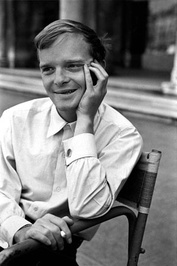
Truman Capote
Truman Capote, an American writer of unparalleled influence, emerged from a tumultuous childhood to become one of the most distinctive voices in 20th-century literature. Born Truman Streckfus Persons in New Orleans, he navigated the complexities of his parents' early divorce by immersing himself in the world of words. Relocating to Monroeville, Alabama, a place that would later echo in his work, Capote's formative years were marked by solitude and an insatiable curiosity. This backdrop of Southern Gothic landscapes and fractured family dynamics indelibly shaped his narrative perspective. At the age of nine, he moved to New York City, where his mother remarried Joseph Capote, who adopted him, thus formalizing the name that would soon resonate throughout literary circles. Capote's literary career is distinguished by its breadth and depth, with works that continue to captivate readers and critics alike. His novella "Breakfast at Tiffany's" (1958) introduced the world to the enigmatic Holly Golightly, capturing the imagination of a generation and cementing its place as a cultural touchstone. However, it was "In Cold Blood" (1966) that truly underscored his prowess as a pioneering force in the genre of literary non-fiction. This meticulously researched "non-fiction novel" delved into the chilling murder of the Clutter family in rural Kansas, earning Capote critical acclaim and international bestseller status. The book's groundbreaking narrative style and psychological depth transformed the landscape of true crime writing, ensuring Capote's enduring legacy. Renowned for his lyrical prose and incisive character studies, Capote's writing transcends mere storytelling to explore themes of identity, isolation, and the human condition. His stylistic elegance and ability to weave fact with fiction not only broadened the scope of contemporary literature but also challenged readers to confront the complexities of morality and truth. Despite personal struggles with substance abuse that shadowed his later years, Capote's contribution to literature remains monumental. Through his evocative storytelling and innovative narrative techniques, Truman Capote solidified his position as a seminal figure in American letters, whose works continue to inspire and provoke reflection.


by Paul J. Zak
by Rory Vaden
by Robert C. Solomon, Fernando Flores
by Brett Gardner
by Dennis S. Reina
by Julian Baggini
by Larry Downes, Omar Abbosh, Paul Nunes
by Jacqueline Woodson
by Kevin Oakes
by Lindsey Pollak, Kimberly B. Cummings, Kimberly Brown
