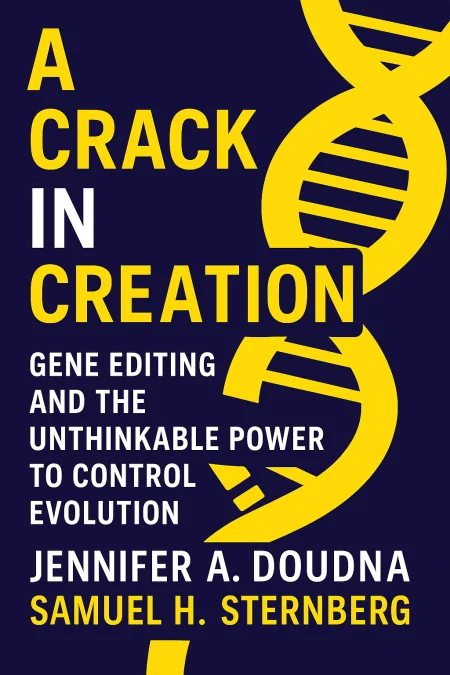
A Crack in Creation
Gene Editing and the Unthinkable Power to Control Evolution
byJennifer A. Doudna, Samuel H. Sternberg
Book Edition Details
Summary
In a world teetering on the brink of a genetic revolution, "A Crack in Creation" unveils the awe-inspiring and controversial realm of CRISPR technology. Imagine the power to rewrite the very blueprint of life, to edit the genes of future generations with unprecedented precision. This groundbreaking book, penned by two visionary scientists, not only demystifies the complex science behind gene editing but also courageously tackles the profound ethical dilemmas and societal upheavals it may unleash. As humanity stands at this crossroads, the authors invite readers to ponder the tantalizing possibilities and potential perils of reshaping our genetic destiny. With a narrative that weaves together scientific insight and moral inquiry, this work is an essential read for anyone intrigued by the future of human evolution.
Introduction
Imagine holding a molecular pair of scissors so precise that you could cut and edit the very blueprint of life itself, correcting genetic mistakes that cause devastating diseases or enhancing crops to feed billions of people. This extraordinary power isn't confined to science fiction anymore—it's the reality of CRISPR, a revolutionary gene-editing technology that has transformed biology from a descriptive science into an engineering discipline. What makes this story even more remarkable is that CRISPR emerged from studying one of the most ancient battles on Earth: the endless war between bacteria and the viruses that hunt them. Scientists discovered that bacteria had evolved their own sophisticated immune system, complete with molecular memory and precision-guided weapons, and then figured out how to reprogram this natural defense system into the most powerful gene-editing tool ever created. As we stand at the threshold of an era where we can rewrite genetic codes as easily as editing a document, CRISPR promises to cure hereditary diseases, create climate-resistant crops, and potentially direct our own evolution. Yet this unprecedented power also forces us to confront profound questions about the ethics of genetic enhancement, the safety of releasing modified organisms into the wild, and our responsibility as the first species capable of deliberately controlling the genetic destiny of life on Earth.
From Bacterial Defense to Molecular Scissors
The story of CRISPR begins in the microscopic world of bacteria, where an ancient arms race has raged for billions of years between these single-celled organisms and the viruses that prey upon them. Scientists first noticed strange, repetitive DNA sequences in bacterial genomes during the 1980s—mysterious patterns that looked like genetic stutters with no apparent purpose. These sequences consisted of short, identical DNA repeats separated by unique spacer regions, creating what looked like a molecular barcode embedded in the bacterial chromosome. For decades, researchers puzzled over these enigmatic sequences, unaware they were examining one of nature's most sophisticated immune systems. The breakthrough came when scientists realized that the spacer sequences between the repeats weren't random junk DNA, but rather fragments captured from viruses that had previously attacked the bacteria. This discovery revealed CRISPR as a kind of genetic memory system, allowing bacteria to maintain a molecular mugshot collection of their enemies. When a virus injects its DNA into a bacterial cell, the CRISPR system can capture a piece of that viral genetic material and store it as a permanent record. If the same virus attacks again, the bacterium consults its genetic memory bank and produces guide RNAs that match the stored viral sequence, directing protein scissors called Cas9 to find and destroy the invading DNA with surgical precision. What transformed CRISPR from a biological curiosity into a revolutionary tool was the realization that this system could be reprogrammed. Unlike other biological processes that are locked into specific targets, CRISPR's modular design meant that scientists could create custom guide RNAs to direct Cas9 to cut virtually any DNA sequence they chose. This programmability was the key insight that converted a bacterial immune system into a universal gene-editing platform. Researchers could now edit genes in any organism simply by designing the appropriate guide RNA and delivering the CRISPR components into cells. The elegance and accessibility of CRISPR democratized genetic engineering in ways previously unimaginable. What once required months of specialized work and expensive equipment could now be accomplished in days using relatively simple laboratory techniques. This transformation turned gene editing from an exclusive domain of elite research institutions into a widely accessible tool, sparking an explosion of innovation as researchers around the world began applying CRISPR to problems ranging from crop improvement to cancer therapy, fundamentally changing our relationship with the genetic code of life.
Engineering Life: Agricultural and Medical Applications
CRISPR has revolutionized agriculture by providing farmers and plant breeders with unprecedented precision in crop improvement, allowing them to enhance nutritional content, disease resistance, and environmental adaptation without introducing foreign genes from other species. Unlike traditional genetic modification, which often involves inserting entire genes from bacteria or other organisms, CRISPR can make subtle, targeted changes that mirror natural genetic variations. Scientists have created tomatoes with enhanced flavor and extended shelf life, wheat varieties that resist devastating fungal diseases without pesticides, and rice with increased vitamin content to combat malnutrition in developing countries. These improvements can be achieved in a fraction of the time required for conventional breeding, potentially helping agriculture adapt to climate change and feed a growing global population. In livestock, CRISPR applications have focused on improving animal welfare while increasing productivity and disease resistance. Researchers have developed pigs that are naturally resistant to Porcine Reproductive and Respiratory Syndrome, a viral disease that costs the swine industry billions of dollars annually and requires extensive antibiotic use. Cattle have been edited to be naturally hornless, eliminating the need for the painful dehorning process that affects millions of calves each year. Perhaps most ambitiously, scientists are working to create pig organs that could be transplanted into humans by editing genes that cause immune rejection, potentially solving the critical shortage of donor organs that claims thousands of lives annually. The medical applications of CRISPR represent perhaps its most transformative potential, offering hope for treating thousands of genetic diseases that have plagued humanity throughout history. The technology works by addressing the root cause of genetic disorders rather than merely managing symptoms, potentially providing permanent cures through one-time treatments. Early clinical trials have shown remarkable success in treating blood disorders like sickle cell disease and beta-thalassemia, where patients' own stem cells are edited outside the body to produce healthy blood cells before being returned to the patient. Cancer immunotherapy has also been revolutionized by CRISPR, with researchers engineering patients' immune cells to better recognize and attack tumors while avoiding the devastating side effects of traditional chemotherapy. Looking toward the future, CRISPR may enable treatments for neurological conditions like Huntington's disease and muscular dystrophy, genetic forms of blindness, and even complex disorders involving multiple genes. Researchers are developing sophisticated delivery systems using modified viruses and nanoparticles to transport gene-editing machinery directly to affected tissues throughout the body. While significant challenges remain in ensuring safety and precision, the potential to cure rather than merely treat genetic diseases represents a fundamental paradigm shift in medicine, transforming our approach from managing chronic conditions to eliminating their genetic causes entirely.
The Ethics of Editing Human Evolution
The most controversial frontier in CRISPR research involves editing the human germline, making genetic changes to embryos that would be inherited by future generations and potentially alter the trajectory of human evolution. This capability raises profound questions about our species' genetic future and the responsibility that comes with wielding such unprecedented power over heredity. Proponents argue that germline editing could eliminate devastating genetic diseases like Huntington's disease, cystic fibrosis, and Tay-Sachs disease from family lineages forever, sparing countless future individuals from suffering and early death. For families carrying these genetic burdens, the technology offers hope of breaking cycles of inherited disease that have persisted for generations. However, the same technology that could eliminate genetic diseases also opens the door to human enhancement beyond medical necessity. CRISPR could theoretically be used to enhance traits like intelligence, physical strength, disease resistance, or even appearance, potentially creating genetic advantages that could be passed down through generations. This possibility raises serious concerns about genetic inequality, where enhanced individuals might gain unfair advantages over their unmodified peers, potentially creating new forms of social stratification based on genetic privilege rather than natural variation or personal achievement. The technical challenges of germline editing remain formidable, with scientists expressing concerns about unintended genetic changes and long-term consequences that might not become apparent for decades or even generations. Unlike therapeutic applications where side effects might be manageable in individual patients, mistakes in germline editing could affect not only the treated individual but all of their descendants, creating a permanent legacy of unintended genetic alterations. The 2018 case of a Chinese scientist who claimed to have created gene-edited babies highlighted both the technical possibilities and the urgent need for international oversight and ethical guidelines. International governance of human gene editing has revealed both common ground and significant disagreements among different cultures, nations, and religious traditions. While there is broad consensus that CRISPR should not be used for frivolous enhancements or eugenic purposes, debates continue about where to draw the line between therapy and enhancement, how to ensure equitable access to genetic therapies, and what level of risk is acceptable when the potential benefits are enormous. Some countries have banned germline editing entirely, while others have adopted more permissive regulatory frameworks, creating a complex patchwork of policies that could lead to genetic tourism as people seek treatments unavailable in their home countries. As we navigate these uncharted ethical waters, the decisions made today about human gene editing will shape not only the future of medicine but also our understanding of human nature and our responsibilities to future generations.
Summary
CRISPR represents a pivotal moment in human history, marking our transition from passive observers of genetic variation to active architects of biological systems, fundamentally changing our relationship with the natural world and our own species. This remarkable technology, born from curiosity about bacterial immune systems, has evolved into a precise and accessible tool for editing the genetic code of any living organism, offering unprecedented opportunities to eliminate genetic diseases, enhance agricultural productivity, and potentially direct human evolution. Yet the power to rewrite life's fundamental instructions brings with it extraordinary responsibilities and complex ethical challenges that extend far beyond the laboratory. As we stand at this crossroads between natural and directed evolution, we must grapple with profound questions about genetic equity, environmental safety, and the kind of future we want to create with these tools. How do we ensure that the benefits of genetic engineering are shared fairly rather than creating new forms of inequality? What safeguards do we need to prevent unintended consequences that could affect entire ecosystems or future generations? The answers to these questions will determine whether CRISPR becomes a force for reducing human suffering and enhancing life on Earth, or a source of new divisions and unforeseen risks that challenge the very foundations of biological diversity and human dignity.
Related Books
Download PDF & EPUB
To save this Black List summary for later, download the free PDF and EPUB. You can print it out, or read offline at your convenience.
By Jennifer A. Doudna
