
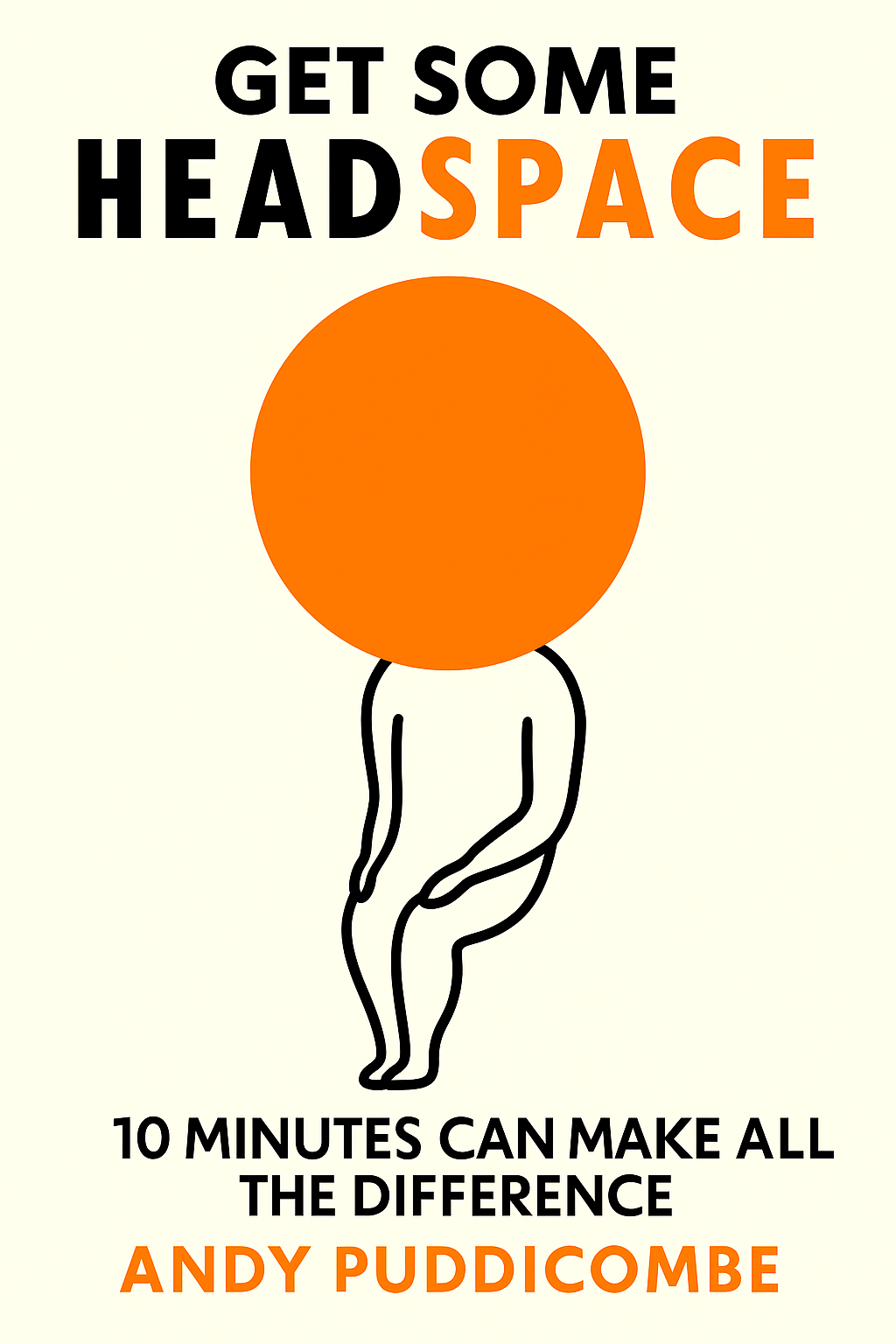
Get Some Headspace
10 Minutes Can Make All the Difference
Book Edition Details
Summary
Amid the hustle and bustle of modern life, Andy Puddicombe offers a lifeline to tranquility with "Get Some Headspace." This isn't just another guide to meditation; it's an invitation to reclaim your peace with just ten minutes a day. Puddicombe, drawing from his profound journey as a Buddhist monk, distills ancient wisdom into practical exercises that fit seamlessly into even the busiest of schedules. His techniques are not just easy to grasp but promise transformative effects—ushering in calm, banishing stress, and revitalizing the spirit. In a world that never stops, here's your chance to pause, breathe, and rediscover yourself. Perfect for both novices and seasoned meditators, this book is your gateway to lasting serenity.
Introduction
Have you ever found yourself halfway through eating a meal without actually tasting it, or driven somewhere only to realize you can't remember the journey? Perhaps you've lain awake at night with your mind racing, replaying conversations from earlier or worrying about tomorrow's tasks. These moments reveal something profound about modern life: we're often physically present but mentally elsewhere, caught up in an endless stream of thoughts that can leave us feeling stressed, distracted, and disconnected from our actual experience. This exploration into mindfulness and meditation isn't about becoming a monk or retreating from the world. Instead, it's about discovering a practical approach to training your mind that can fundamentally transform how you experience each moment. Through understanding the science behind these ancient practices, we'll uncover how just ten minutes of daily meditation can reshape your brain, reduce anxiety, and improve relationships. We'll also explore how mindfulness can be woven into everyday activities, turning routine tasks into opportunities for greater awareness and peace. Most importantly, you'll learn that the state of calm clarity you seek isn't something you need to create or achieve, but rather something that's already there, waiting to be uncovered beneath the mental chatter.
Understanding Your Mind: The Road to Awareness
Imagine sitting by the side of a busy highway, watching cars speed past in an endless stream. Now picture that these cars represent your thoughts, each one carrying different emotions, memories, or worries. Most of the time, we're not sitting calmly by the roadside observing this mental traffic. Instead, we're running out into the road, chasing after some thoughts because they seem appealing, or desperately trying to block others because they make us uncomfortable. This is the exhausting reality of our relationship with our own minds. The first crucial insight about meditation is that it doesn't aim to stop thoughts or empty your mind completely. Your mind naturally thinks, just as your heart naturally beats. Trying to forcefully stop thoughts is like trying to hold back a wild horse by grabbing its reins and pulling with all your strength. The harder you pull, the more it struggles. Instead, meditation teaches you how to step back and observe your thoughts from that roadside position, watching them come and go without getting swept away by their content. Understanding your mind also means recognizing the difference between awareness and the objects of awareness. Think of your mind as a vast blue sky, naturally clear and spacious. Your thoughts, emotions, and sensations are like clouds passing through this sky. Sometimes the clouds are light and fluffy, barely noticeable. Other times they're dark and stormy, seeming to fill the entire sky. But no matter how dense the clouds become, the blue sky remains unchanged beneath them. This blue sky represents your fundamental awareness, the part of you that observes and knows, which is always present regardless of what's happening in your mental weather. The process of developing awareness isn't about achieving some perfect state of mind. Rather, it's about becoming familiar with your mind as it actually is, not as you think it should be. When you start observing your thoughts with gentle curiosity instead of judgment, something remarkable happens. You begin to see patterns in your thinking, recognize emotional triggers, and gain the space to respond thoughtfully rather than react impulsively. This shift from being caught up in mental activity to observing it with friendly awareness forms the foundation for all genuine transformation and peace of mind.
Learning to Meditate: The Take10 Practice
The Take10 practice represents a carefully structured approach to meditation that makes this ancient art accessible to modern life. Unlike complicated techniques that require years of study, Take10 provides a simple framework that anyone can follow: just ten minutes a day of focused attention training that gradually develops the skill of mindfulness. The beauty of this approach lies not in its complexity, but in its elegant simplicity and proven effectiveness. The technique begins with what's called "checking in," a process similar to arriving at a new destination and taking a moment to orient yourself. You start by noticing how you feel physically and emotionally, without trying to change anything. This isn't about judgment or analysis, but rather about building awareness of your starting point. Think of it as taking a mental photograph of your current state. Are you feeling tense or relaxed? Anxious or calm? Energetic or tired? This simple act of acknowledgment creates a foundation of honesty that supports everything that follows. The core of Take10 involves focusing on your breath, not because breathing is mystical, but because it's always available and provides a perfect anchor for your attention. You simply count each breath cycle up to ten, then start again. When your mind wanders off, which it inevitably will, you gently return to counting. This isn't failure; it's the actual practice. Each time you notice your mind has drifted and bring it back, you're strengthening your awareness muscle. It's like doing repetitions at the gym, except you're training your mind's ability to maintain focus while remaining relaxed. What makes Take10 particularly effective is its balanced approach to effort. Too much striving creates tension and actually makes concentration more difficult. Too little effort leads to drowsiness or daydreaming. The practice teaches you to find that sweet spot of relaxed alertness, where you're focused but not forcing, engaged but not tense. This quality of effortless effort, once developed in meditation, naturally begins to influence how you approach other activities in life, leading to greater effectiveness with less stress and more enjoyment in whatever you're doing.
Living Mindfully: Integration into Daily Life
The real power of meditation emerges not during the ten minutes you spend sitting with your eyes closed, but in how that training transforms your experience of the remaining twenty-three hours and fifty minutes of each day. Mindfulness is simply the art of being fully present with whatever you're doing, whenever you're doing it. Instead of going through life on autopilot while your mind churns through endless mental commentary, you learn to actually inhabit your moments and participate fully in your own life. Consider something as simple as brushing your teeth. Normally, this might be done hastily while mentally rehearsing the day ahead or reviewing yesterday's events. Mindful tooth brushing involves actually experiencing the activity: feeling the texture of the brush against your teeth, noticing the taste and smell of the toothpaste, being aware of the arm moving back and forth. This isn't about making tooth brushing into a major production, but about using these routine activities as opportunities to practice presence. When you're truly engaged with what you're doing, there's no mental space left for the anxious thoughts and worries that typically occupy your mind. Mindful living extends to how you interact with other people. When you're genuinely present in conversations, you actually hear what others are saying rather than preparing your next response or getting lost in your own thoughts. This quality of attention is rare and precious in our distracted world. People intuitively sense when they have your full attention, and it transforms the quality of your relationships. You become less reactive and more responsive, able to speak and act from a place of clarity rather than being driven by unconscious emotional patterns. The integration of mindfulness into daily life doesn't require additional time or special equipment. Whether you're walking down the street, eating a meal, or waiting in line, you can use these moments to practice presence. The key is remembering to shift your attention from the mental commentary running in your head to the direct experience of your senses. Over time, this creates a continuity of awareness that makes life feel more vivid, connected, and meaningful. You begin to realize that ordinary moments, when met with full attention, are actually quite extraordinary, and that the peace and contentment you've been seeking isn't somewhere else, but right here in your immediate experience.
Summary
The journey into mindfulness and meditation reveals a profound yet simple truth: the peace and clarity we seek isn't something we need to create or achieve, but rather something we need to stop obscuring with our mental busyness and resistance to the present moment. Through understanding how our minds work and learning to observe our thoughts and emotions with friendly awareness, we discover an unshakeable sense of well-being that doesn't depend on external circumstances. This approach to mental training offers far more than stress relief or relaxation, though these benefits naturally arise. It provides a fundamental shift in how you relate to your own experience, moving from being at the mercy of your thoughts and emotions to having the space to respond wisely to whatever life presents. The science confirms what practitioners have known for centuries: regular meditation literally changes the brain, enhancing areas associated with attention, emotional regulation, and compassion while reducing activity in regions linked to anxiety and reactivity. What questions about your own mind and its patterns are you most curious to explore? How might your life transform if you could maintain the calm clarity that emerges from this practice not just during meditation, but throughout your daily interactions and challenges?
Related Books
Download PDF & EPUB
To save this Black List summary for later, download the free PDF and EPUB. You can print it out, or read offline at your convenience.
By Andy Puddicombe
