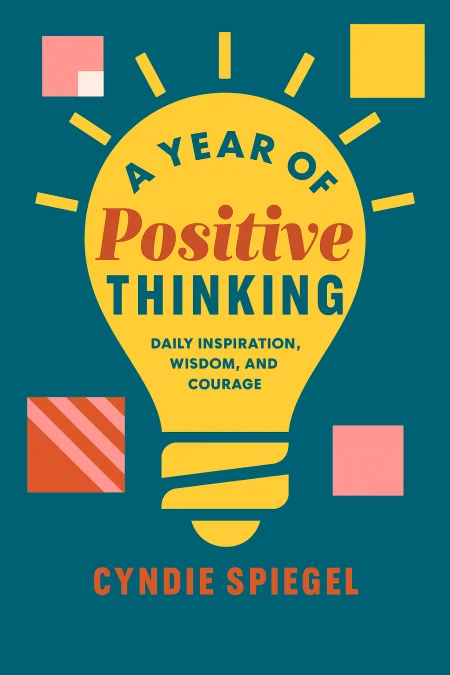
A Year of Positive Thinking
Daily Inspiration, Wisdom, and Courage
Book Edition Details
Summary
In the tapestry of your daily life, what if each sunrise brought with it a thread of boundless positivity? "A Year of Positive Thinking" is your beacon, illuminating the path to self-discovery with a daily dose of optimism. Seamlessly weaving insights from positive psychology and neuroscience, this guide transforms ordinary days into extraordinary opportunities for personal growth. Each day offers a new affirmation or meditation, inviting you to embrace self-respect, kindness, and love. Whether you start in January or June, the flexible structure promises that change is always within reach. Choose optimism, choose growth, choose a life lived to its fullest potential—one thought at a time.
Introduction
Sarah stared at her reflection in the bathroom mirror, exhaustion written across her face after another sleepless night. The promotion she'd worked toward for months had gone to someone else, her relationship felt strained, and the constant stream of negative news made the world seem increasingly dark. She found herself trapped in a cycle of pessimistic thinking, each disappointment reinforcing her belief that good things simply weren't meant for her. Yet somewhere deep inside, a small voice whispered that there had to be another way to experience life. This moment of recognition—that our thoughts shape our reality more than our circumstances do—marks the beginning of transformation. The human brain, remarkably adaptable through neuroplasticity, can literally rewire itself when we consciously choose different thought patterns. However, this process requires more than wishful thinking; it demands daily practice, self-compassion, and the courage to challenge our deepest assumptions about ourselves and the world around us. Through daily practices rooted in positive psychology, mindfulness, and authentic self-reflection, we can learn to shift from a scarcity mindset to one of abundance. This journey isn't about denying life's difficulties or pretending everything is perfect. Instead, it's about developing the resilience to find meaning in challenges, the wisdom to focus on what we can control, and the strength to create positive change in our lives and communities. Each day offers a new opportunity to choose hope over despair, connection over isolation, and growth over stagnation.
The Foundation of Self-Awareness and Acceptance
On a quiet January morning, the author encountered the Japanese art of Kintsukuroi—the practice of repairing broken ceramics with gold, making the cracks more visible rather than hiding them. Instead of concealing the damage, artisans highlight the breaks with precious metal, creating something more beautiful than the original piece. This ancient practice embodies a profound truth: our imperfections and struggles don't diminish our worth; they become the very source of our beauty and strength. The story resonates because it challenges our cultural obsession with perfection and our tendency to view our past wounds as shameful secrets to hide. A woman shared how growing up in poverty had always been her source of deepest embarrassment until she reframed her story. Rather than saying "I'm ashamed of being poor," she learned to say "Growing up with financial struggles taught me resilience, gratitude for what I have, and deep empathy for others facing similar challenges." Her painful experiences became the foundation of her strength and her ability to help others. This transformation begins with radical self-acceptance—the willingness to embrace all aspects of ourselves without condition. When we stop trying to fix or change our fundamental nature and instead focus on understanding and accepting who we are, something miraculous happens. We discover that happiness isn't found in achieving some idealized version of ourselves but in embracing our authentic selves, complete with our quirks, failures, and imperfections. The path forward requires us to become experts in our own experience, trusting our intuition while remaining open to growth and learning. Like the golden lines in broken pottery, our scars and struggles become the most beautiful aspects of our story, connecting us more deeply to our humanity and to others who need to see that healing and wholeness are possible.
Building Resilience Through Relationships and Community
A woman approached the gates of a guarded community and asked what kind of people lived there. The gatekeeper replied, "What kind of people live where you come from?" She described them as mean, rude, and shortsighted. "You'll find the same people here," he told her. Minutes later, another woman asked the same question. When the gatekeeper inquired about her previous community, she described people as kind, loving, and authentic. "You'll find the same people here," he assured her. This ancient parable illustrates how our expectations shape our reality, particularly in relationships. When we approach others with suspicion and judgment, we often find reasons to confirm our negative beliefs. Conversely, when we extend curiosity and goodwill, we create space for authentic connection and mutual growth. The quality of our relationships directly impacts our ability to develop resilience and maintain positive thinking during difficult times. True friendship acts as a mirror for our best selves while also providing the safety to be vulnerable about our struggles. The most valuable friends are those who "speak truth to our nonsense" with love and compassion, challenging us to grow while accepting us exactly as we are. These relationships become our compass during uncertainty, redirecting us when pride or fear leads us astray from our authentic path. Building a supportive community requires the courage to be genuinely ourselves rather than performing an idealized version for others' approval. When we dare to show up authentically—with our struggles, dreams, and imperfections visible—we give others permission to do the same. This creates a ripple effect of authenticity that transforms not just our individual experience but the culture of connection around us, proving that vulnerability is not weakness but the birthplace of courage, creativity, and change.
Transforming Challenges into Growth Opportunities
A farmer's horse ran away, and his neighbors expressed sympathy for his bad luck. "Maybe," the old farmer replied simply. The next day, the horse returned with three wild horses. "What wonderful fortune!" the neighbors exclaimed. "Maybe," he said again. His son tried to tame one of the wild horses, fell, and broke his leg. The neighbors again offered condolences. "Maybe," the farmer responded. When military officials came to draft young men for war but passed over his injured son, the neighbors celebrated his good fortune. Once more, the farmer simply said, "Maybe." This Taoist story reveals the futility of immediately labeling our experiences as purely good or bad. What appears to be misfortune often contains the seeds of unexpected opportunity, while apparent blessings sometimes lead to unforeseen challenges. The farmer's wisdom lies not in denying reality but in maintaining perspective and remaining open to possibilities beyond our initial judgment. When life presents us with obstacles, we face a choice: we can focus on what's wrong and allow circumstances to diminish our spirit, or we can ask what these challenges might teach us. Every setback contains information about our resilience, every failure reveals something about our values, and every disappointment offers clarity about what truly matters to us. The most difficult periods often precede our greatest growth, forcing us to develop strength we didn't know we possessed. The transformation from victim to victor happens when we stop asking "Why is this happening to me?" and start asking "How is this experience serving my growth?" This shift doesn't minimize real pain or struggle, but it empowers us to find meaning and direction even in darkness. Like the farmer who understood that fortune and misfortune are often matters of perspective and timing, we can learn to hold our experiences lightly, trusting that clarity will come when we're ready to receive it.
Living Authentically and Creating Your Own Path
Standing at the edge of her comfort zone, a successful corporate executive realized she had built her entire career around others' expectations rather than her own values. Despite external measures of success, she felt empty and disconnected from her true self. The moment she asked herself, "What would I do differently if others' opinions didn't matter?" everything began to change. She discovered that her real passion lay in teaching and mentoring others, not climbing the corporate ladder. This awakening represents the courage required to live authentically in a world that constantly pressures us to conform. True authenticity isn't about rejecting all external input or becoming selfishly individualistic. Instead, it's about developing such a strong sense of self that we can receive guidance and feedback without losing our center or compromising our core values. Living authentically means accepting that we cannot please everyone, and that trying to do so only leads to exhaustion and resentment. When we dare to disappoint some people by being genuinely ourselves, we create space for the right people to find and appreciate us. The executive who left her corporate job faced criticism from some quarters but found herself surrounded by individuals who valued her authentic contribution to the world. The path of authenticity requires us to become comfortable with uncertainty and to trust our inner compass even when the destination isn't clear. Like an artist who must risk creating something imperfect in order to discover their unique voice, we must be willing to experiment, fail, and begin again in service of becoming who we're truly meant to be. This journey transforms not only our individual experience but ripples outward, inspiring others to embrace their own authentic paths and creating a world where diversity of expression is celebrated rather than feared.
Summary
The transformation from negative to positive thinking isn't about denying reality or pretending life is perfect. Instead, it's about recognizing that we have far more power over our experience than we often believe. Like the Japanese artisans who transform broken pottery into something more beautiful with golden repair, we can learn to see our struggles and imperfections as the raw material for resilience and wisdom rather than evidence of our inadequacy. The journey requires three essential elements: authentic self-acceptance, meaningful relationships, and the courage to live according to our own values rather than others' expectations. When we stop trying to fix ourselves and instead focus on understanding and embracing who we are, we discover that happiness was never about becoming perfect but about becoming real. Through genuine connections with others, we learn that vulnerability is not weakness but the foundation of true strength and intimacy. Perhaps most importantly, positive thinking emerges not from forced optimism but from a deep trust in our ability to grow through whatever life presents. Like the wise farmer who understood that fortune and misfortune are often temporary and interconnected, we can learn to hold our experiences with curiosity rather than judgment. This perspective doesn't eliminate pain or guarantee easy solutions, but it ensures that we remain open to possibilities, connected to others, and committed to becoming the fullest expression of who we're meant to be. In choosing hope over despair and authenticity over approval, we not only transform our own lives but contribute to a world where others feel permission to do the same.
Related Books
Download PDF & EPUB
To save this Black List summary for later, download the free PDF and EPUB. You can print it out, or read offline at your convenience.
By Cyndie Spiegel
