
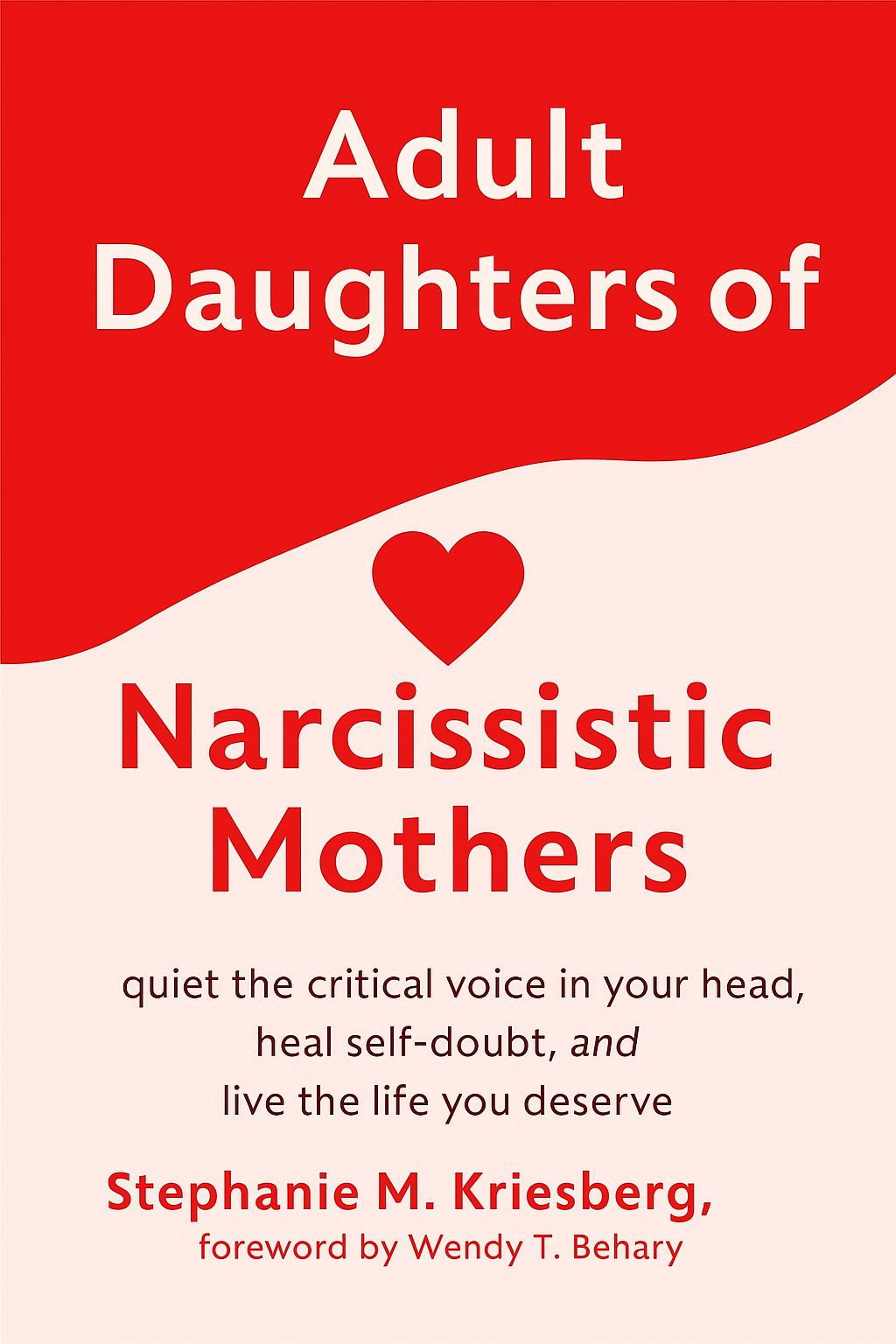
Adult Daughters of Narcissistic Mothers
Quiet the Critical Voice in Your Head, Heal Self-Doubt, and Live the Life You Deserve
byStephanie M. Kriesberg, Wendy T. Behary
Book Edition Details
Summary
Trapped in the relentless orbit of a narcissistic mother, many daughters find themselves battling invisible chains of self-doubt and anxiety. This transformative guide, penned by a psychologist well-versed in the labyrinth of narcissism, offers a lifeline to reclaim your identity. Dive into the proven strategies of cognitive, dialectical, and acceptance-based therapies, designed to silence the echo of that critical inner voice and ignite the courage to live life on your own terms. Here, you'll uncover a roadmap to healing that empowers you to foster genuine relationships, trust your instincts, and let go of the burdens of a toxic upbringing. If you’ve ever felt sidelined by a parent’s overpowering shadow, this book is your key to rediscovering the vibrant, unapologetic self you were always meant to be.
Introduction
Growing up with a narcissistic mother creates a unique psychological landscape that profoundly shapes a daughter's development and sense of self. The experience generates persistent patterns of self-doubt, emotional dysregulation, and relationship difficulties that extend far into adulthood. At the heart of this exploration lies a fundamental challenge: how daughters of narcissistic mothers can recognize the deep-seated impact of their upbringing while developing the tools necessary to reclaim their authentic identity and create meaningful connections with others. The examination proceeds through a systematic analysis that combines psychological research with practical therapeutic approaches. Rather than merely cataloging the damage inflicted by narcissistic parenting, the focus centers on understanding the specific mechanisms through which these patterns take hold and persist. The methodology draws from acceptance and commitment therapy, cognitive behavioral therapy, and mindful self-compassion to create a comprehensive framework for healing and growth. This therapeutic approach recognizes that breaking free from narcissistic influence requires more than simply understanding what went wrong. It demands developing new neural pathways, learning to trust one's inner voice, and acquiring skills that were never properly modeled during crucial developmental years. The journey involves confronting painful truths while simultaneously building the emotional resilience necessary to create a life aligned with authentic values rather than inherited dysfunction.
Understanding Narcissistic Mothering: Core Traits and Behavioral Patterns
Narcissistic mothers operate from a place of profound insecurity masked by grandiosity or overwhelming vulnerability. Their fundamental inability to develop a stable sense of self creates an emotional vacuum that their children are expected to fill. These mothers view their daughters not as separate individuals with unique needs and perspectives, but as extensions of themselves whose primary function is to regulate the mother's emotional state and bolster her fragile self-esteem. The narcissistic mother's relationship with reality becomes distorted by her desperate need for validation and control. She employs various forms of gaslighting that systematically undermine her daughter's ability to trust her own perceptions and feelings. This manipulation ranges from outright denial of events to subtle invalidation of emotions, creating a psychological environment where the daughter learns to doubt her most basic instincts and experiences. Two primary presentations emerge in narcissistic mothering: the grandiose type who demands center stage and expects special treatment, and the vulnerable type who appears fragile while manipulating through guilt and emotional dependency. Both variations share the core inability to provide genuine empathy or emotional attunement to their daughters' needs. The mother's emotional responses remain unpredictable and contingent upon her own internal state rather than the actual circumstances at hand. The absence of consistent emotional mirroring and validation during critical developmental periods creates lasting deficits in the daughter's capacity for self-regulation and self-worth. The daughter learns to prioritize the mother's needs above her own, developing hypervigilance to others' emotional states while losing touch with her own internal compass. This foundation of conditional love and emotional neglect shapes all subsequent relationships and life choices.
The Psychological Impact: How Daughters Internalize Dysfunction
Daughters of narcissistic mothers develop what can be understood as an internalized critical voice that perpetually judges, minimizes, and undermines their authentic self-expression. This inner critic represents a psychological survival mechanism that helped navigate the unpredictable emotional terrain of their childhood home. The daughter learned to anticipate criticism and rejection by becoming her own harshest judge, hoping to avoid the painful experience of maternal disapproval or abandonment. The process of internalization occurs through repeated exposure to invalidating messages about the daughter's worth, competence, and right to exist as a separate individual. These messages become embedded in the daughter's developing sense of self, creating persistent patterns of shame, self-doubt, and perfectionism. The daughter's emotional experiences were consistently dismissed, criticized, or used to serve the mother's needs rather than being acknowledged and validated as important in their own right. Repetitive negative thinking patterns emerge as the adult daughter's mind attempts to gain control over situations that feel threatening or uncertain. The brain's threat detection system remains chronically activated, scanning for signs of rejection, criticism, or abandonment. This hypervigilance exhausts cognitive resources and prevents the daughter from fully engaging with present-moment experiences, keeping her trapped in cycles of worry about future disasters or rumination about past failures. The emotional dysregulation that characterizes many daughters stems from never having learned appropriate skills for identifying, tolerating, and responding to difficult emotions. Instead of developing internal emotional regulation capacities, the daughter learned to manage her mother's emotions while suppressing or dismissing her own. This creates ongoing difficulties with boundary-setting, assertiveness, and maintaining healthy relationships throughout adulthood.
Healing Strategies: From Self-Doubt to Self-Compassion
The journey toward healing begins with developing awareness of the internalized patterns while simultaneously cultivating a stance of compassionate curiosity rather than harsh judgment. Self-compassion provides the emotional safety necessary to examine painful experiences without becoming overwhelmed by shame or self-blame. This involves learning to speak to oneself with the same kindness and understanding that would be offered to a dear friend facing similar struggles. Mindfulness practices create the foundation for observing thoughts and emotions without automatically believing or acting upon them. The daughter learns to recognize the difference between her authentic inner voice and the internalized critical voice of her mother. This distinction becomes crucial for making decisions based on personal values rather than fear of disapproval or perfectionist expectations that can never be satisfied. Acceptance and commitment therapy principles help daughters move toward valued living even while experiencing difficult emotions. Rather than trying to eliminate anxiety, shame, or anger, the focus shifts to developing psychological flexibility – the ability to experience the full range of human emotions while taking actions aligned with what truly matters. This approach recognizes that painful emotions often contain important information about values and needs that have been suppressed. The development of emotional intelligence involves learning to identify, label, and respond appropriately to the full spectrum of emotional experiences. Many daughters must essentially reparent themselves, providing the emotional attunement and validation they never received. This includes learning to set boundaries, express needs clearly, and trust their own judgment even when others disagree or express disapproval.
Rebuilding Relationships: Setting Boundaries and Creating Authentic Connections
Creating healthy relationships requires developing the capacity to maintain a stable sense of self while remaining emotionally available to others. For daughters of narcissistic mothers, this means learning to resist the familiar pull toward caretaking roles or emotional fusion that characterized their early family dynamics. Healthy relationships involve mutual respect, reciprocity, and the ability to maintain individual identity within the context of connection. Boundary-setting becomes a critical skill that many daughters must learn from scratch, having grown up in environments where boundaries were routinely violated or dismissed as selfish. Learning to say no without guilt, to express preferences without apology, and to maintain limits even when others react negatively requires developing tolerance for others' disappointment or anger. This process involves recognizing that other people's emotions are not the daughter's responsibility to manage or fix. The ability to create authentic connections depends upon developing trust in one's own perceptions and judgments while remaining open to feedback and different perspectives. This balanced approach allows for genuine intimacy without the fear of losing oneself in the relationship. The daughter learns to share her authentic experiences while also respecting others' autonomy and separate emotional reality. Recovery involves grieving the mother-daughter relationship that never was while potentially maintaining some form of contact with the narcissistic mother if desired. This complex process requires developing realistic expectations about what the mother can and cannot provide while protecting oneself from ongoing manipulation or abuse. Some daughters choose limited or no contact, while others learn to interact with their mothers from a place of emotional detachment and clear boundaries.
Summary
The path from narcissistic family dysfunction to authentic self-expression requires courage to question long-held beliefs about oneself while developing new capacities for emotional regulation and healthy relationship dynamics. Healing occurs not through eliminating all traces of the difficult past, but through developing the psychological flexibility to respond to life's challenges from a place of self-compassion and clear values rather than fear and shame. This transformation represents a fundamental shift from living reactively based on inherited patterns to living proactively based on conscious choice and authentic self-knowledge.
Related Books
Download PDF & EPUB
To save this Black List summary for later, download the free PDF and EPUB. You can print it out, or read offline at your convenience.
By Stephanie M. Kriesberg
