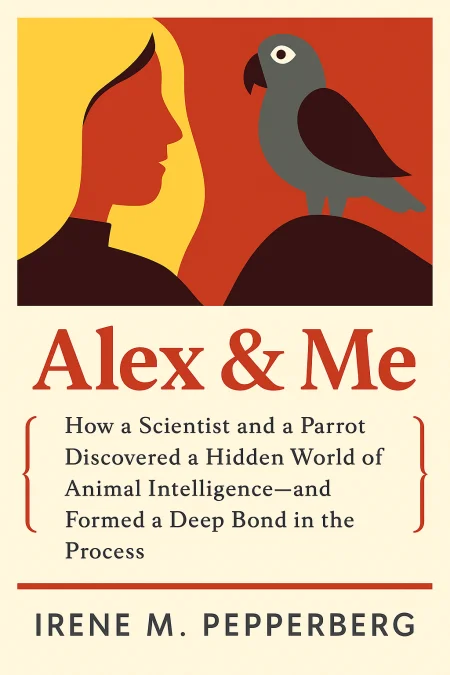
Alex & Me
How a Scientist and a Parrot Discovered a Hidden World of Animal Intelligence – and Formed a Deep Bond in the Process
Book Edition Details
Summary
In a world where science often dismisses the intelligence of animals, Dr. Irene Pepperberg's memoir, "Alex & Me," shatters these preconceived notions through the extraordinary tale of her bond with Alex, an African Grey parrot who defied scientific boundaries. This captivating narrative weaves together groundbreaking research and a touching friendship, revealing Alex's remarkable ability to understand and communicate complex ideas. As Pepperberg recounts their shared journey, readers are invited into a realm where love and intellect converge, challenging our perceptions of both animal intelligence and human connection. This heartfelt account is more than just a scientific triumph; it's a celebration of an irreplaceable companion who forever changed the landscape of cognitive research.
Introduction
In the quiet hours of an evening laboratory, a remarkable conversation was taking place between two unlikely partners. One was a distinguished scientist who had dedicated her life to understanding the mysteries of animal intelligence. The other was a small, gray-feathered African Grey parrot whose extraordinary abilities would challenge everything the scientific world thought it knew about the minds of non-human animals. This is the story of Dr. Irene Pepperberg and Alex, a partnership that spanned three decades and revolutionized our understanding of animal cognition. Their journey together began with a simple question: could a bird with a brain the size of a walnut truly understand and use human language, or was it merely mimicking sounds without comprehension? What emerged was far more profound than either could have imagined. Alex didn't just learn words; he demonstrated concepts of color, shape, numbers, and even abstract thinking that scientists believed were uniquely human. Through their extraordinary relationship, readers will discover the patience required for groundbreaking scientific research, the emotional bonds that can form between species, and the profound lessons about intelligence, consciousness, and our place in the natural world. This is both a scientific adventure and a deeply personal story of friendship, loss, and the transformative power of open minds meeting across the boundaries of species.
From Isolation to Scientific Awakening
Irene Pepperberg's path to revolutionizing animal cognition research began in the most unlikely of circumstances. Growing up as an only child in Brooklyn during the 1950s, she found herself desperately lonely, with parents who were emotionally distant and no neighborhood children to befriend. Her salvation came in the form of a small green parakeet, a birthday gift from her father when she was just four years old. This tiny creature became her constant companion, someone to talk to during the long, solitary days of childhood. The bond with her unnamed parakeet opened Irene's eyes to something profound about the intelligence of birds. While other children played with toys, she spent hours conversing with her feathered friend, organizing buttons by color and pattern, or sitting together at the typewriter where the bird would ride the carriage as she typed. Even at that young age, she sensed that something deeper was happening in these interactions, though she lacked the vocabulary to express it. Years later, as a chemistry graduate student at Harvard, Irene's life took an unexpected turn when she encountered the pioneering work being broadcast on NOVA television programs. Researchers were successfully communicating with dolphins and chimpanzees, demonstrating cognitive abilities that challenged long-held assumptions about animal intelligence. The moment she witnessed these breakthroughs, Irene experienced what she would later describe as an instantaneous recognition of her true calling. Despite having no formal training in animal behavior or psychology, and facing skepticism from colleagues who couldn't understand why a talented chemist would abandon a secure career path, Irene made the bold decision to pursue this uncharted territory. She understood intuitively that birds, with their capacity for vocal learning and complex social behaviors, might hold keys to understanding animal cognition that had been overlooked by the scientific establishment. This leap of faith would set the stage for one of the most significant partnerships in the history of animal research.
Alex's Remarkable Cognitive Achievements
When Alex first arrived at the laboratory in 1977, he was a traumatized, one-year-old African Grey parrot who had just been plucked from his flock and thrust into an alien world of humans and scientific equipment. His early days were marked by fear, broken feathers, and a desperate wariness of his new environment. Yet within this frightened creature lay an intelligence that would astonish the scientific world and challenge fundamental assumptions about the nature of mind and consciousness. Alex's first breakthrough came within weeks of beginning his training with Irene's revolutionary model-rival technique. Unlike traditional methods that isolated animals in sterile boxes, this approach used two human trainers who took turns asking each other questions about objects, creating a rich social context for learning. When Alex finally produced his first intentional vocalization, clearly requesting "paper" to clean his beak after eating messy fruit, it marked the beginning of a cognitive journey that would span three decades. As Alex's abilities expanded, so did the complexity of his achievements. He learned not just to label objects, but to understand abstract concepts like color, shape, and number. When presented with a blue wooden triangle and asked "What color?" or "What shape?", Alex demonstrated true comprehension by providing the appropriate categorical response. Perhaps most remarkably, he developed his own creative solutions to communication challenges, inventing the word "banerry" for apple by combining "banana" and "cherry" when the fruit's taste and appearance reminded him of both familiar foods. Alex's mathematical abilities proved equally astonishing. He mastered addition problems, understood the concept of zero by using "none" appropriately, and demonstrated equivalence by recognizing that the Arabic numeral six represents the same quantity as six physical objects. These achievements placed him on par with young children and chimpanzees in cognitive testing, all while possessing a brain weighing less than one-thirtieth that of a chimp. Through patience, repetition, and genuine intellectual engagement, Alex had proven that intelligence takes many forms throughout the animal kingdom.
Breaking Barriers in Animal Intelligence Research
The scientific establishment of the 1970s and 1980s was not ready for Alex. Rooted in behaviorist doctrine that viewed animals as mindless automatons responding to stimuli, the academic world initially dismissed Irene and Alex's work as mere mimicry or unconscious cuing. When Irene submitted their first research paper to the prestigious journal Science, it was rejected without even being sent to peer reviewers. The editor deemed it "not of significant interest," reflecting the deep-seated bias against the possibility of genuine animal cognition. This resistance wasn't merely scientific skepticism; it represented a fundamental challenge to humanity's perceived uniqueness. For centuries, Western thought had placed humans at the apex of creation, separated from all other life forms by our supposedly exclusive possession of language, consciousness, and abstract reasoning. Alex's demonstrations of these very abilities in a bird brain the size of a walnut threatened this comfortable hierarchy. Each time skeptics moved the goalposts, claiming birds couldn't possibly understand concepts or demonstrate reasoning, Alex proved them wrong with methodical precision. The breakthrough came gradually, as Irene's rigorous scientific methodology made their findings impossible to ignore. By the 1990s, Alex was appearing on national television, demonstrating his abilities to amazed audiences and fellow scientists alike. His clear articulation of responses to questions about color, number, and category showed unambiguous evidence of understanding. When Alan Alda worked with Alex on Scientific American Frontiers, even this experienced science communicator was visibly stunned by the parrot's cognitive capabilities. The broader implications of Alex's achievements extended far beyond a single remarkable bird. His success opened doors for a new generation of animal cognition research, challenging scientists to reconsider the mental lives of creatures from dolphins to elephants to crows. The work helped establish that intelligence is not a uniquely human trait but rather exists on a spectrum throughout the animal kingdom, manifesting in ways shaped by each species' evolutionary history and ecological needs. This paradigm shift has profound implications for how humans understand their place in nature and their responsibilities toward other conscious beings.
Legacy of Love and Scientific Revolution
Alex's sudden death in September 2007 sent shockwaves through both the scientific community and the general public. His passing made international headlines, with obituaries appearing in major newspapers and magazines worldwide. The outpouring of grief was extraordinary, with thousands of people writing to express how Alex had touched their lives and changed their understanding of animal intelligence. For many, Alex had become a ambassador for the hidden cognitive world of non-human animals, proving that consciousness and intelligence extend far beyond the human species. The emotional impact of Alex's loss revealed the profound bond that had developed between the parrot and his human partner. Despite Irene's attempts to maintain scientific objectivity, thirty years of daily collaboration had created a relationship of genuine affection and mutual respect. Alex's final words to her, "You be good. I love you," became a poignant testament to the authentic emotional connection that can exist between species. His death forced Irene to confront the depth of their bond and the personal cost of scientific dedication. Beyond the personal grief, Alex's legacy continues to influence scientific understanding and public perception of animal minds. His achievements demonstrated that the capacity for language-like communication, numerical reasoning, and abstract thought are not uniquely human traits but represent different expressions of intelligence that have evolved throughout the animal kingdom. This recognition has led to more humane treatment of animals in research, education, and daily life, as people begin to acknowledge the rich inner lives of creatures once dismissed as mere automatons. Perhaps most importantly, Alex's story challenges us to reconsider humanity's relationship with the natural world. Rather than standing apart from and superior to other species, his legacy suggests we are part of an interconnected web of conscious beings, each contributing unique forms of intelligence to the tapestry of life on Earth. His work opened windows into minds we never knew existed, revealing the profound beauty and complexity of consciousness in all its forms. In teaching us about the depths of his own remarkable mind, Alex ultimately taught us about the limitations of our own assumptions and the vast mysteries that still await discovery in the minds of our fellow creatures.
Summary
Alex's greatest gift to humanity was not simply proving that animals can think, but demonstrating that intelligence, consciousness, and emotional depth exist throughout the natural world in forms we are only beginning to understand. His partnership with Irene Pepperberg revealed that the boundaries between human and animal minds are far more porous than previously imagined, challenging us to expand our definition of what it means to be conscious and intelligent. From Alex's journey, we learn the transformative power of patient observation, open-minded inquiry, and the courage to challenge established beliefs even in the face of professional ridicule. His story reminds us that breakthrough discoveries often come from unexpected partnerships and that the most profound truths may be found in the most humble circumstances. For anyone interested in the mysteries of consciousness, the ethics of animal treatment, or the ongoing revolution in our understanding of non-human minds, Alex's legacy offers both inspiration and a call to deeper respect for the intelligence that surrounds us in nature.
Related Books
Download PDF & EPUB
To save this Black List summary for later, download the free PDF and EPUB. You can print it out, or read offline at your convenience.
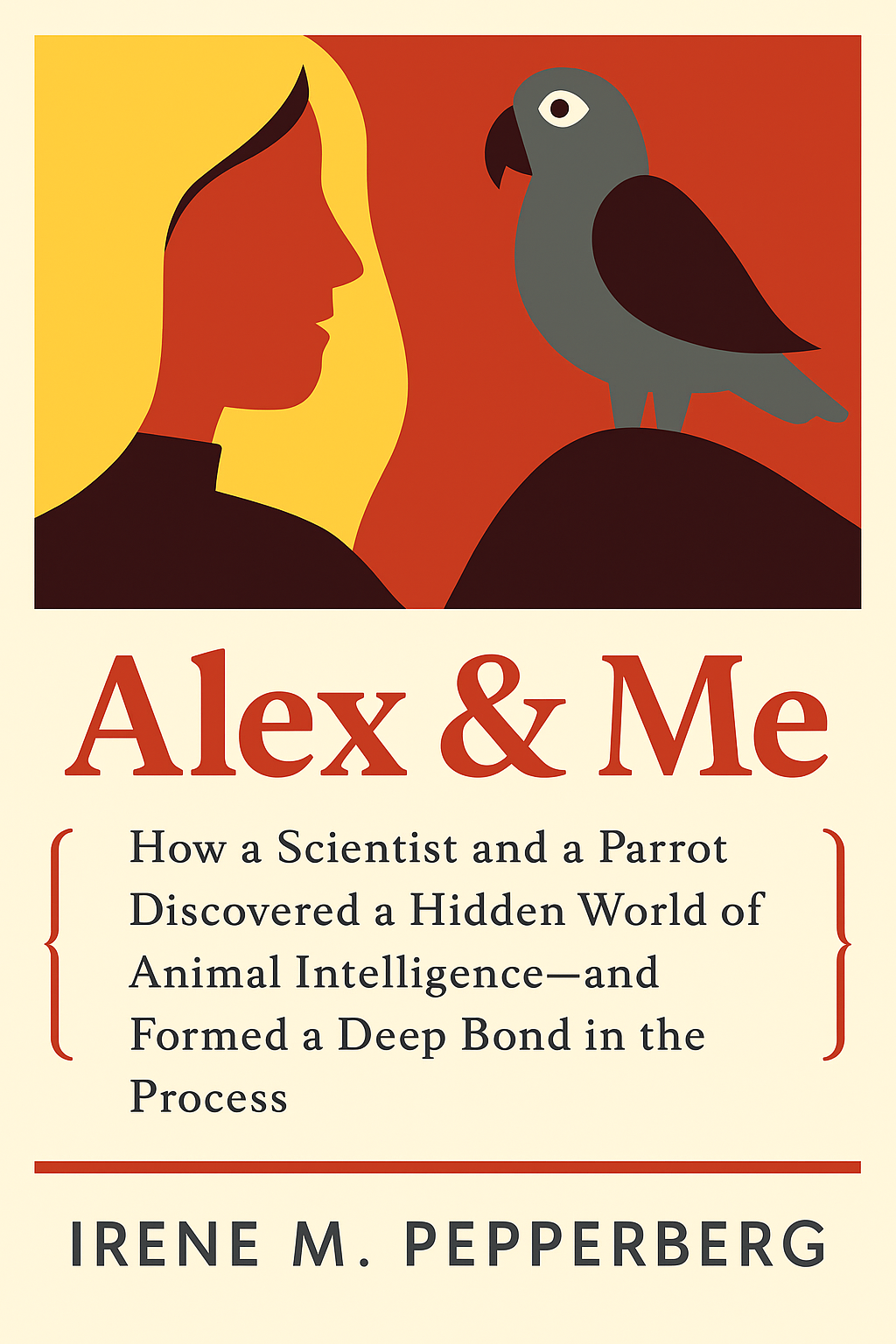
By Irene M. Pepperberg
