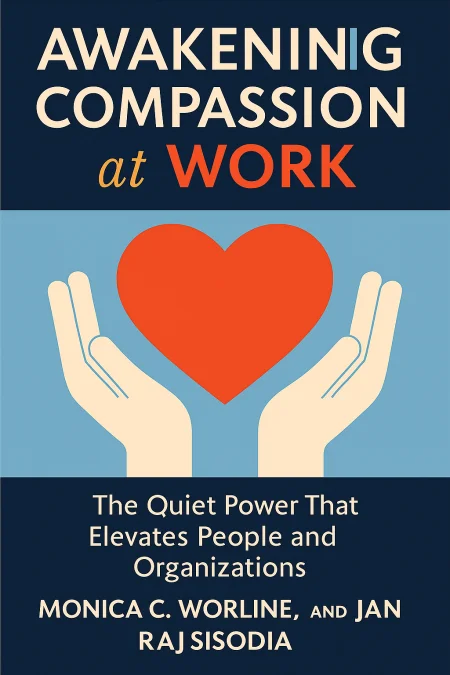
Awakening Compassion at Work
The Quiet Power That Elevates People and Organizations
byJane E. Dutton, Monica C. Worline, Raj Sisodia
Book Edition Details
Summary
In the bustling corridors of corporate life, where ambition often trumps empathy, Monica Worline and Jane Dutton present a transformative blueprint in "Awakening Compassion at Work." Drawing from twenty years of meticulous research, they unravel a profound truth: compassion isn't merely a noble ideal but a strategic asset. Their work reveals how a culture of empathy can catalyze innovation, enrich collaboration, and bolster talent retention, ultimately redefining organizational excellence. Through a compelling four-step framework, this guide empowers leaders to weave compassion into the very fabric of their companies, proving that caring is not just an ethical choice but a powerful competitive advantage. Prepare to challenge the status quo and unlock the full potential of human capability in your workplace.
Introduction
Sarah had always prided herself on running a tight ship. As the billing manager for a busy healthcare system, she valued efficiency above all else. Her team processed hundreds of insurance claims daily, and there was little room for error or delay. But on a particularly hectic Monday morning, something shifted her perspective forever. Dorothy, one of her most reliable employees, sat hunched behind a mountain of mail envelopes, her usual cheerful demeanor nowhere to be found. Instead of her typical morning greeting, Dorothy worked in unusual silence, her movements mechanical and distant. As Sarah watched other team members quietly gather around Dorothy's desk, each picking up letter openers without being asked, she witnessed something remarkable. In the span of thirty minutes, what would have taken Dorothy half a day was completed through the seamless collaboration of her colleagues. No words were exchanged, no formal requests made. The team had simply recognized suffering and responded with quiet, coordinated compassion. This moment of witnessing unveiled a hidden dimension of workplace life that most of us rarely discuss or acknowledge. While we spend over 100,000 hours of our lives at work, we often compartmentalize our humanity, believing that emotions, care, and genuine concern for one another have no place in professional settings. Yet beneath the surface of every organization flows an undercurrent of human experience, complete with loss, struggle, triumph, and the profound need for connection and support. The stories and research that follow reveal how compassion at work is not just a nice-to-have quality, but a fundamental driver of organizational success, employee engagement, and human flourishing. Through real accounts of individuals and companies who have embraced this quiet power, we discover that when we allow ourselves to truly see and respond to each other's struggles, we unlock extraordinary potential for both personal transformation and organizational excellence.
The Hidden Cost of Suffering in Organizations
When Xian arrived at work the morning after receiving devastating news about his sister's death in China, his manager Andy faced a choice that his MBA training had never prepared him for. Xian, typically one of their most engaged engineers, sat unusually quiet during the team meeting, his usual contributions absent. During the coffee break, Andy approached him with simple concern, asking if everything was okay. What followed was an outpouring of grief that shattered the boundary between personal and professional life. Xian's sister had been killed in a tragic accident while preparing to study in the United States. Feeling lost and drawn to the familiar comfort of work routines, Xian had chosen to attend the meeting rather than stay home with his grief. The technical discussions provided temporary relief from the waves of memory and loss that otherwise consumed him. Andy listened, then made a series of decisions that would ripple through their workplace culture. He offered flexible time off, opened his own home to Xian if needed, and created space for genuine human connection in the midst of professional demands. This story illuminates a reality that exists in every workplace but is rarely acknowledged: suffering is everywhere. It flows in from outside our office walls through divorce, illness, financial pressure, and family loss. It also springs up from within organizations themselves through downsizing, overwhelming workloads, toxic relationships, and feelings of being undervalued or misunderstood. Yet most workplace cultures maintain a silence around these struggles, expecting employees to compartmentalize their humanity and show up as perfectly functioning professional units. The research reveals that this silence comes at a tremendous cost. When we ignore suffering at work, we create environments where people cannot bring their full selves to their roles. Employee engagement plummets, creativity withers, collaboration suffers, and the very human capabilities that drive organizational success begin to deteriorate. Organizations that perpetuate suffering through indifference or neglect find themselves trapped in cycles of turnover, burnout, and diminished performance that ultimately impact their bottom line and their ability to fulfill their mission in the world.
Individual Stories of Compassion at Work
At a law firm where dreams of advancement seemed distant, Juana worked as a copy clerk while harboring aspirations of becoming a paralegal. She spent her days running errands and operating copying machines, but her mind often wandered to the legal books she delivered and the important work happening in the offices above her basement locker. When personal financial pressures began mounting, her usually reliable performance started to slip. Simple tasks like making the correct number of copies became sources of error, frustrating both Juana and the paralegals who depended on her work. Rosita, one of the paralegals Juana hoped to emulate, grew increasingly impatient with these mistakes. Their supervisor Veronica noticed the tension building between them and chose to intervene before the situation deteriorated further. Rather than simply addressing the performance issues through formal channels, Veronica engaged both women in a conversation that revealed the human story beneath the workplace friction. When Juana finally shared her struggles with childcare, transportation, and basic necessities, the dynamic shifted completely. What emerged was a network of support that transformed not only Juana's immediate circumstances but the entire office culture. Rosita, drawing from her own family's immigrant experience, provided groceries and gas money anonymously. Colleagues began offering rides and childcare assistance. The office fast-track program, which had seemed impossibly out of reach for someone in Juana's position, suddenly became a real possibility with Rosita's mentorship and recommendation. This transformation began with the simple act of one person choosing to notice another's struggles and respond with curiosity rather than judgment. Veronica's willingness to dig beneath surface-level performance issues, Rosita's capacity to connect Juana's situation with her own family's journey, and the collective response of their workplace community demonstrated how individual acts of attention and care can create ripple effects that benefit everyone involved. When we allow ourselves to see the whole person behind the role, we often discover that addressing human needs simultaneously solves organizational challenges in ways that purely procedural approaches cannot achieve.
Building Compassionate Organizations Through Social Architecture
TechCo's response to Zeke's devastating bicycle accident revealed how entire organizations can be designed to respond to human crisis with remarkable competence and care. When Zeke lost control of his bike during what should have been a peaceful afternoon ride, suffering a traumatic injury that left him hospitalized for months, his workplace transformed into a coordinated network of support that spanned continents and organizational levels. Within hours of the accident, Zeke's colleagues had mobilized resources that went far beyond typical employee assistance programs. His manager Avi immediately alerted executives across the global company, triggering a cascade of responses that included everything from direct financial support to customized equipment for Zeke's eventual return to work. The vice president of European operations called Zeke's family personally, offering not just condolences but concrete assistance. When experimental treatments offered hope for Zeke's recovery, the organization activated vacation-time donation policies, matched employee contributions, and secured additional funding from corporate headquarters. What made TechCo's response extraordinary was not just its generosity, but its systematic competence. The company had built what researchers call a "social architecture" that enabled rapid, coordinated, and sustained compassionate action. Their network structures allowed information to flow quickly across divisions and geographical boundaries. Cultural values that emphasized "winning together" and "caring for each other" provided a framework for interpreting employee crises as organizational priorities. Roles were designed to include responsibility for colleague wellbeing, and routines existed for converting employee donations into meaningful assistance. The result was a pattern of support that was simultaneously immediate and sustained, broad in scope and deeply customized to Zeke's changing needs. As his condition evolved from emergency treatment to rehabilitation to eventual return to work, the organization continuously adapted its response. They created a special workstation for his physical therapy facility, arranged for modified work assignments that didn't require travel, and even organized a Hanukkah celebration for his rehabilitation center when they learned there wouldn't be one otherwise. This level of organizational compassion doesn't happen by accident. It requires intentional design of systems, structures, and processes that make it easier for people to notice suffering, interpret it generously, feel empathy, and coordinate effective responses. When organizations build this kind of social architecture, they create environments where human flourishing and business success become mutually reinforcing rather than competing priorities.
Leading Change and Overcoming Obstacles
Julie Morath's leadership at Children's Hospital demonstrated how courageous leaders can transform entire organizational cultures by refusing to accept harmful norms as inevitable. When she became chief operating officer, medical errors were rarely discussed openly in healthcare settings. The prevailing culture treated mistakes as individual failures rather than system problems, creating environments where fear of blame prevented the honest communication necessary for learning and improvement. This silence came at a tremendous human cost. Julie carried with her the memory of a four-year-old patient who died from an anesthesia error thirty years earlier. The tragedy had ripple effects that extended far beyond the child and family. The nurse who felt responsible never returned to work, abandoning a career she loved due to overwhelming guilt. Doctors and other staff members retreated into emotional isolation, never discussing what happened or learning from the experience. The organizational response to this tragedy had actually amplified the suffering rather than providing healing and growth. As a leader, Julie chose to use this painful memory as fuel for transformation rather than simply accepting it as the inevitable cost of medical practice. She set an aspirational goal that seemed impossible at the time: 100 percent patient safety. More importantly, she worked with others to create new routines and cultural norms that would make this goal achievable. They instituted "blameless reporting" processes based on the assumption that everyone in the hospital was acting with good intentions and striving for excellent patient care. This approach encouraged examination of errors and near-misses as opportunities for learning rather than occasions for punishment. The transformation required sustained effort to overcome deeply entrenched obstacles. Staff members had to learn new ways of interpreting mistakes and failures, moving from blame to curiosity. Leaders had to model vulnerability by acknowledging their own errors and demonstrating that honesty about problems would be met with support rather than retaliation. The organization had to redesign systems and processes to make it easier for people to speak up about concerns and coordinate responses to potential safety issues. Julie's example illustrates how leaders can become architects of compassion by refusing to accept cultures that perpetuate suffering, even when those cultures are deeply embedded in professional norms and industry practices. By combining personal courage with systematic change efforts, leaders can create organizations where human wellbeing and mission fulfillment work together rather than in opposition to each other.
Summary
The stories woven throughout these pages reveal a profound truth about human nature and organizational life: our capacity for compassion is not a luxury or weakness, but a fundamental strength that drives both individual flourishing and collective success. From Sarah's billing department to Julie's hospital, from TechCo's global response to Zeke's crisis to the quiet moments of recognition between colleagues like Andy and Xian, we see how acknowledging and responding to human suffering transforms workplace cultures in ways that benefit everyone involved. The research and real-world examples demonstrate that compassion at work operates on multiple levels simultaneously. At the individual level, it requires developing skills of attention, generous interpretation, empathic connection, and skillful action. At the organizational level, it demands intentional design of social architectures that make it easier for people to see each other's struggles, feel connected across differences, and coordinate effective responses to human needs. Perhaps most importantly, these stories reveal that compassion and excellence are not competing values but mutually reinforcing forces. Organizations that build competence in responding to human suffering consistently outperform their peers in measures of innovation, employee engagement, customer loyalty, and financial resilience. When we create workplaces where people can bring their full humanity to their roles, we unlock levels of creativity, collaboration, and commitment that purely transactional approaches cannot achieve. The quiet power of compassion at work lies not in its gentleness, but in its capacity to transform both individual lives and organizational cultures in ways that create sustainable success and human dignity.
Related Books
Download PDF & EPUB
To save this Black List summary for later, download the free PDF and EPUB. You can print it out, or read offline at your convenience.
By Jane E. Dutton
