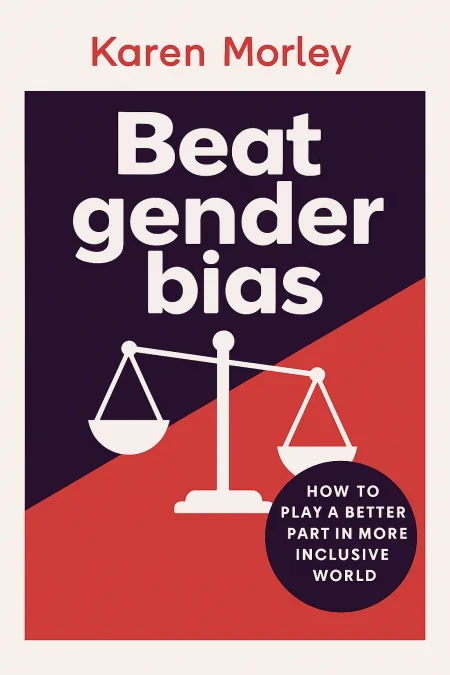
Beat Gender Bias
How to Play a Better Part in a More Inclusive World
Book Edition Details
Summary
In the labyrinth of leadership, unseen forces often tether progress, especially for women striving for the summit. "Beat Gender Bias" by Dr. Karen Morley dives deep into the mind's hidden prejudices—those stealthy biases that, like shadowy tricksters, derail our best intentions. Dr. Morley unveils the subtle yet potent biases that form a 'sticky floor,' hindering women's ascent in their careers. She provides a toolkit of "Bias Busters," actionable strategies designed to disrupt these patterns and foster a culture of inclusion. This book is a rallying cry for leaders and allies alike, inviting them to dismantle the barriers of sexism and craft workplaces that not only value gender balance but thrive because of it. A must-read for anyone eager to transform intention into action and lead a charge towards a more equitable future.
Introduction
Imagine walking into a boardroom where every voice is heard, every perspective valued, and every individual can reach their full potential regardless of gender. This isn't just an idealistic dream—it's an achievable reality that forward-thinking leaders are creating today. The workplace transformation we desperately need isn't about quick fixes or surface-level policies. It's about fundamentally rewiring how we think, decide, and act when it comes to gender equality. The stakes couldn't be higher: organizations that fail to address gender bias aren't just missing out on talent, they're setting themselves up for obsolescence in an increasingly diverse world. The good news? The roadmap to inclusive leadership already exists, and it starts with understanding the invisible forces that shape our decisions and learning to outsmart them at every turn.
Recognize and Challenge Unconscious Bias
Unconscious bias operates like a hidden operating system in our minds, processing millions of bits of information while our conscious awareness handles only about forty pieces per second. This mental shortcut system, designed to help us navigate complex decisions quickly, often leads us astray when it comes to evaluating people and potential. Consider Karen's own moment of reckoning at an airport concourse. Walking behind two pilots, she noticed a significant height difference between the male and female aviators. Her immediate, unconscious thought was startling: "She can't be a pilot, she's not strong enough." This reaction came despite Karen's conscious commitment to gender equality and her genuine excitement about seeing women in non-traditional roles. The realization was both uncomfortable and enlightening—even advocates for inclusion can harbor unconscious associations that contradict their stated beliefs. This experience perfectly illustrates how our brains categorize people based on group characteristics rather than individual capabilities. Karen's unconscious mind had automatically associated physical strength with piloting ability, and male characteristics with competence, despite knowing rationally that piloting requires skill, training, and mental acuity rather than physical prowess. The key insight wasn't to feel shame about this unconscious response, but to use it as a catalyst for growth and awareness. The most effective way to combat unconscious bias is to slow down our decision-making process, especially when evaluating people. When we don't have clear criteria, feel pressed for time, or face ambiguous information, our unconscious shortcuts take over. Instead, we must deliberately create structured, transparent processes that force us to consider individual merit rather than group assumptions. This means implementing blind resume reviews, diverse interview panels, and clear competency frameworks that focus on actual job requirements rather than traditional expectations. Start by acknowledging that bias isn't a character flaw but a human reality. Take the Implicit Association Test to understand your own unconscious patterns. Then commit to questioning your first impressions, seeking contradictory evidence, and creating accountability systems that help you make fairer decisions consistently.
Champion Gender Balance Through Leadership
True champions of gender balance aren't born—they're forged through personal experiences of difference and a deep commitment to leaving a meaningful legacy. The most powerful advocates often emerge from their own encounters with exclusion or their recognition of systemic unfairness that demands action. Nick Marinelli's transformation from CEO to champion illustrates this journey perfectly. His motivation stemmed from two pivotal experiences: his early years as a builder's laborer where he witnessed firsthand how education and opportunity could transform lives, and a later revelation about the systematic barriers facing women in his engineering-focused company. The turning point came during a workshop for female engineering graduates when Nick discovered that some managers weren't supporting women's attendance at professional development sessions, and that basic safety equipment wasn't available in appropriate sizes for women workers. One female graduate described her experience of rolling up oversized sleeves and pant legs, looking "like the Michelin Man" on construction sites. This wasn't just about comfort—it was about belonging and professional credibility. Nick realized that despite his organization's stated commitment to equality, women were encountering invisible obstacles that prevented them from succeeding. The revelation sparked his determination to embed diversity into the company's DNA rather than treat it as an add-on initiative. Nick's approach focused on integration rather than isolation. Instead of implementing diversity as a standalone program, he wove it into the broader business strategy, making it easier for managers to understand why change mattered and what success looked like. He tracked concrete metrics, celebrated progress publicly, and maintained focus over years rather than months. The result was measurable change: women's representation in the company's Rising Star awards shifted from zero to one-third of nominees. The key to sustainable championship lies in connecting diversity goals to business outcomes and personal values. Champions don't just talk about inclusion—they embed it in organizational systems, hold themselves accountable for results, and persist through inevitable challenges. They understand that changing culture requires changing conversations, one interaction at a time.
Build Inclusive Cultures That Drive Performance
Inclusive cultures aren't accidents—they're carefully constructed environments where both warmth and competence flourish together. The magic happens when organizations move beyond either masculine contest cultures or overly polite environments to create spaces where everyone can contribute their best work. Research on offshore oil rigs provides a surprising example of cultural transformation in action. These traditionally hyper-masculine environments were plagued by high accident rates and competitive dynamics that prioritized individual toughness over collective safety. Leadership decided to fundamentally restructure the culture, focusing workers on learning, mistake acknowledgment, and mutual support rather than proving individual strength and dominance. The transformation required workers to publicly admit physical limitations, openly acknowledge mistakes, and actively attend to others' emotional needs. These behaviors directly contradicted traditional masculine norms, yet they produced remarkable results. The participating oil rigs achieved an eighty-four percent reduction in accident rates while simultaneously improving productivity, efficiency, and reliability beyond industry benchmarks. Even more striking, worker relationships strengthened, and overall job satisfaction increased. This example demonstrates that inclusive cultures aren't about weakening performance standards—they're about optimizing human potential by removing the energy drain of constant competition and status contests. When people feel psychologically safe, they contribute more creative ideas, take appropriate risks, and collaborate more effectively. The "contest" becomes about achieving the best possible outcomes rather than individual dominance. Building such cultures requires leaders who start with warmth before demonstrating competence. This means showing genuine care for team members' growth and wellbeing, actively listening to diverse perspectives, and creating systems that reward collective success over individual heroics. Leaders must also facilitate group dynamics that honor both individual uniqueness and shared goals, helping teams navigate differences constructively rather than avoiding them. The most successful inclusive leaders operate like skilled coaches, helping each person contribute their distinctive strengths while building team cohesion around common purposes.
Navigate Difficult Conversations with Confidence
The most challenging conversations about gender bias often occur when stakes and emotions are highest, yet these moments offer the greatest opportunities for meaningful change. Success depends not on perfect execution but on consistent engagement with curiosity, courage, and care. Consider the transformation at the BBC, where presenter Ros Atkins decided to address the stark gender imbalance among on-air contributors. In 2015, only nineteen percent of front-of-camera experts were women. Rather than waiting for organizational mandates or perfect conditions, Ros made a personal commitment to achieve fifty-fifty gender representation on his show. His team began collecting daily data on contributor demographics and made this information visible to track progress. The approach worked because it was simultaneously simple and systematic. The team didn't shame anyone or create complex procedures—they simply decided to act, measured their progress, and made adjustments based on evidence. Within four months, Outside Source achieved gender parity among contributors. More importantly, the success became contagious rather than compulsory. Other BBC programs observed the results and chose to implement similar approaches. By 2019, seventy-four percent of BBC's English-language shows featured fifty percent or more female contributors, representing a seventy-four percent increase in women's on-air representation. The transformation occurred through countless individual conversations, daily decisions, and persistent attention to data rather than dramatic policy changes or top-down mandates. The key principles that made this transformation possible apply to any difficult conversation about bias: decide to engage rather than avoid, make progress visible through concrete measures, and create momentum through example rather than enforcement. When approaching sensitive topics, establish psychological safety through curiosity and confidentiality, focus on specific behaviors rather than general attitudes, and maintain optimism about positive change. Successful difficult conversations require preparation, patience, and persistence. They're rarely resolved in single interactions but through sustained engagement over time, with each exchange building understanding and trust for the next.
Summary
Creating workplaces where gender bias cannot flourish requires both systematic change and daily courage. As this exploration reveals, "We are what we repeatedly do. Excellence, then, is not an act, but a habit." The transformation from biased to inclusive organizations happens through thousands of small decisions, conversations, and actions that collectively reshape culture and expand human potential. The evidence is clear: when we remove barriers and create truly inclusive environments, everyone rises. Organizations become more innovative, productive, and resilient. Individuals contribute more fully and experience greater satisfaction. Society benefits from the full utilization of human talent regardless of gender. Your next conversation, decision, or action could be the catalyst that transforms your workplace. The question isn't whether change is possible—it's whether you're ready to begin today.
Related Books
Download PDF & EPUB
To save this Black List summary for later, download the free PDF and EPUB. You can print it out, or read offline at your convenience.
By Karen Morley
