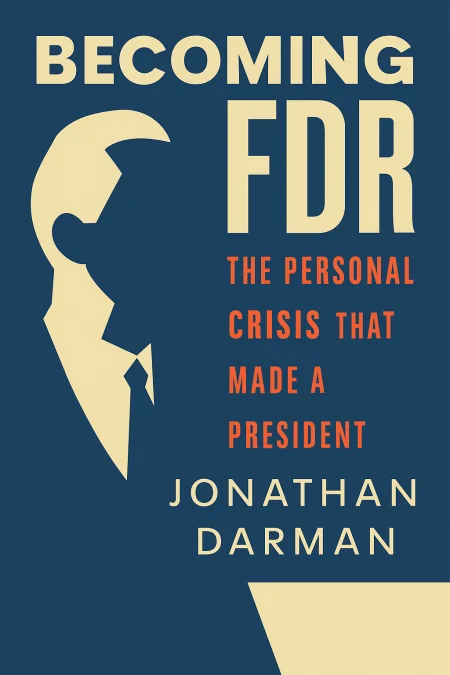
Becoming FDR
The Personal Crisis That Made a President
Book Edition Details
Summary
In the crucible of personal adversity, Franklin D. Roosevelt was reborn. Stripped of physical prowess by polio at 39, he emerged not defeated, but metamorphosed—a testament to resilience and reinvention. "Becoming FDR" unravels the profound journey of a man who, once a privileged scion, found depth and empathy through his trials. His newfound strength, honed by struggle, would galvanize a nation through despair and global conflict. This biography peels back layers of myth to reveal a leader shaped not by birthright but by hardship, capturing the poignant transformation that fueled his extraordinary ability to connect with the forgotten and steer America toward hope.
Introduction
In the summer of 1921, Franklin Delano Roosevelt was the embodiment of American political promise—a handsome, charismatic thirty-nine-year-old who had already served as Assistant Secretary of the Navy and run as the Democratic vice-presidential candidate. Then, in a single devastating moment at his family's retreat on Campobello Island, polio struck him down, paralyzing his legs and seemingly ending his political dreams forever. Yet this catastrophe would prove to be the crucible that forged America's most transformative president. Roosevelt's journey from privileged dilettante to inspirational leader reveals the profound ways that suffering can create greatness. Before polio, he was pleasant but shallow, ambitious but untested by real adversity. The disease stripped away his physical advantages and forced him to develop new sources of strength—patience, empathy, and an unshakeable faith in the possibility of renewal. Through this remarkable transformation, readers will discover how personal crisis can become the foundation for extraordinary leadership, how genuine hope emerges from honest confrontation with hardship, and how one man's private struggle to walk again became a nation's path toward recovery from the Great Depression.
The Privileged Politician: Roosevelt's Golden Youth and Early Promise
Franklin Roosevelt entered public life with every conceivable advantage. Born into Hudson Valley aristocracy in 1882, blessed with movie-star looks and a famous family name, he glided effortlessly through Harvard, marriage to his distant cousin Eleanor, and early political success. His charm opened doors, his confidence suggested destiny, and by 1920, at just thirty-eight, he had secured the Democratic vice-presidential nomination, seemingly following the same trajectory that had carried his cousin Theodore to the White House. Yet beneath this golden exterior lay troubling shallowness. Roosevelt's early political career was marked more by performance than substance. As a New York state senator, he made headlines opposing Tammany Hall corruption but passed no significant legislation. His seven years as Assistant Secretary of the Navy showcased administrative abilities but revealed a man more interested in appearing important than doing important work. He excelled at dinner parties and golf games, cultivating the image of a vigorous young leader while avoiding hard choices that might have tested his character. Roosevelt's personal life reflected the same pattern of surface charm masking deeper problems. His marriage to Eleanor had grown cold and distant, culminating in his affair with Lucy Mercer that nearly destroyed their union. He chose political ambition over love, ending the relationship to preserve his career prospects. Even his response to various political scandals showed a man willing to prioritize convenience over conscience, signing documents he hadn't carefully examined. The 1920 campaign exposed these limitations on a national stage. Despite his energy and enthusiasm, Roosevelt failed to articulate a compelling vision for America's future. His speeches were pleasant but forgettable, his policy positions shifted with political winds, and his attempts to channel Theodore Roosevelt's dynamism fell flat. When the Democratic ticket suffered a crushing defeat, many observers concluded that Franklin Roosevelt was exactly what his critics had always claimed: an attractive lightweight who lacked the depth and wisdom necessary for true leadership.
The Great Trial: Polio's Strike and the Fight for Recovery
On August 11, 1921, Roosevelt awoke at the family's summer cottage on Campobello Island feeling unusually tired after a day of sailing and fighting forest fires with his children. What began as apparent fatigue quickly escalated into a medical nightmare that would forever alter his life's trajectory. Within hours, he was wracked with fever and excruciating pain, unable to move his legs or control basic bodily functions. The vibrant, athletic man who had bounded through life with seemingly inexhaustible energy was suddenly helpless, confined to bed and dependent on others for his most basic needs. The initial medical response was catastrophically inadequate. The local doctor dismissed Roosevelt's condition as a mere cold, while a renowned surgeon misdiagnosed it as a blood clot and prescribed vigorous massage—exactly the wrong treatment that likely worsened the damage. For weeks, Roosevelt lay in agony on the remote island, his world shrinking to four bedroom walls while his family struggled to understand what was happening. When the correct diagnosis of infantile paralysis finally came, it brought both clarity and devastating implications for a man whose political ambitions had always depended on projecting strength and vitality. The journey back to New York became an elaborate exercise in concealment and stage management. Louis Howe, Roosevelt's devoted political adviser, orchestrated a complex deception to hide the extent of his disability from reporters and the public. Through careful positioning and strategic props—a cigarette placed in his hand, a hat covering his weakened fingers—they created the illusion of a man well on his way to recovery. The newspapers dutifully reported that Roosevelt would soon be walking with only a cane, then without any assistance at all. Behind the public facade, however, Roosevelt faced the grinding reality of his new existence. He spent months learning to navigate the world without the use of his legs, crawling across floors, being carried up and down stairs, and struggling with heavy steel braces that reminded him daily of his limitations. The man who had once leaped over chairs at political conventions now required assistance for the most basic movements. Yet even in these darkest moments, something profound was beginning to stir within him—a recognition that his old life was over and that whatever came next would require entirely new sources of strength and purpose.
Transformation Through Adversity: Finding Purpose in Warm Springs
Roosevelt's discovery of Warm Springs, Georgia, in 1924 marked a crucial turning point in his journey toward renewal. Drawn by stories of miraculous healing waters that had helped another polio victim regain the ability to walk, he arrived at the dilapidated resort with desperate hope for his own recovery. The warm, buoyant mineral springs did indeed provide remarkable relief—for the first time in three years, he could move his legs in the water and feel something approaching his old physical freedom. But Warm Springs would ultimately give him something far more valuable than the restoration of his mobility. What Roosevelt found at the resort was a community of fellow sufferers who looked to him for leadership and inspiration. Other polio patients had followed news reports of his progress and made their own pilgrimages to Georgia, creating an impromptu colony of the disabled seeking healing. Rather than focusing solely on his own recovery, Roosevelt threw himself into organizing their collective rehabilitation. He designed exercise routines, supervised therapy sessions, and created detailed charts tracking each patient's progress. In helping others, he discovered a new sense of purpose that transcended his personal struggle. The transformation was profound and multifaceted. Roosevelt developed genuine empathy for those facing hardship, replacing his earlier superficial concern for the less fortunate with deep understanding born of shared experience. He learned patience, spending hours in the pool working on exercises that might yield only marginal improvement. Most importantly, he discovered his remarkable ability to inspire hope in others, even when his own prospects remained uncertain. Patients at Warm Springs called him "Doctor Roosevelt" and looked to him not just for medical guidance but for the kind of optimistic leadership that made their struggles feel worthwhile. This period also saw Roosevelt develop the communication skills that would later make him the most effective presidential orator of the radio age. Confined to a seated position and unable to rely on physical presence to command attention, he learned to project strength and confidence through his voice alone. His speeches became more measured and thoughtful, his tone deeper and more reassuring. The man who had once depended on youthful energy and athletic grace was learning to lead through wisdom, compassion, and an unshakeable faith in the possibility of renewal—qualities that would prove essential when he faced a nation paralyzed by economic depression.
The Leader Emerges: From Personal Triumph to Presidential Greatness
By the time Roosevelt returned to active politics in 1928, accepting the Democratic nomination for Governor of New York, he was fundamentally transformed from the man who had been struck down by polio seven years earlier. The shallow, charming politician had been replaced by a leader of remarkable depth and resilience. His successful gubernatorial campaign, conducted largely from a seated position but with unprecedented energy and vision, demonstrated that his disability had not diminished his political effectiveness but had actually enhanced it in crucial ways. Roosevelt's years of struggle had taught him lessons that no amount of privilege or education could have provided. He understood suffering in a way that allowed him to connect authentically with ordinary Americans facing their own hardships. His patient work at Warm Springs had shown him the power of practical problem-solving and incremental progress—skills that would prove invaluable during the New Deal. Most importantly, his personal battle with despair had given him an unshakeable faith in the possibility of recovery and renewal, both for individuals and for nations. The presidency that began in March 1933 revealed the full extent of Roosevelt's transformation. Facing the worst economic crisis in American history, he brought to the White House not just political skill but hard-won wisdom about hope, perseverance, and the importance of trying new approaches when old ones failed. His famous fireside chats drew their power from his genuine understanding of fear and uncertainty, while his willingness to experiment with bold programs reflected the same spirit that had led him to try untested treatments for his paralysis. Roosevelt's disability, which had seemed to end his political career, ultimately became the source of his greatest strength as a leader. The man who had learned to find hope in the darkness of personal crisis was uniquely equipped to guide a nation through its own dark night of economic despair. His transformation from privileged dilettante to inspirational leader stands as one of history's most remarkable examples of how personal adversity, honestly confronted and courageously overcome, can become the foundation for extraordinary service to others. The polio that paralyzed his legs had freed his spirit and prepared him to become exactly the leader America needed in its hour of greatest need.
Summary
Franklin Roosevelt's journey from shallow politician to transformational president demonstrates that our greatest challenges often become the source of our most important contributions to the world. His struggle with polio stripped away the superficial advantages of youth, wealth, and physical vigor, forcing him to develop the deeper qualities of character—empathy, patience, resilience, and genuine hope—that would make him one of history's most effective leaders. Roosevelt's story teaches us that authentic leadership emerges not from privilege or natural gifts alone, but from the wisdom gained through honest confrontation with adversity and the choice to use our struggles in service of others. His example offers profound encouragement to anyone facing personal crisis, suggesting that what appears to be an ending may actually be the beginning of our most meaningful chapter. For leaders, activists, and anyone seeking to understand how personal transformation can serve the greater good, Roosevelt's metamorphosis provides a timeless blueprint for turning private pain into public purpose.
Related Books
Download PDF & EPUB
To save this Black List summary for later, download the free PDF and EPUB. You can print it out, or read offline at your convenience.
By Jonathan Darman
