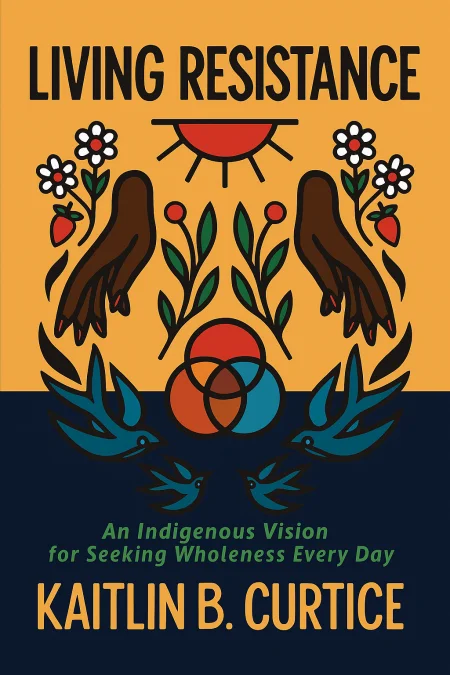
Living Resistance
An Indigenous Vision for Seeking Wholeness Every Day
Book Edition Details
Summary
Resistance isn't just a buzzword—it's a calling, a pulse, a heartbeat, urging us toward shared humanity and flourishing. Kaitlin Curtice, a voice of Indigenous wisdom, breathes new life into this idea, weaving a tapestry where personal empowerment meets collective liberation. "Living Resistance" unfolds as an invitation to explore the profound realms of personal, communal, ancestral, and integral resistance, each interwoven with the fibers of our daily lives. With echoes of Potawatomi traditions and global Indigenous teachings, Curtice invites readers to engage in acts of resistance that are as ordinary as they are extraordinary—resting, reconnecting with our bodies, and honoring those who came before us. Embrace this transformative journey and discover how your simple, daily choices ripple outward, nurturing a world where every life thrives.
Introduction
Modern society presents us with a paradox: while resistance movements proliferate across social media platforms and activism becomes increasingly commodified, many individuals struggle to translate their desire for justice into meaningful daily practice. This tension between performative activism and authentic transformation lies at the heart of contemporary social change efforts. The framework presented here challenges the linear, product-oriented approach to resistance that dominates Western thinking. Instead, it proposes a cyclical understanding rooted in Indigenous wisdom traditions, where personal healing, community engagement, ancestral reckoning, and spiritual integration form interconnected realms of transformative practice. This vision rejects the notion that resistance must be dramatic or public to be meaningful, instead revealing how everyday acts of embodiment, presence, and relationship constitute profound challenges to systems of oppression. The analysis unfolds through four distinct yet overlapping realms, each corresponding to natural seasons and elemental forces. Readers will encounter a methodology that treats resistance not as a destination to reach but as a way of being to inhabit. This approach recognizes that sustainable social change emerges from individuals who have done the inner work of decolonizing their own minds and hearts while simultaneously engaging in collective action and honoring the wisdom of those who came before.
The Four Realms of Resistance: Personal, Communal, Ancestral, and Integral
The architecture of meaningful resistance operates through four interconnected realms that mirror natural cycles and honor Indigenous ways of understanding transformation. The Personal Realm, represented by the color red and the season of winter, calls individuals inward to examine their own patterns, heal personal wounds, and develop the self-awareness necessary for authentic action. This realm encompasses practices of presence, embodiment, and radical self-love as foundational acts of resistance against systems that profit from disconnection and self-hatred. The Communal Realm, colored brown like earth and aligned with spring's energy of planting, focuses on how individual healing extends into collective action. Here, resistance manifests through ethical practices, solidarity work, land protection, and kinship building. The emphasis shifts from personal transformation to community engagement, recognizing that authentic resistance cannot remain isolated within individual experience but must flower into shared commitment to justice. The Ancestral Realm flows like blue water, embodying summer's growth and the fluid movement between past and future. This space acknowledges that resistance work involves healing intergenerational trauma while honoring ancestral wisdom. Decolonization, generosity, and facing historical truth become acts of resistance that serve both those who came before and those who will come after. The Integral Realm sits at the golden center where all other realms converge, representing the fire of integrated being and the autumn season of harvest. This space demonstrates how personal, communal, and ancestral work synthesizes into a coherent way of life. Prayer, dreaming, and interspiritual relationship become tools for sustaining lifelong resistance that transcends momentary activism to become a fundamental orientation toward justice and healing.
Decolonization as Daily Practice: From Self-Love to Land Protection
Decolonization extends far beyond academic theory or political rhetoric to encompass daily practices that reconnect individuals to their authentic selves and their relationships with the living world. The process begins with recognizing how colonization operates not only through external systems but through internalized patterns of disconnection, self-criticism, and domination over nature. Self-love emerges as a radical act of resistance because it directly challenges the shame-based conditioning that keeps people compliant with oppressive structures. The journey from personal healing to land protection illustrates how individual transformation naturally expands into ecological consciousness. As people reconnect with their own bodies through practices of presence and embodiment, they simultaneously redevelop their capacity to relate to the earth as a living being rather than a resource to be exploited. This shift in perception transforms environmental activism from duty-based obligation to love-based relationship. Ethical practices bridge the gap between inner work and outer action by establishing guidelines for how to engage with others' cultures, spiritual traditions, and lands with respect rather than appropriation. These practices require ongoing education about the difference between appreciation and extraction, creating space for marginalized voices while centering Indigenous leadership in environmental and social justice movements. The integration of personal healing with collective action demonstrates that sustainable resistance cannot be built on the burnout and trauma responses that characterize much contemporary activism. Instead, it requires individuals who have developed the capacity to act from wholeness rather than woundedness, creating movements that embody the changes they seek rather than simply opposing existing structures.
Indigenous Wisdom vs. Colonial Christianity: Reclaiming Spiritual Resistance
The contrast between Indigenous spiritual frameworks and colonial Christianity reveals how different cosmologies shape approaches to resistance and social change. Colonial Christianity, as historically practiced, often emphasized individual salvation, hierarchical authority, and separation between sacred and secular realms. This worldview supported systems of domination by teaching people to seek spiritual fulfillment through submission to external authorities while viewing the natural world as fallen or corrupt. Indigenous wisdom traditions, by contrast, typically emphasize interconnection, reciprocity, and the inherent sacredness of all life. These frameworks naturally generate resistance to systems that treat humans, animals, or land as commodities. The Seven Grandfather Teachings of love, respect, courage, honesty, truth, humility, and wisdom provide ethical guidelines that directly challenge capitalist and colonial values without requiring adherence to specific religious doctrines. Reclaiming spiritual resistance involves developing practices that honor both personal relationship with the sacred and collective responsibility for justice. Prayer becomes not petition to a distant deity but conversation with the living world. Ceremony creates space for community healing and commitment to shared values. Interspiritual dialogue allows people from different traditions to find common ground in their dedication to protecting life. This spiritual dimension of resistance addresses the existential questions that sustain long-term engagement with social change work. Without connection to sources of meaning and renewal that transcend immediate political victories or defeats, activists often experience burnout or despair. Indigenous spiritual practices offer time-tested methods for maintaining hope and commitment across generations of struggle.
Integration and Lifelong Commitment: Sustaining Resistance Through Cycles
The ultimate goal of this framework involves integration of all four realms into a coherent way of life that sustains resistance across decades rather than months. This integration recognizes that meaningful social change operates on generational timescales and requires individuals capable of maintaining their commitment through various life circumstances and changing political conditions. Lifelong resistance demands practices that honor natural cycles of expansion and contraction, action and rest, engagement and withdrawal. Rather than demanding constant activism, this approach creates space for seasons of inner work, periods of intense community engagement, times for studying history and healing ancestral wounds, and moments of spiritual renewal. The cyclical nature prevents burnout while ensuring that individuals continue growing in their capacity for effective action. The integration process requires developing discernment about which battles to fight and which to leave to others, understanding personal gifts and limitations, and learning to collaborate effectively across differences of strategy, identity, and belief. This wisdom emerges through years of practice rather than through theoretical study, requiring patience with the slow work of personal and collective transformation. Sustaining resistance through cycles also means preparing future generations to continue the work while honoring the contributions of ancestors who laid foundations for current possibilities. This intergenerational perspective transforms individual activism into participation in a much larger story of human evolution toward justice and ecological balance. The framework ultimately offers a pathway for those seeking to make their entire lives into expressions of their deepest values rather than compartmentalizing their idealism into weekend activities or social media posts.
Summary
The vision presented here reveals that authentic resistance emerges not from anger or opposition alone but from love that refuses to accept unnecessary suffering in ourselves, our communities, or our living world. The four-realm framework provides practical guidance for individuals seeking to align their daily lives with their highest aspirations for justice while avoiding the burnout and spiritual emptiness that plague much contemporary activism. This approach offers hope for those who recognize that the crises facing humanity require not merely political solutions but fundamental transformations in how people understand themselves, their relationships, and their responsibilities to future generations. The integration of Indigenous wisdom with contemporary social justice work creates possibilities for resistance movements that are both spiritually nourishing and strategically effective, capable of sustaining the long-term commitment that systemic change requires.
Related Books
Download PDF & EPUB
To save this Black List summary for later, download the free PDF and EPUB. You can print it out, or read offline at your convenience.
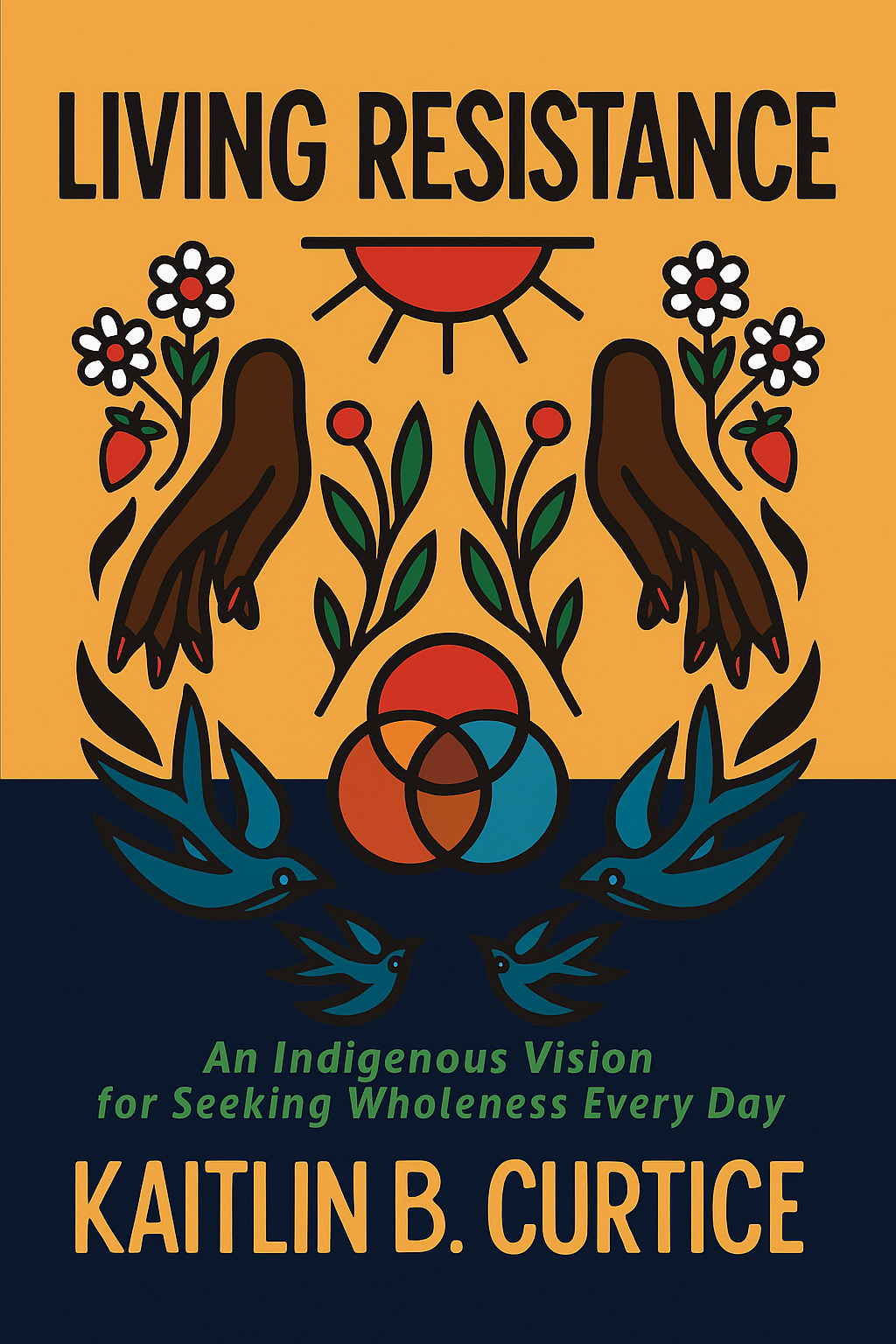
By Kaitlin B. Curtice
