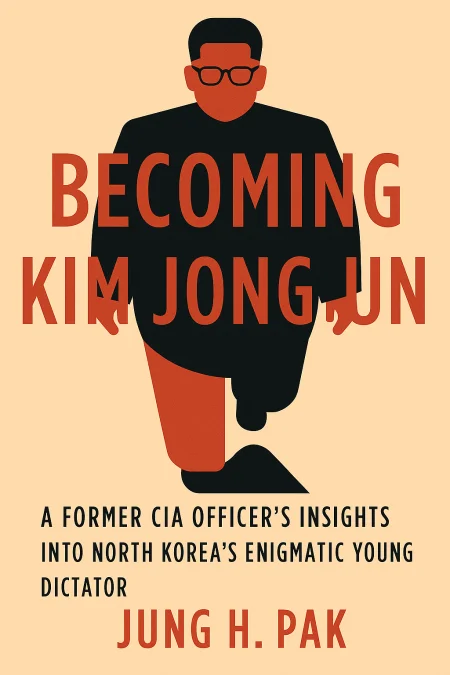
Becoming Kim Jong Un
A Former CIA Officer's Insights into North Korea's Enigmatic Young Dictator
Book Edition Details
Summary
A shadowy figure steps into the spotlight, defying expectations and reshaping global dynamics with a chilling confidence. Kim Jong Un, once dismissed as a mere puppet, has emerged as a master of strategic brinkmanship. In "Becoming Kim Jong Un," former CIA analyst Jung Pak peels back the layers of this enigmatic leader, revealing a portrait not just of a man, but of a phenomenon that has both confounded and challenged international norms. Pak's intimate knowledge and analytical prowess expose the intricacies of Kim's rise—from ruthless purges to unprecedented summits with Donald Trump. This gripping narrative takes readers behind closed doors and into the psyche of a ruler whose nuclear ambitions keep the world on edge. Discover the unpredictable and profound impact of a leader often underestimated, yet impossible to ignore.
Introduction
In the winter of 2011, as snow fell on Pyongyang, a young man in his twenties walked solemnly behind his father's hearse, leading North Korea into an uncertain future. Few could have predicted that this untested heir would become one of the most consequential leaders of the twenty-first century, wielding nuclear weapons while navigating the treacherous waters of international diplomacy. The story of Kim Jong Un's rise reveals three profound historical truths that continue to shape our world today. First, how the trauma of war and colonization can echo across generations, creating leaders who view the world through the lens of perpetual threat and survival. Second, the way modern dictatorships adapt ancient tools of control to twenty-first-century realities, blending brutal repression with technological sophistication and consumer culture. Third, the dangerous dance between nuclear powers, where personal psychology and historical grievances can bring the world to the brink of catastrophe. This narrative speaks to anyone seeking to understand how authoritarian power operates in our interconnected age, how historical wounds shape contemporary conflicts, and why the Korean Peninsula remains one of the world's most volatile flashpoints. The lessons extend far beyond Northeast Asia, illuminating the broader struggle between democracy and authoritarianism that defines our era.
Guerrilla Legacy to Nuclear Foundation (1912-2011)
The Kim dynasty's origins lie not in palaces but in the harsh mountains of Manchuria, where a young Korean named Kim Song Ju earned his revolutionary credentials fighting Japanese colonial forces in the 1930s. Taking the nom de guerre Kim Il Sung, he embodied the fierce nationalism and anti-imperial sentiment that would define North Korea for generations. His guerrilla experience became more than personal history—it became the foundational myth of an entire nation. The devastation of the Korean War from 1950 to 1953 proved pivotal in shaping the regime's worldview. American bombing campaigns reduced North Korea to rubble, killing nearly three million Koreans and leaving an indelible mark on the collective consciousness. Kim Il Sung transformed this trauma into political capital, packaging the devastation as victory against American imperialism while using the fear of future attacks to justify his increasingly authoritarian rule. The regime's genius lay in creating what observers called a "family state," where Kim Il Sung assumed the role of national father and his people became his children. This paternalistic system demanded absolute loyalty in exchange for protection and care, while the elaborate caste system determined every citizen's fate based on their family's revolutionary credentials. Education became indoctrination, teaching children to revere their leader while demonizing external enemies, particularly the United States. By the time Kim Jong Il inherited power in 1994, the foundation for nuclear ambitions had been laid. The younger Kim accelerated weapons development while his son Jong Un received his political education, learning that nuclear capability represented the ultimate insurance policy against regime change. The guerrilla's legacy would endure well into the twenty-first century, transforming from anti-colonial resistance into nuclear deterrence.
Brutal Consolidation and Nuclear Acceleration (2011-2017)
Kim Jong Un's early years in power defied every prediction of collapse or moderation. Instead of the cautious apprentice many expected, he emerged as a bold and ruthless leader who accelerated both nuclear development and internal purges. His execution of his uncle Jang Song Thaek in 2013 sent shockwaves through the international community, demonstrating that family ties meant nothing when weighed against absolute power. The new leader's approach to nuclear development showed remarkable ambition and strategic thinking. In his first six years, he conducted more missile tests than his father and grandfather combined, rapidly advancing North Korea's capabilities toward the goal of threatening the American mainland. Each test was carefully choreographed for maximum psychological impact, with Kim personally overseeing launches and state media highlighting his central role in the nation's nuclear achievements. Domestically, Kim pursued a dual strategy of repression and modernization that his advisors called byungjin—the parallel development of nuclear weapons and economic growth. While building ski resorts and water parks to create the illusion of prosperity, he simultaneously strengthened the surveillance state and expanded the network of political prison camps. This combination of carrots and sticks reflected a sophisticated understanding of how to maintain control in the information age. The period culminated in 2017 with a dangerous escalation that brought the world closer to nuclear war than at any time since the Cuban Missile Crisis. Kim's successful tests of intercontinental ballistic missiles, combined with his war of words with President Trump, created a crisis atmosphere that seemed to make military conflict inevitable. Yet even as tensions peaked, Kim was already planning his next strategic pivot, one that would transform him from international pariah to diplomatic player on the world stage.
From Brinkmanship to Summit Diplomacy (2017-2020)
The transformation of Kim Jong Un from "Rocket Man" to international statesman represents one of the most dramatic diplomatic reversals in modern history. His decision to pivot toward engagement in early 2018, beginning with North Korea's participation in the Winter Olympics, demonstrated the same strategic boldness that had characterized his nuclear development program. The sight of Kim's sister crossing into South Korea marked a historic first and set the stage for an unprecedented year of summit diplomacy. Kim's charm offensive proved remarkably effective at dividing his adversaries and weakening international sanctions. His meetings with South Korean President Moon Jae-in, Chinese President Xi Jinping, and ultimately President Trump himself elevated North Korea's status while providing the regime with valuable breathing room. The carefully choreographed summits showcased Kim as a reasonable leader seeking peace, a stark contrast to his previous image as an unstable dictator. The Singapore summit with Trump in June 2018 marked the culmination of Kim's diplomatic strategy. By securing a meeting with the American president—something his father and grandfather had never achieved—Kim gained the international legitimacy that North Korea had long sought. The summit's vague commitments to denuclearization allowed both sides to claim victory while leaving the fundamental issues unresolved. However, the diplomatic process ultimately revealed the fundamental contradiction at the heart of Kim's strategy. While he successfully used the promise of denuclearization to reduce international pressure and secure economic benefits, he showed no genuine willingness to abandon the weapons that had made his diplomatic success possible. The collapse of the Hanoi summit demonstrated that Kim viewed nuclear weapons not as bargaining chips to be traded away, but as permanent assets essential to his regime's survival and his own political legacy.
Summary
The rise of Kim Jong Un illuminates the central paradox of our nuclear age: how the world's most isolated and repressive regime has managed not only to survive but to thrive by mastering the dangerous art of nuclear diplomacy. His story reveals the enduring power of historical trauma to shape contemporary politics, as the wounds of colonization and war continue to drive North Korean behavior decades after the original conflicts ended. Kim's success in consolidating power and gaining international recognition offers sobering lessons about the resilience of authoritarian systems in the modern world. His ability to blend brutal repression with technological sophistication, to use both nuclear weapons and cyber warfare as tools of statecraft, and to exploit divisions among democratic allies demonstrates that dictatorships can adapt and evolve rather than simply collapse under pressure. For policymakers and citizens alike, Kim's trajectory suggests three crucial imperatives: first, the need to understand how historical grievances shape contemporary conflicts; second, the importance of maintaining unity among democratic allies when confronting authoritarian challenges; and third, the recognition that nuclear weapons fundamentally alter the calculus of international relations, making even small, poor nations capable of constraining superpowers. The Korean Peninsula remains a laboratory for these broader struggles, offering both warnings and insights for navigating an increasingly dangerous world.
Related Books
Download PDF & EPUB
To save this Black List summary for later, download the free PDF and EPUB. You can print it out, or read offline at your convenience.
By Jung H. Pak
