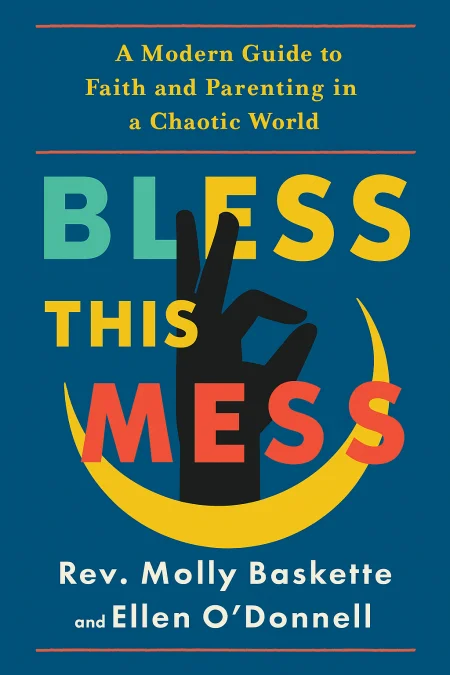
Bless This Mess
A Modern Guide to Faith and Parenting in a Chaotic World
byMolly Baskette, Ellen O'Donnell
Book Edition Details
Summary
In a world swirling with uncertainty, "Bless This Mess" offers a beacon of hope for parents navigating the tumultuous seas of child-rearing. Dr. Ellen O'Donnell and Rev. Molly Baskette, armed with a blend of modern psychology and progressive Christian values, unravel the mysteries of nurturing a family with laughter and wisdom. Born from their own quest for practical, spiritually rich parenting strategies, this book is a treasure trove of real-life insights. It equips parents with tools to discuss everything from ethics to finances with their children while fostering a spirit of generosity and gratitude. As you turn the pages, discover how to embrace fearless parenting amidst chaos and cultivate a home brimming with love and understanding. Here, faith and science unite, guiding you through the challenges of raising children in a complex world, all while reminding you that you are never alone on this sacred journey.
Introduction
Parenting in today's world feels overwhelming. Between endless expert advice, social media comparisons, and our own deep fears about raising good humans, many of us feel lost in the chaos. We want to raise children who are both spiritually grounded and emotionally healthy, but we're not sure how to bridge the gap between ancient wisdom and modern psychology. The truth is, you don't need to choose between faith-based values and evidence-based parenting approaches. When we embrace both our spiritual calling as parents and what science teaches us about child development, we discover that God's design for raising children aligns beautifully with what helps kids truly thrive. This isn't about perfection or having all the answers. It's about finding grace in the mess and trusting that love, structure, and authentic relationship can guide us through even the most challenging parenting moments.
The Holy Trinity of Parenting: Structure, Involvement, and Autonomy
At the heart of effective parenting lies a powerful framework that mirrors both psychological research and spiritual wisdom: the holy trinity of structure, involvement, and autonomy support. These three elements work together like a three-legged stool, each one essential for stability and growth. When Molly found herself in tears after resorting to spanking her strong-willed three-year-old Rafe, she discovered that neither pure permissiveness nor authoritarian control would work. The breakthrough came when she learned to provide clear, consistent boundaries while also respecting Rafe's developing autonomy and staying emotionally connected to who he really was. Instead of demanding blind obedience, she began explaining the reasoning behind rules, offering age-appropriate choices, and following through with natural consequences. This approach transformed their relationship. Rafe still pushed boundaries, as all healthy children do, but he began to internalize family values rather than simply complying out of fear. Molly learned to see his spirited nature not as defiance to crush, but as energy to channel. She provided structure through consistent routines and clear expectations, stayed involved by truly listening to his concerns and perspective, and supported his autonomy by offering choices within safe boundaries. The practical application begins with identifying your family's core values, then creating structures that support those values while leaving room for your child's unique personality to flourish. This means saying yes to their autonomy in areas that don't compromise safety or family principles, while maintaining firm boundaries where they're needed. Remember that your goal isn't compliance but character development, not control but connection. Start today by examining one recurring conflict with your child. Ask yourself whether you're providing enough structure, genuine involvement, or respect for their developing independence. Often, behavioral issues stem from an imbalance in one of these three areas, and small adjustments can yield significant improvements.
Spiritual Practices for Everyday Family Life
Faith doesn't require perfect families or pristine moments of prayer. Instead, it flourishes in the ordinary rhythms of daily life when we learn to recognize the sacred in the everyday and create simple practices that connect our hearts to something greater than ourselves. Ellen discovered this truth when her young son Luke began asking profound questions about God, death, and meaning during their car rides and bedtime conversations. Rather than feeling inadequate to answer, she learned to sit with his questions, share her own wondering, and create space for mystery. They developed a simple practice of "Help, Thanks, Wow" prayers at dinner, where each family member could share something they needed help with, something they were grateful for, and something that filled them with awe. These small moments became the foundation of Luke's spiritual life. He learned that God was present not just in church on Sundays, but in the everyday struggles and joys of being human. When he faced difficult situations at school, he had language and practices to draw upon. The family's spiritual life became less about perfect theology and more about honest relationship with the divine. Begin by choosing one daily routine and infusing it with intentional spiritual connection. This might mean saying a simple blessing before meals, sharing gratitudes at bedtime, or creating moments of silence to notice God's presence. The key is consistency rather than complexity. Even thirty seconds of authentic spiritual attention can transform an ordinary moment into holy ground. Your children are watching how you relate to the sacred. They need to see that faith isn't something you put on for special occasions, but a living relationship that guides and comforts you through real-life challenges. Let them hear you pray when you're worried, see you find peace in scripture when you're struggling, and watch you extend grace when others disappoint you.
Navigating Life's Challenges with Faith and Resilience
Life will inevitably bring challenges that test our faith and stretch our parenting beyond what we thought possible. Whether facing a child's learning disability, mental health struggles, serious illness, or simply the daily wear of raising difficult teenagers, we need more than positive thinking or good intentions. We need practices that anchor us to hope when circumstances feel overwhelming. Jamie's story illustrates this powerfully. When his youngest son's addiction led to arrests, lies, and heartbreak, Jamie discovered that his obsession with fixing his child had become its own form of addiction. Through Al-Anon, he learned the difference between love and control, between helping and enabling. The hardest lesson was recognizing his powerlessness over his son's choices while still maintaining appropriate boundaries and unconditional love. The transformation came when Jamie shifted his faith statement from "Everything is going to be all right" to "Everything is going to be all right, but I don't get to determine what all right looks like." This surrender opened space for his son to find his own path to recovery while Jamie learned to trust in a larger story of redemption that might unfold very differently than he had hoped or planned. When facing your own parenting challenges, start by distinguishing between what you can and cannot control. Focus your energy on today's concerns rather than catastrophizing about future possibilities. Seek professional help when needed, but remember that experts can guide you while only God can ultimately heal and transform hearts. Build a support network of other parents who understand your struggles. Share your story honestly, without shame or pretense. Often the very challenges we want to hide become sources of connection and wisdom when we're brave enough to be vulnerable. Your difficulties don't disqualify you from faith; they become the places where grace enters most powerfully.
Summary
Parenting is fundamentally a spiritual practice that calls us to love imperfect children with the same grace that God extends to us. As the book reminds us, "God loves us just as we are and loves us too much to let us stay that way." This truth applies equally to our children and to ourselves as parents. We are all works in progress, learning to embody love more fully through the daily challenges and joys of family life. The goal isn't to raise perfect children or to become perfect parents, but to create families where everyone can grow into who God created them to be. Start today by releasing the pressure to get everything right and instead focus on staying connected to your children's hearts, trusting in God's bigger story for their lives, and finding grace in the beautiful mess of raising the next generation.
Related Books
Download PDF & EPUB
To save this Black List summary for later, download the free PDF and EPUB. You can print it out, or read offline at your convenience.
By Molly Baskette
