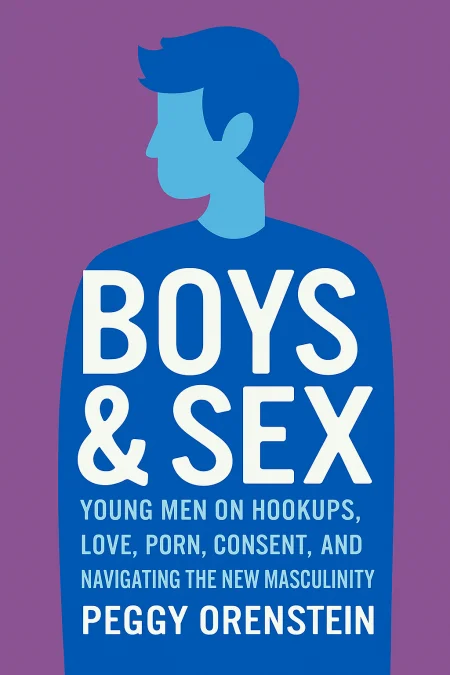
Boys & Sex
Young Men on Hookups, Love, Porn, Consent, and Navigating the New Masculinity
Book Edition Details
Summary
In "Boys & Sex," Peggy Orenstein takes a bold leap into the enigmatic world of young men's intimate lives, peeling back layers of societal norms and unspoken truths. This isn't just a book; it's a seismic shift in how we perceive young male sexuality. Drawing from candid conversations with young men, educators, and psychologists, Orenstein paints a vivid portrait of the pressures and paradoxes facing boys today. She examines the dissonance between locker room bravado and heartfelt vulnerability, the skewed lessons of pornography, and the tangled web of consent and emotional connection. With her signature blend of empathy and incisive analysis, Orenstein invites us to reconsider what it means to grow into manhood in a world rife with stereotypes. This groundbreaking work not only spotlights the hurdles boys face but also envisions a more compassionate, understanding path forward.
Introduction
Contemporary masculinity exists within a profound paradox that shapes the intimate lives of an entire generation. Young men today navigate between traditional expectations of emotional stoicism and sexual dominance while simultaneously confronting evolving standards of consent, communication, and mutual respect in relationships. This tension creates a crisis of identity that extends far beyond individual confusion to encompass broader questions about gender, power, and human connection in the digital age. The investigation employs extensive interviews with over one hundred young men across diverse backgrounds to reveal how cultural scripts about manhood collide with modern realities of dating, sexuality, and emotional expression. Rather than accepting surface-level explanations or retreating into ideological positions, this analysis examines the lived experiences of young men themselves, uncovering patterns of behavior that often contradict their stated beliefs and values. The approach challenges readers to move beyond simplistic narratives about toxic masculinity or male privilege to understand the complex psychological and social forces that shape masculine identity. The examination reveals that the crisis of masculinity represents both a significant challenge and an unprecedented opportunity for transformation. By understanding how traditional gender scripts interact with digital influences, consent culture, and diverse identity formations, we can begin to envision more authentic and sustainable approaches to masculine development. The analysis invites readers to consider how individual struggles with identity and intimacy reflect broader cultural tensions that require collective attention and thoughtful intervention.
The Masculinity Trap: Traditional Gender Scripts and Their Harmful Effects
Traditional masculinity operates through three interconnected mechanisms that systematically constrain young men's emotional and relational development from early childhood through adulthood. Emotional suppression forms the foundational element, teaching boys that feelings beyond anger represent dangerous vulnerabilities that must be contained or eliminated. This process begins in elementary school, where boys learn to disconnect from their natural capacity for empathy, sadness, and fear, creating internal barriers that persist throughout their lives and limit their ability to form authentic connections with others. The systematic devaluation of femininity constitutes the second mechanism, manifesting not only in attitudes toward girls and women but in the constant policing of other boys who display traits deemed insufficiently masculine. The casual deployment of terms like "pussy," "bitch," and "fag" as insults reveals how deeply embedded these hierarchies remain in youth culture. These words function as boundary markers that define the narrow acceptable range of masculine expression while threatening social exile for those who transgress these limits. Sexual conquest represents the third mechanism, positioning young men's worth in direct relation to their ability to accumulate sexual experiences while maintaining emotional distance from their partners. This framework transforms intimate encounters into performances of masculinity rather than opportunities for genuine connection and mutual exploration. The pressure to treat sexuality as a competitive sport creates dynamics where partners become trophies to be collected rather than people to be known, and where young men's own desires for intimacy and emotional connection are dismissed as weakness or failure. These three mechanisms work synergistically to create what researchers identify as toxic masculinity, though the young men trapped within this system rarely recognize its harmful effects on their own psychological wellbeing and relational capacity. The consequences include elevated rates of depression, suicide, and substance abuse among young men, as well as persistent difficulties in forming lasting intimate relationships. The tragedy extends beyond the harm this causes to others to encompass how it prevents young men from accessing their own full humanity and potential for meaningful connection with themselves and others.
Digital Sexual Education: Pornography, Apps, and Unrealistic Expectations
The digital revolution has fundamentally transformed how young men learn about sexuality, creating an unprecedented experiment in human sexual development with far-reaching consequences for intimate relationships. Pornography now functions as the primary sex educator for most adolescent boys, with typical first exposure occurring between ages nine and eleven, well before they possess the cognitive or emotional frameworks necessary to contextualize this material appropriately. Unlike previous generations who encountered static images in magazines, contemporary young men grow up with unlimited access to increasingly extreme video content that shapes their understanding of normal sexual behavior before they have any real-world experience to provide balance or perspective. This early and extensive exposure to pornographic material creates cascading effects on sexual expectations and behaviors that persist into adulthood. Young men develop associations between sexual arousal and pornographic imagery that make it difficult to become excited by real partners who fail to conform to artificial standards of appearance and behavior. The mechanical, performance-focused sexuality depicted in most mainstream pornography becomes their template for intimate encounters, leading to experiences that prioritize male pleasure while ignoring female satisfaction and emotional connection. Dating and hookup applications compound these problems by reducing human connection to a series of consumer choices based primarily on physical appearance and brief text exchanges. The endless scroll of potential partners creates an illusion of infinite options while simultaneously making genuine connection more elusive and difficult to sustain. Young men report feeling overwhelmed by choice yet consistently disappointed by the superficial nature of app-mediated encounters, which often fail to deliver the meaningful connection they secretly desire. The convergence of pornographic education and app-mediated dating creates conditions where young men arrive at sexual experiences with scripts learned from artificial sources and partners selected through digital interfaces that prioritize appearance over compatibility. This combination leaves little space for the authentic communication, gradual discovery, and mutual vulnerability that characterize healthy sexual development, resulting in a generation of young men who are simultaneously more sexually active and less sexually satisfied than their predecessors.
Consent in Practice: The Gap Between Ethics and Behavior
The evolution of consent standards from simple refusal-based models to affirmative consent requirements has created both opportunities and challenges for young men attempting to navigate intimate encounters ethically. While many embrace clearer guidelines and report finding enthusiastic consent genuinely erotic, others struggle to integrate these new standards with deeply ingrained assumptions about male sexual entitlement and female availability that they absorbed during their formative years. Research reveals a significant gap between young men's stated beliefs about consent and their actual behavior in intimate situations. Many can articulate the principles of affirmative consent yet fail to implement them consistently in practice, particularly in contexts involving alcohol, social pressure, or their own sexual arousal. When confronted with this contradiction, they often expand their definition of consent rather than questioning their behavior, finding ways to rationalize encounters that technically meet legal standards while falling short of ethical ideals. The emergence of the "good guy" defense represents a particularly problematic response to accusations of sexual misconduct or boundary violations. Young men who maintain positive self-images struggle to reconcile their identity as fundamentally decent people with behaviors that may have caused harm to others. Rather than engaging in honest self-reflection about their actions, they often retreat into denial, insisting that their good intentions absolve them of responsibility for negative outcomes experienced by their partners. Breaking free from these patterns requires more than individual commitment to ethical behavior; it demands collective effort to create new cultural norms that value mutual respect and genuine connection over traditional markers of masculine success. The young men most successful in navigating this transition have found communities that support more expansive definitions of masculinity while maintaining clear standards of accountability, suggesting that cultural change must accompany individual transformation for meaningful progress to occur.
Beyond Binaries: Race, Identity, and Alternative Models of Masculinity
The intersection of racial identity with masculine expectations creates distinct challenges for young men of color who must navigate predominantly white educational and social environments while managing stereotypes that simultaneously fetishize and criminalize their sexuality. African American young men face the particular burden of being perceived as both sexually desirable and potentially dangerous, requiring constant self-monitoring and strategic behavior modification to avoid triggering fears or assumptions that could have serious consequences for their safety and opportunities. Asian American young men confront different but equally constraining stereotypes that position them as intellectually capable but sexually inadequate according to Western standards of masculine attractiveness. The persistent myth of Asian male effeminacy creates barriers to romantic and sexual connection while reinforcing narrow definitions of desirability based on European physical features and aggressive behavioral patterns that may conflict with cultural values emphasizing respect and restraint. LGBTQ+ young men offer unique perspectives on masculinity precisely because their identities require them to question conventional gender norms and develop more flexible approaches to self-expression and relationships. Gay and bisexual young men often develop more sophisticated skills in sexual communication and consent negotiation, while transgender young men bring insights from having experienced multiple forms of gender socialization that reveal the constructed nature of masculine performance. The most promising developments in masculine identity emerge from young men who have learned to integrate multiple aspects of their identities rather than compartmentalizing them according to social expectations. These individuals often serve as bridges between different communities, helping to expand definitions of acceptable masculine behavior and creating space for others to explore more authentic forms of self-expression that honor both individual authenticity and collective responsibility for creating more inclusive social environments.
Summary
The crisis of contemporary masculinity stems not from challenges to traditional gender roles but from the failure to develop coherent alternatives that serve both individual wellbeing and social harmony in an increasingly complex world. Young men inherit cultural scripts that promise power and status through emotional suppression, sexual conquest, and dominance over others, yet discover these strategies increasingly ineffective at delivering genuine satisfaction or meaningful connection in their actual relationships and life experiences. The digital age has amplified these contradictions by providing unlimited access to pornographic fantasies and superficial connections while making authentic intimacy more elusive than ever before. The transformation of masculinity represents an unprecedented opportunity for creating more authentic and flexible approaches to gender identity that allow young men to access their full emotional range, form deeper relationships, and contribute to building more equitable communities that benefit everyone involved.
Related Books
Download PDF & EPUB
To save this Black List summary for later, download the free PDF and EPUB. You can print it out, or read offline at your convenience.
By Peggy Orenstein
