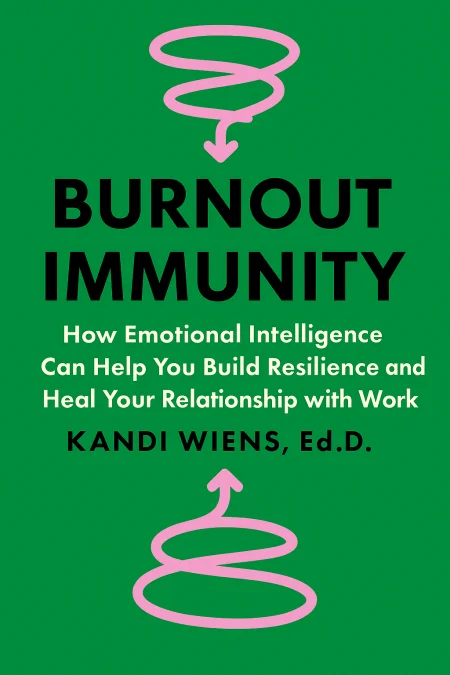
Burnout Immunity
How Emotional Intelligence Can Help You Build Resilience and Heal Your Relationship with Work
Book Edition Details
Summary
When life's chaos threatens to swallow us whole, how do some thrive while others crumble? Dr. Kandi Wiens, having battled her own dance with burnout, embarked on an enlightening journey to crack this mystery. Her findings reveal a surprising ally against burnout: emotional intelligence. In "Burnout Immunity," Wiens lays bare the secrets of those who defy exhaustion's grasp, drawing from compelling research and real-world testimonies. She distills the essence of resilience into five transformative skills—Awareness, Regulation, Meaningful Connections, Mindset, and Recovery—that arm us against the relentless tide of stress. This book isn't just a guide; it's a lifeline for anyone yearning for a joyful, fulfilling career free from the shadows of burnout. Discover how to harness emotional intelligence to revolutionize your relationship with work, ensuring a vibrant, balanced life.
Introduction
Sarah stared at her computer screen, her heart racing as another urgent email landed in her inbox at 9 PM. The marketing director had been working fourteen-hour days for months, surviving on coffee and determination alone. When her hands began trembling uncontrollably during a client presentation, she knew something was desperately wrong. Like millions of professionals worldwide, Sarah was experiencing burnout—not just exhaustion, but a profound disconnection from her work, her purpose, and herself. This devastating workplace phenomenon has reached epidemic proportions, affecting everyone from healthcare workers to teachers, executives to entrepreneurs. Yet while most discussions focus on burnout's symptoms, groundbreaking research reveals something far more hopeful: some individuals seem naturally immune to burnout, thriving even in the most demanding environments. What separates these resilient professionals from those who struggle? The answer lies in emotional intelligence—the ability to understand and manage emotions, both our own and others'. Through extensive research with hundreds of high-performing leaders who maintain their well-being despite intense pressure, we discover that burnout immunity isn't a matter of luck or genetics. It's a learnable skill set rooted in four essential emotional intelligence competencies: awareness of our triggers and limits, regulation of our stress responses, meaningful connections that sustain us, and mindsets that transform challenges into growth opportunities. This book will guide you through developing these capabilities, helping you not just survive but flourish in today's demanding work environment.
From Crisis to Clarity: Recognizing Burnout's Warning Signs
Dr. Michael Chen thought he was invincible. As chief medical officer of a major hospital system, he'd weathered countless crises, making life-and-death decisions with steady hands and clear thinking. But during a particularly intense period managing COVID-19 responses, something shifted. The man who once found energy in helping others began dreading patient rounds. His usual optimism gave way to cynicism about healthcare systems. Most alarming, his clinical judgment—once razor-sharp—became clouded by fatigue and emotional numbness. Unlike Sarah's dramatic physical symptoms, Michael's burnout crept in quietly. He maintained his professional demeanor while internally struggling with what researchers identify as the three hallmarks of burnout: emotional exhaustion, depersonalization, and reduced professional efficacy. He felt drained despite adequate sleep, treated patients as problems rather than people, and questioned his competence despite decades of excellence. Michael's story illustrates burnout's deceptive nature—it doesn't always announce itself with dramatic breakdowns. Often, it masquerades as dedication, presenting itself as working longer hours or pushing through pain. The most successful professionals can be particularly vulnerable because their identity becomes so intertwined with achievement that they ignore their body's distress signals. Understanding these subtle warning signs becomes the first line of defense against a condition that robs us not just of effectiveness, but of our essential humanity and connection to meaningful work.
The Regulation Revolution: Managing Stress and Emotions
Lieutenant Colonel Patricia Williams commanded respect in the military for her unflappable demeanor under pressure. During a particularly volatile deployment, her unit faced daily threats while managing complex humanitarian operations. While her colleagues struggled with anger, fear, and decision fatigue, Patricia seemed to navigate each crisis with remarkable composure. Her secret wasn't an absence of stress—quite the opposite. She felt every ounce of pressure but had mastered what researchers call emotional regulation. When mortar fire interrupted a critical briefing, Patricia noticed her heart racing and muscles tensing. Instead of fighting these physical responses or making hasty decisions, she employed a simple but powerful technique. She mentally acknowledged the stress—"I'm feeling the pressure of this situation"—then took three deep breaths while mentally reviewing her training and available resources. This brief pause allowed her prefrontal cortex to override her amygdala's fight-or-flight response, enabling clear thinking despite chaos. Patricia's approach demonstrates the regulation revolution transforming how we understand workplace resilience. Rather than suppressing emotions or pushing through stress, regulation involves acknowledging our internal experience while choosing our response. This skill can be developed through specific practices: naming emotions to reduce their intensity, reframing stressors as challenges rather than threats, and creating space between stimulus and response. When we learn to regulate our emotional and physiological reactions, we transform from victims of our circumstances into architects of our experience, maintaining clarity and effectiveness even in the most demanding situations.
Finding Your North Star: Values, Purpose, and Connection
Marcus had climbed the corporate ladder at a prestigious consulting firm, earning impressive bonuses and recognition. Yet despite external success, he felt increasingly hollow. The work that once energized him now seemed meaningless, and he found himself going through the motions while yearning for something more. Everything changed during a volunteer project helping nonprofits develop strategic plans. Suddenly, Marcus experienced the electric feeling of alignment—his analytical skills serving a deeper purpose, his expertise making a genuine difference in communities he cared about. This revelation led Marcus to a fundamental career shift. He left his lucrative position to become a nonprofit consultant, taking a significant pay cut but gaining something invaluable: a profound sense of meaning. His work now connected to his core values of service and social justice, creating what researchers call "meaningful connections"—the powerful alignment between personal values, professional purpose, and daily activities. Marcus discovered what burnout-immune individuals understand intuitively: we need three types of meaningful connections to sustain us through challenging work. First, connection to purpose—understanding how our efforts serve something larger than ourselves. Second, connection to people—building supportive relationships that provide encouragement and perspective. Third, connection to our authentic values—ensuring our daily actions reflect what matters most to us. When these connections are strong, even high-stress work becomes sustainable because it feeds our soul rather than depleting it. The key isn't finding perfect work, but finding the meaningful threads within our current role and strengthening them until they become our professional North Star.
The Recovery Blueprint: Healing and Reimagining Your Future
Jennifer hit rock bottom on a Tuesday morning. The nonprofit executive director sat in her car outside the office, unable to force herself through the doors. After months of sixteen-hour days, weekend emergencies, and constant pressure, her body had simply refused to cooperate. The woman who had dedicated her life to serving others couldn't serve anyone—including herself. This moment of breakdown became the catalyst for one of the most transformative journeys of her life. Jennifer's recovery followed what experts call the 3Rx prescription: Recover, Reconnect, and Reimagine. First, she took a medical leave to address her physical and emotional exhaustion, learning that true recovery requires more than rest—it demands systematic healing of the patterns that led to burnout. Next, she reconnected with aspects of herself that work had consumed: her love of painting, relationships with family, and spiritual practices that had sustained her before career pressures took over. Finally, she reimagined her relationship with work, setting boundaries, delegating responsibilities, and realigning her role with her core values. Six months later, Jennifer returned to work transformed. She maintained the same passion for her mission but approached it with wisdom hard-earned through crisis. Her team noticed the difference immediately—she modeled healthy boundaries, encouraged self-care, and created a culture where sustainable excellence replaced destructive perfectionism. Jennifer's journey illustrates that burnout, while painful, can become a powerful teacher. When we commit to genuine recovery rather than quick fixes, we don't just return to our previous state—we evolve into more resilient, aware, and effective versions of ourselves, equipped with the emotional intelligence to thrive in demanding environments while maintaining our humanity.
Summary
The stories throughout these pages reveal a profound truth: burnout immunity isn't about being tougher or working harder, but about developing the emotional intelligence to work more wisely. From Sarah's recognition of her breaking point to Jennifer's transformation through recovery, we see that our relationship with stress and work can be fundamentally reimagined. The individuals who thrive in high-pressure environments share common skills—they recognize their warning signs before crisis hits, regulate their emotional responses rather than being controlled by them, maintain meaningful connections that sustain their purpose, and approach challenges with mindsets that foster growth rather than depletion. These capabilities offer three essential insights for anyone seeking to build their own burnout immunity. First, awareness becomes your early warning system—the ability to notice when stress is accumulating before it reaches critical levels. Second, regulation transforms you from a victim of circumstances into an active participant in your own experience, choosing responses that serve your long-term wellbeing. Third, meaningful connections anchor you to your deepest values and purposes, ensuring that even difficult work feeds your soul rather than depleting it. The path forward requires courage to examine our current patterns honestly and commitment to developing new ways of being in our professional lives. But the reward is extraordinary: the ability to pursue meaningful, impactful work while maintaining your health, relationships, and sense of purpose. In a world that often demands we sacrifice our wellbeing for success, emotional intelligence offers a different way—one where we can excel professionally while remaining fully human, creating sustainable careers that energize rather than exhaust us.
Related Books
Download PDF & EPUB
To save this Black List summary for later, download the free PDF and EPUB. You can print it out, or read offline at your convenience.
By Kandi Wiens
