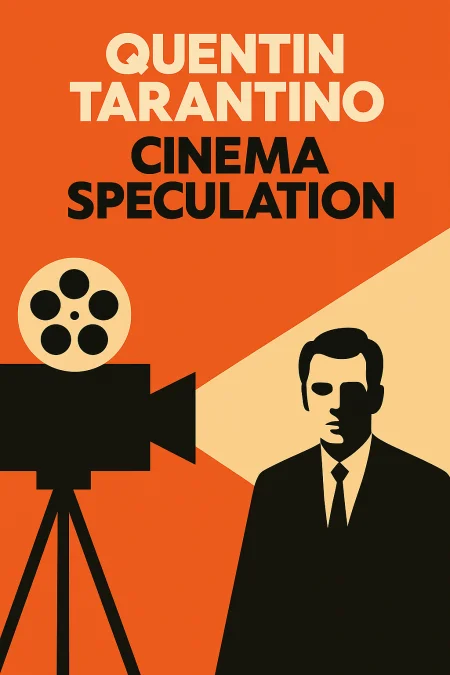
Cinema Speculation
Hollywood History Through the Eyes of a Contemporary Filmmaker
Book Edition Details
Summary
Quentin Tarantino steps from the director's chair into the world of nonfiction with "Cinema Speculation," a cinematic tapestry woven from the vibrant threads of 1970s American film. This isn't just a book; it's a pulsating love letter to cinema, penned by one of its most fervent enthusiasts. Tarantino, renowned for his razor-sharp storytelling, now trains his lens on the movies that molded him, offering a kaleidoscope of film critique, theory, and memoir. With each page, readers are invited into Tarantino's vivid recollections, his passionate analyses, and the tantalizing "what ifs" of film history. The book's voice is unmistakably Tarantino: bold, insightful, and imbued with the infectious energy of a master filmmaker sharing the secrets of his craft. For cinephiles and curious readers alike, this work promises an exhilarating journey into the heart of cinema.
Introduction
Picture yourself as an eight-year-old child, sitting in a darkened theater in 1970, watching films that would make today's parents clutch their pearls in horror. The screen flickers with raw, uncompromising images—violence that feels real, dialogue that cuts like broken glass, stories that refuse to offer easy answers. This wasn't just entertainment; it was an education in the deepest possibilities of cinema, delivered at an age when the mind absorbs everything without filters or preconceptions. What happens when someone experiences the birth of New Hollywood not as a critic or scholar, but as a pure audience member whose formative years coincided with cinema's most revolutionary decade? The result is a unique perspective that bridges the gap between sophisticated film analysis and genuine emotional response to movies. Through deeply personal encounters with controversial classics and forgotten gems, we discover how films function as both artistic statements and cultural artifacts, reflecting society's anxieties while pushing boundaries that seemed unbreakable. This journey through cinema's most transformative era reveals three profound insights: how early exposure to challenging films develops sophisticated taste and critical thinking, why understanding audience reactions is crucial to creating meaningful cinema, and how the most controversial and misunderstood films often become the most enduring and influential works of art. These lessons apply not just to filmmaking, but to any creative endeavor that seeks to balance artistic integrity with genuine human connection.
Little Q Watching Big Movies: A Child's Cinema Education
In 1970, a seven-year-old boy accompanied his mother to the Tiffany Theater on Sunset Strip for what would become a defining cinematic experience. The double feature that night paired "Joe" with "Where's Poppa?"—hardly typical children's fare. As Peter Boyle's racist, working-class character unleashed his profanity-laden tirades about hippies and social change, something remarkable happened in that darkened theater. The adult audience didn't recoil in horror or walk out in disgust. Instead, they erupted in laughter. The child watched, fascinated, as the room's energy transformed from uncomfortable silence during the film's gritty opening to raucous appreciation once Boyle appeared on screen. When Joe examined a jukebox filled with soul music and declared, "Christ, they even fucked up the goddamn music!" the theater exploded with even greater hilarity. This wasn't an endorsement of the character's bigoted worldview—it was recognition of fearless performance and brilliant writing that dared to put uncomfortable truths on screen. This experience illuminated a fundamental principle about cinema that would shape a lifetime of film appreciation: the crucial difference between laughing at a character and laughing with a performer. Great actors can make audiences enjoy despicable characters without endorsing their actions or beliefs. The key lies in the performer's ability to find humanity within monstrosity, creating complex emotional responses that simple heroes and villains cannot achieve. When filmmakers trust audiences to distinguish between character and performer, between story and endorsement, they create space for more sophisticated storytelling. This approach challenges viewers rather than merely confirming their existing beliefs, leading to richer, more memorable cinematic experiences that linger long after the credits roll.
Violence and Authenticity in New Hollywood's Golden Age
The night young Quentin witnessed "The Wild Bunch" paired with "Deliverance" marked his introduction to cinema's capacity for beautiful brutality. Sam Peckinpah's masterpiece opened with its infamous throat-slitting scene, blood spurting in slow motion at 120 frames per second. Rather than turning away, the child found himself mesmerized by what he would later recognize as "liquid ballet and visual poetry painted in crimson." This wasn't violence for its own sake—it was choreographed with the precision of dance and the emotional weight of opera. But it was "Deliverance" that truly demonstrated how authentic filmmaking could transform potentially exploitative material into genuine art. The film's notorious assault scene succeeded not through shock value but through its unflinching commitment to realism. Bill McKinney's mountain man wasn't a cartoon villain but a convincingly primitive human being whose childlike cruelty felt genuinely threatening. Director John Boorman and his actors committed fully to the reality of the situation, refusing to soften its edges for audience comfort. The lesson embedded in these formative experiences reveals itself decades later: authentic violence in cinema serves the story and characters, while gratuitous violence serves only itself. When filmmakers approach difficult material with honesty rather than exploitation, they create moments that resonate with genuine emotional power. The goal isn't to traumatize audiences but to make them feel the full weight of human experience, including its darkest corners. This authenticity demands respect for both the material and the audience's intelligence. Viewers can sense when violence is meaningful versus when it's merely decorative. The films that endure are those that use every element—including brutality—to illuminate deeper truths about human nature and the world we inhabit.
The Movie Brats vs. The Anti-Establishment Auteurs
Two distinct tribes emerged from the ashes of Old Hollywood in the 1970s, each with radically different philosophies about cinema's purpose and potential. The Anti-Establishment Auteurs—directors like Robert Altman, Sam Peckinpah, and Arthur Penn—viewed filmmaking as a weapon against the system, using their cameras to expose America's hypocrisies and challenge comfortable assumptions. They wanted to remake "Fort Apache" from the Apaches' perspective, to show Jesse James as a religious fanatic rather than a romantic outlaw. These directors often seemed to resent the very audiences watching their films, creating deliberately challenging works that frustrated conventional expectations. Their movies were acts of rebellion against both Hollywood tradition and American mythology, designed to make viewers question everything they thought they knew about their country and themselves. In sharp contrast, the Movie Brats—Spielberg, Lucas, Scorsese, and their contemporaries—approached filmmaking as devoted fans who wanted to perfect the genres they loved. When Spielberg made "Jaws," he wasn't deconstructing the monster movie; he was creating the ultimate monster movie. These directors had grown up watching films on television, absorbing thousands of hours of cinema that their predecessors had dismissed as mere entertainment. The fundamental difference lay in their relationship with audiences. While the Anti-Establishment Auteurs often seemed to view popularity with suspicion, the Movie Brats understood that the best way to elevate popular entertainment was to execute it with unprecedented skill and passion. They proved that genre films could be both commercially successful and artistically ambitious, that respecting audience expectations didn't require abandoning artistic vision. This approach ultimately won the cultural war, establishing a new paradigm where popular entertainment and serious filmmaking could coexist and enhance each other.
Genre Masters and the Art of Pure Cinema
The true masters of genre filmmaking understood that creative limitations often breed the most innovative solutions. Don Siegel's "Dirty Harry" succeeded not despite its controversial politics but because Siegel committed fully to his vision of urban decay and moral ambiguity. He crafted suspense sequences with surgical precision, using violence not as spectacle but as punctuation in a larger argument about society's breakdown. Every brutal moment served the story's inexorable logic, building toward a conclusion that felt both inevitable and shocking. Similarly, Brian De Palma's approach to Hitchcockian thrillers demonstrated how technical mastery could elevate familiar material into something entirely new. In "Sisters," De Palma didn't simply copy Hitchcock's techniques—he adapted them for a more permissive era, using split-screen photography and elaborate camera movements to create fresh forms of cinematic language. His murder sequences weren't just shocking; they were ballets of suspense that showcased cinema's unique ability to manipulate time, space, and audience emotion. These filmmakers understood that genre conventions aren't restrictions but foundations upon which to build something extraordinary. The key lies in respecting the genre's essential elements while finding innovative ways to execute them. Audiences come to horror films wanting to be scared, to action films wanting excitement, to comedies wanting laughter. The artist's job isn't to deny these desires but to fulfill them in ways that surprise and delight. When filmmakers master their craft while honoring their audience's expectations, they create works that satisfy both immediate entertainment needs and long-term artistic ambitions. This balance between innovation and tradition, between artistic vision and audience connection, represents the highest achievement in popular filmmaking.
Summary
The greatest insight cinema offers is this: movies work best when filmmakers trust their audiences to handle complexity, controversy, and moral ambiguity without requiring simple answers or comfortable resolutions. Seek out films that challenge your assumptions rather than confirm your existing beliefs, paying special attention to how audiences react in theaters—their responses often reveal truths about both the films and society that critics miss. Study the technical craft behind your favorite scenes, understanding that great filmmaking combines emotional authenticity with precise execution. Remember that the most enduring films often emerge from the intersection of popular entertainment and uncompromising artistic vision, proving that commercial success and artistic integrity need not be mutually exclusive. Trust your own instincts about what moves you, even when critics disagree, because genuine emotional response is the ultimate measure of cinema's power.
Related Books
Download PDF & EPUB
To save this Black List summary for later, download the free PDF and EPUB. You can print it out, or read offline at your convenience.
By Quentin Tarantino
