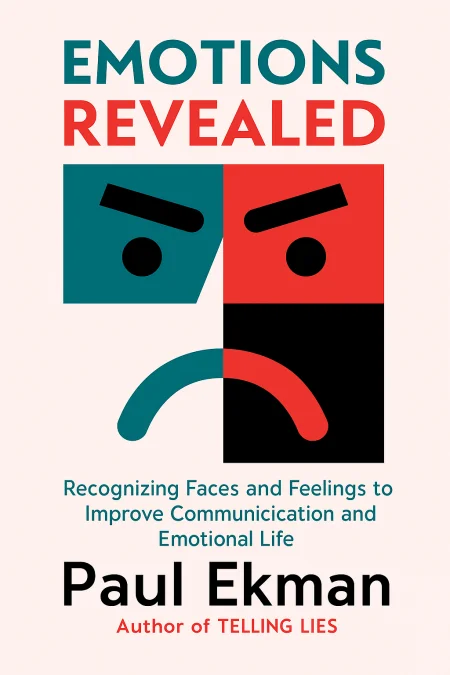
Emotions Revealed
Recognizing Faces and Feelings to Improve Communication and Emotional Life
Book Edition Details
Summary
In the intricate dance of human interaction, emotions silently lead the way, and Paul Ekman stands as the ultimate choreographer. "Emotions Revealed" isn't just a book—it's a revelation, a deep dive into the ancient whispers that guide our every expression. What if you could read the unspoken language of feelings, discerning genuine joy from a mere façade, understanding not just what emotions are but why they erupt and how they're etched on our faces? Ekman's decades of pioneering research unfold in a tapestry of insights, blending science with self-discovery. With vivid exercises and revealing photographs, this book offers a profound lens into the heart of human nature, challenging readers to explore their own emotional landscapes and those of others with newfound clarity. A compelling guide to the uncharted territories of the heart, "Emotions Revealed" promises to transform the way you perceive the world around you.
Introduction
Have you ever noticed how you can instantly sense someone's mood the moment they walk into a room, even before they speak a single word? Or wondered why a genuine smile feels so different from a polite, forced one, even though you might not be able to explain exactly what makes them distinct? The human face operates as nature's most sophisticated communication device, broadcasting emotional messages through tiny muscle movements that occur faster than conscious thought. This remarkable system represents one of our species' most fascinating achievements, yet most of us navigate through life only dimly aware of the intricate emotional conversations happening right in front of us. Through groundbreaking research spanning isolated cultures and modern societies alike, scientists have discovered that our facial expressions form a universal language that transcends cultural boundaries, revealing deep truths about human nature and connection. You'll discover how seven basic emotions create a shared vocabulary that appears identical whether you're in Manhattan or the remote highlands of Papua New Guinea, why our faces often betray our true feelings even when we're desperately trying to hide them, and how understanding these subtle signals can revolutionize your relationships and emotional intelligence. Perhaps most remarkably, you'll learn that the simple act of changing your facial expression can actually alter your internal emotional state, revealing a profound two-way connection between our outer expressions and inner experiences.
The Universal Language of Emotional Expressions
Imagine showing a photograph of an angry face to people from dozens of different cultures around the world, from bustling cities to remote villages that have never seen television or movies. Remarkably, nearly everyone would identify the same emotion, despite having no shared language or cultural background. This extraordinary finding revolutionized our understanding of human nature and challenged the long-held belief that all emotional expressions are learned behaviors, like local customs or spoken languages. For decades, scientists assumed that facial expressions were entirely cultural creations, passed down through families and communities like recipes or folk tales. This seemed logical given how dramatically cultures differ in their values, traditions, and communication styles. However, groundbreaking research in the 1960s and 1970s revealed something astonishing. When researchers studied the Fore people of Papua New Guinea, who had lived in complete isolation from Western civilization, they discovered that these individuals recognized and produced exactly the same facial expressions for basic emotions as people in industrialized societies thousands of miles away. The evidence became even more compelling when scientists studied people born blind. Despite never having seen another person's facial expression, blind individuals display the same emotional expressions as sighted people, suggesting these patterns are hardwired into our biology rather than learned through imitation. Seven emotions emerged as truly universal: happiness, sadness, anger, fear, surprise, disgust, and contempt. Each creates a distinct facial signature involving specific muscle movements that appear virtually identical across all human cultures, from the raised eyebrows and widened eyes of surprise to the lowered brow and tightened lips of anger. This universality doesn't eliminate cultural influence entirely. While the basic expressions themselves are universal, different societies develop their own "display rules" about when and where emotions should be shown. A Japanese businessperson might mask disappointment with a polite smile in public, while still experiencing the same underlying facial muscle movements that signal sadness. Understanding this distinction between our automatic, biological expressions and our learned cultural modifications helps explain why emotional communication can feel both familiar and foreign when we interact with people from different backgrounds, and why we can often sense someone's true feelings even when they're following their culture's rules about emotional display.
Understanding What Triggers Our Emotions
Why does the sound of fingernails on a chalkboard make almost everyone cringe, while the sight of a baby's smile brings instant warmth to most people's faces? The answer lies in understanding how our brains constantly evaluate the world around us, making split-second decisions about what deserves an emotional response. This process happens so automatically and quickly that we often find ourselves feeling angry, afraid, or joyful before we consciously understand why. Our emotional system operates like an incredibly sophisticated alarm system, continuously scanning our environment for anything that might threaten our well-being or signal an opportunity. This evaluation process, which researchers call "automatic appraisal," occurs in milliseconds, far faster than conscious thought. Think about the last time you jumped at a sudden loud noise or felt your heart race when a car pulled out unexpectedly in front of you. Your emotional response began, your body prepared for action, and stress hormones flooded your system before your rational mind could even process what was happening. This lightning-fast emotional evaluation system is tuned to detect both universal triggers that have been important to human survival throughout our evolutionary history, and highly personal triggers we've developed based on our individual experiences. Universal triggers include things like sudden movements, loud sounds, heights, or aggressive facial expressions from other people, situations that have posed potential dangers to humans for thousands of years. These ancient programs explain why horror movies can make us jump even when we know we're perfectly safe, or why most people feel uneasy walking alone in dark, unfamiliar places. However, we also develop intensely personal emotional triggers based on our unique life experiences, especially those from childhood. Perhaps you learned to feel anxious around authority figures due to a harsh teacher, and now find yourself inexplicably nervous around your supportive supervisor. Or maybe a past betrayal makes you overly suspicious when new friends are late to meet you. Understanding that our emotions arise from this combination of ancient survival programming and personal learning history helps explain why emotional reactions sometimes seem disproportionate to present circumstances. While we cannot always control what triggers our emotions, recognizing these patterns gives us the power to pause, evaluate whether our emotional response fits the current situation, and choose how to respond rather than simply react automatically.
Recognizing and Managing Emotional Behavior
Once an emotion begins, a remarkable cascade of changes sweeps through our entire being within fractions of a second. Our facial muscles contract in precise patterns, our voice takes on specific tones and rhythms, our heart rate and breathing shift, and our thinking becomes laser-focused on information that supports whatever emotion we're experiencing. This entire transformation happens automatically, without conscious choice, which explains why emotions can feel like they're hijacking our minds and bodies. The secret to managing emotional behavior lies not in trying to suppress these automatic responses, which is largely impossible, but in developing what might be called "emotional awareness in real-time." This means learning to recognize that you're having an emotional response while it's actually happening, rather than only realizing it later when someone points it out or when you reflect on your behavior afterward. Think of it as developing an internal observer who can step back and notice, "I'm getting angry right now. My jaw is tightening and my voice is getting louder. Do I want to continue down this path, or should I pause and consider my options?" This kind of emotional self-awareness requires practice but can be developed by learning to recognize the unique physical sensations that accompany each emotion. Anger might feel like heat rising in your chest and tension in your jaw. Sadness could manifest as a heavy feeling in your stomach or tightness in your throat. Fear often appears as a racing heart or shallow breathing. These bodily signals serve as early warning systems, alerting you to pay attention to your emotional state before your behavior escalates beyond your control. Equally important is learning to read the subtle emotional expressions of others. When you can detect the early signs of someone else's anger, worry, or sadness, you can adjust your approach accordingly, perhaps speaking more gently to someone who appears anxious or giving space to someone showing signs of irritation. However, it's crucial to remember that facial expressions reveal how someone is feeling, not necessarily why they're feeling that way. The frustration you notice on a colleague's face might be directed at you, at themselves, at their computer, or at something completely unrelated to your interaction. The art lies in using this emotional information wisely, responding with appropriate empathy and sensitivity while avoiding the trap of assuming you know the source or target of someone's feelings.
The Science Behind Facial Expression Recognition
The discovery that human facial expressions form a universal language represents one of the most profound insights into our shared humanity, revealing that beneath our cultural differences lies a common biological heritage that connects every person on Earth. This sophisticated emotional communication system, operating through lightning-fast neural networks and involuntary muscle movements, challenges us to reconsider fundamental questions about human nature, consciousness, and our capacity for empathy and understanding. By learning to decode both the universal patterns that unite all humans and the subtle individual variations that make each person unique, we gain access to a deeper level of communication that can transform our relationships, enhance our emotional intelligence, and provide us with greater insight into the rich inner lives of those around us. How might your daily interactions change if you became more attuned to the constant stream of emotional information flowing between you and others? What new possibilities for connection and understanding might emerge as we continue to unlock the secrets written in the movements of human faces? For anyone fascinated by human psychology, interested in improving their relationships, or simply curious about the remarkable ways our minds and bodies work together to create the experience of being human, this field offers endless opportunities for discovery, personal growth, and deeper appreciation of our shared emotional heritage.
Summary
Related Books
Download PDF & EPUB
To save this Black List summary for later, download the free PDF and EPUB. You can print it out, or read offline at your convenience.
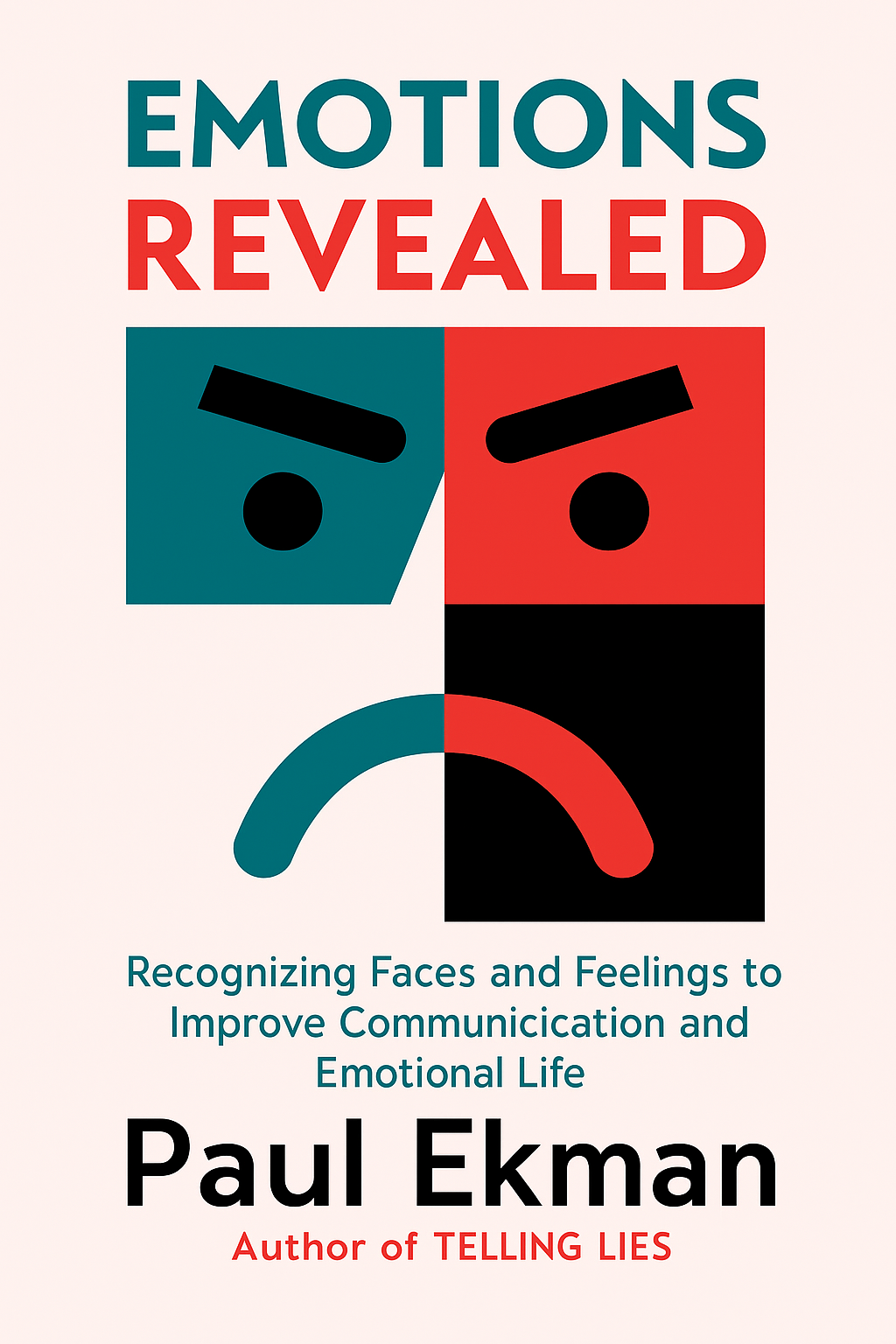
By Paul Ekman
