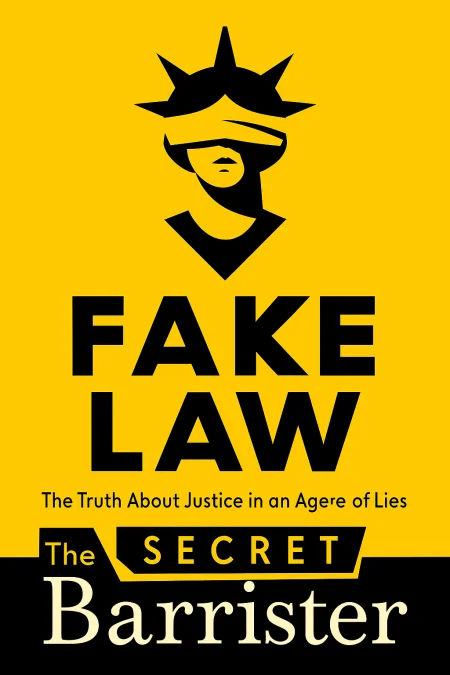
Fake Law
The Truth About Justice in an Age of Lies
Book Edition Details
Summary
When did the law become a playground for deception and manipulation? In "Fake Law," the enigmatic Secret Barrister takes you on a riveting exposé of the tangled web spun by misinformation and media distortions in Britain's legal system. This isn’t just about the courtroom; it’s a mirror reflecting society’s deepest vulnerabilities to twisted narratives and political agendas. With biting wit and razor-sharp analysis, the author unravels the truth behind headline-grabbing cases, revealing the absurdity and malice often hidden in plain sight. Brace yourself for a journey that’s as enlightening as it is unsettling, showing just how far the powerful will go to reshape justice—and why understanding the law is crucial for all of us.
Introduction
Democratic societies face an unprecedented crisis where the very institutions designed to protect citizens have become targets of systematic disinformation campaigns. The manipulation of legal understanding represents one of the most sophisticated threats to constitutional governance, operating not through direct assault but through the gradual erosion of public comprehension of fundamental rights and protections. This erosion occurs when complex legal principles are deliberately distorted, creating false narratives that serve particular political and economic interests while undermining the rule of law itself. The danger lies not merely in individual misconceptions about specific laws, but in the comprehensive transformation of how citizens understand their relationship to legal institutions. When people believe that their rights protect only criminals, that their courts favor only the undeserving, and that their legal protections serve only elite interests, they become willing participants in dismantling the very safeguards upon which democratic governance depends. This systematic manipulation exploits the natural complexity of legal systems, using carefully selected anecdotes and statistical distortions to create alternative narratives that bear little resemblance to legal reality. Understanding how legal misinformation operates reveals the mechanisms by which democratic institutions can be captured and corrupted from within, maintaining the appearance of legitimacy while serving increasingly authoritarian purposes. The stakes extend far beyond legal technicalities to encompass the fundamental question of whether informed democratic participation can survive in an environment where truth itself has become contested terrain.
The Construction of Legal Myths: Media Manipulation and Systematic Distortion
Legal misinformation follows predictable patterns that exploit both journalistic incentives and public unfamiliarity with complex legal systems. The construction process begins with selective case reporting that presents exceptional outcomes as typical results, creating false impressions about how justice normally operates. High-profile cases involving self-defense, medical treatment decisions, or employment disputes become stripped of crucial context, transforming nuanced legal balancing exercises into simple morality tales that confirm predetermined narratives about systemic bias or institutional failure. Statistical manipulation provides the quantitative foundation for these myths, using incomplete data sets and expansive definitions to create alarming figures that justify radical reforms. Claims about compensation culture or fraudulent insurance claims rely on cherry-picked statistics that ignore broader trends or definitional problems, while insurance industry figures conflate legitimate disputes with actual fraud to inflate apparent abuse rates. These manufactured statistics then circulate through media ecosystems without scrutiny, becoming accepted facts that shape policy debates. The emotional framing of legal stories transforms complex constitutional principles into obstacles to common sense, bypassing rational analysis in favor of visceral reactions. Due process protections become reframed as loopholes for criminals, while judicial independence gets characterized as unaccountable power exercised by out-of-touch elites. This emotional manipulation makes audiences receptive to solutions that would actually harm their own interests, as the technical nature of legal reasoning makes it difficult for non-specialists to evaluate competing claims about institutional performance. Media outlets amplify these distortions through structural incentives that prioritize engagement over accuracy, while political actors exploit legal complexity to advance predetermined agendas under the guise of responding to public concerns. The cumulative effect creates comprehensive alternative narratives about legal reality that serve specific interests while undermining public understanding of institutional safeguards essential to democratic governance.
Targeting Constitutional Safeguards: Rights Erosion Through Manufactured Crisis
Constitutional rights face systematic attack through coordinated campaigns that manufacture crises to justify the erosion of fundamental protections. Human rights legislation becomes reframed as foreign interference that prevents effective governance, while the nuanced balancing exercises that courts actually perform disappear from public view. The European Convention on Human Rights, drafted largely by British lawyers and reflecting British legal traditions, gets rebranded as an alien imposition that protects only criminals and terrorists, obscuring the everyday victories that human rights law delivers for ordinary citizens. Employment protections suffer similar assault through myths about vexatious tribunal claims that ignore evidence showing most employment disputes involve genuine grievances about unpaid wages, discrimination, or unfair dismissal. The introduction of tribunal fees creates insurmountable barriers for low-paid workers seeking to enforce basic rights, while employers retain access to professional legal representation. This asymmetry transforms employment law from protection for vulnerable workers into a dead letter, justified by false narratives about frivolous litigation. Personal injury law demonstrates how rights erosion operates through the compensation culture narrative that portrays legitimate claims for workplace injuries or medical negligence as frivolous money-grabs. Legislative changes like increased small claims limits force injured people to represent themselves against professional legal teams, effectively denying access to justice for all but the wealthiest claimants. The fault-based nature of the legal system gets obscured by rhetoric about lottery-winner claimants, while insurance companies that benefit from restricting compensation rights remain invisible in public discourse. The attack on judicial independence represents the most dangerous trend, as political leaders increasingly respond to adverse court decisions not by accepting judicial oversight but by questioning judicial legitimacy. This strategy transforms constitutional checks and balances into partisan conflicts, suggesting that judges who rule against popular policies betray democratic will rather than uphold constitutional principles, creating precedents that normalize political interference in judicial processes.
The Democratic Cost: When Misinformation Destroys Institutional Legitimacy
The widespread acceptance of legal misinformation creates cascading effects that undermine the rule of law itself, as public support for legal protections erodes based on false premises about institutional performance. Citizens lose the ability to distinguish between legitimate policy debates and fundamental attacks on constitutional governance, making them vulnerable to authoritarian appeals disguised as democratic reform. This confusion enables politicians to dismantle legal protections while claiming to respond to public demand, creating a ratcheting effect where each successful attack makes subsequent erosion easier to justify. Economic consequences ripple through society as legal protections lose their deterrent effect, creating races to the bottom that harm everyone except those wealthy enough to maintain private legal protection. Employers who understand that workers cannot afford to challenge unfair treatment have no incentive to comply with employment law, while manufacturers recognize that injured consumers cannot access legal representation and can therefore cut safety corners with impunity. The separation of powers that protects democratic governance depends on courts being able to hold the executive accountable, but this requires citizens to have meaningful access to legal remedies. Social trust erodes when people believe the legal system serves only elite interests, creating alienation that makes populations vulnerable to authoritarian promises of simple solutions to complex problems. If human rights protect only criminals, if compensation goes only to the undeserving, and if employment law favors only troublemakers, then ordinary citizens have no stake in defending these institutions. This manufactured cynicism about legal institutions serves those who would concentrate power while maintaining democratic appearances. The damage proves difficult to reverse because legal misinformation becomes embedded in political discourse and policy frameworks, while dismantled protective institutions require overcoming both original misinformation and new interests that benefit from weakened legal protections. The ultimate result threatens the basic social contract that underlies democratic governance, as citizens cannot effectively participate in democracy when they fundamentally misunderstand the institutions designed to protect their participation.
Defending Legal Truth: Strategies for Protecting Democratic Justice
Protecting democratic institutions from legal misinformation requires comprehensive strategies that address both immediate distortions and underlying conditions that enable manipulation to flourish. Educational initiatives must improve public legal literacy while simultaneously countering specific false narratives that have already taken hold, recognizing that misinformation thrives in environments where citizens lack knowledge necessary to evaluate legal claims critically. Professional legal communities bear special responsibility for public education and myth-busting, but their efforts must extend beyond traditional academic channels to engage directly with popular media and social platforms where misinformation spreads most rapidly. Institutional reforms can reduce conditions that enable legal misinformation by increasing transparency in legal proceedings, improving access to legal documents and court records, and establishing stronger ethical standards for public officials discussing legal matters. These structural changes work alongside educational efforts to create environments where accurate legal information can compete effectively with misleading alternatives, while greater transparency helps citizens understand how legal institutions actually function rather than relying on sensationalized media accounts. The translation of complex legal concepts into accessible language without sacrificing accuracy or nuance represents a crucial challenge that requires sustained collaboration between legal professionals, educators, and media practitioners. This engagement must recognize that legal complexity cannot justify professional insularity when public misunderstanding threatens institutional survival, while the technical nature of legal reasoning makes public education more necessary rather than less important for democratic governance. The ultimate defense lies in cultivating democratic culture that values truth over convenience and complexity over simplification, requiring sustained effort from multiple institutions working in coordination rather than isolation. Success depends upon recognizing that legal misinformation represents a threat to democratic governance itself, not merely a problem for legal professionals to solve among themselves, while building public understanding that legal institutions deserve protection even when they produce unpopular results.
Summary
The systematic campaign to undermine public understanding of law represents one of the most successful propaganda efforts in modern democratic history, achieving through manufactured consent what direct assault could never accomplish: the voluntary surrender of rights and remedies that took centuries to establish. By convincing citizens that their own legal protections serve as obstacles to justice rather than safeguards for democratic participation, powerful interests have created conditions where people become complicit in their own disenfranchisement, cheering as barriers to justice rise higher and access to legal protection becomes restricted to those with sufficient wealth and power to defend themselves. The defense of democratic institutions requires recognizing that legal misinformation operates as a comprehensive threat to constitutional governance, demanding sustained commitment to public education, institutional transparency, and cultural values that prioritize the patient work of building informed democratic citizenship over the immediate gratification of simple solutions to complex problems.
Related Books
Download PDF & EPUB
To save this Black List summary for later, download the free PDF and EPUB. You can print it out, or read offline at your convenience.
By The Secret Barrister
