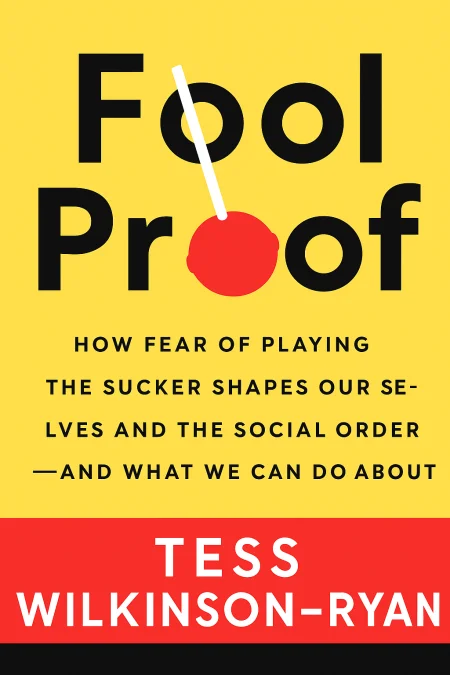
Fool Proof
How Fear of Playing the Sucker Shapes Our Selves and the Social Order — And What We Can Do About It
Book Edition Details
Summary
In a society obsessed with dodging deception, "Fool Proof" unravels the psychology of our deepest fear: being the fool. Tess Wilkinson-Ryan, a brilliant mind from the University of Pennsylvania, peels back the layers of this pervasive anxiety, revealing how it shapes decisions and distorts perceptions. Armed with insights from psychology, sociology, and economics, she embarks on a riveting exploration from everyday shopping dilemmas to global trade tensions. Wilkinson-Ryan deftly examines who we label as gullible and who we praise as wise, all while challenging the narratives that sustain social hierarchies. With a keen eye for human behavior, she not only decodes the 'sucker construct' but also empowers us to redefine risk and integrity in our lives. "Fool Proof" offers an eye-opening roadmap to navigate a world where the fear of being duped can either divide us or lead to genuine human connection and progress.
Introduction
The terror of being played for a fool operates as one of the most pervasive yet invisible forces shaping contemporary American life, driving individuals to make decisions that contradict their stated values and undermine their own interests. This psychological phenomenon—sugrophobia—extends far beyond simple caution about scams or fraud, functioning instead as a sophisticated mechanism that maintains social hierarchies and prevents collective action for positive change. The fear manifests in countless daily interactions: voters rejecting beneficial policies because someone undeserving might benefit, individuals withdrawing from charitable giving to avoid being duped, and communities fracturing along lines of mutual suspicion rather than building cooperative solutions to shared problems. The analysis reveals how this deeply embedded anxiety operates simultaneously as a personal psychological trigger and a weapon of social control, with those in power consistently deploying accusations of foolishness against marginalized groups while positioning themselves as savvy protectors of social order. The framework illuminates seemingly disparate phenomena—from road rage to welfare policy debates, from gender dynamics to racial stereotyping—as manifestations of the same underlying fear structure. Understanding this dynamic requires examining both the individual psychology of betrayal aversion and the systematic ways that sucker rhetoric serves to preserve existing power arrangements while masquerading as common sense and prudent self-protection.
The Psychology and Political Weaponization of Sugrophobia
The fear of playing the fool represents a distinct psychological phenomenon that combines two of humanity's most aversive experiences: regret and social humiliation. Unlike other forms of victimization, being suckered requires the mark's active participation, creating a particularly painful form of self-recrimination that distinguishes it from simple misfortune. Laboratory studies demonstrate that people will forgo significant material benefits rather than risk appearing gullible, even when rational analysis clearly favors cooperation and mutual gain. Experimental research using public goods games reveals that participants consistently under-contribute to collective benefits, not from selfishness but from terror that others will exploit their generosity. This pattern persists even when cooperation would maximize everyone's outcomes, indicating that sugrophobia operates independently of material self-interest. Neurological studies show that the mere anticipation of being played activates brain regions associated with social rejection and physical pain, triggering fight-or-flight responses that prioritize reputation protection over optimal decision-making. Political actors have learned to exploit this psychological vulnerability with devastating effectiveness, transforming legitimate policy discussions into zero-sum battles where helping others becomes synonymous with personal victimization. The rhetoric of welfare fraud and immigration scams succeeds not because these characterizations reflect reality, but because they activate deep-seated fears of being taken advantage of by undeserving others. This weaponization allows demagogues to mobilize opposition to beneficial programs by reframing social cooperation as dangerous naivety. The deployment of sucker narratives in political discourse reveals their power to override both rational analysis and moral intuition, convincing people to support policies that harm their own interests while violating their stated values. When citizens believe they might be exploited, they become willing to dismantle social safety nets, reject international cooperation, and embrace punitive measures that ultimately damage the very communities they claim to protect from manipulation and fraud.
Fight-or-Flight Responses and the Erosion of Social Cooperation
When confronted with potential exploitation, humans exhibit predictable defensive patterns that mirror classic stress responses, with the flight mechanism manifesting as systematic withdrawal from social cooperation and institutional engagement. Research demonstrates that people consistently choose guaranteed smaller payoffs over potentially larger but uncertain gains when the possibility of being duped exists, even when mathematical analysis clearly favors the riskier cooperative choice. This defensive calculation creates cascading social problems as individuals retreat from the very systems and relationships that could provide the greatest mutual benefit. The withdrawal response operates across multiple levels of social organization, from personal relationships to civic participation. Citizens reject government assistance programs not because they lack need, but because accepting help feels like admitting vulnerability to being scammed by bureaucrats or fellow recipients. Communities resist investment in public goods, preferring private solutions that offer less collective benefit but greater individual control over potential exploitation. The result is a society of defensive individualists, each protecting themselves from imagined threats while collectively creating conditions of mutual impoverishment. The fight response to perceived exploitation takes the form of punitive retaliation that often exceeds any reasonable proportion to the actual offense, with laboratory studies using ultimatum games revealing that people will reject beneficial offers and punish perceived unfairness even when doing so imposes significant costs on themselves. This retaliatory impulse serves important functions in deterring genuine exploitation, but becomes destructive when triggered by minor slights or imagined manipulation, leading to cycles of escalating conflict that destroy the social trust necessary for cooperative problem-solving. The erosion of social cooperation creates self-fulfilling prophecies where defensive behavior breeds the very mistrust it seeks to prevent, as individuals approaching interactions with suspicion and hostility elicit similar responses from others. Communities trapped in these dynamics find themselves unable to address collective challenges not because solutions are unavailable, but because the social capital necessary to implement cooperative strategies has been systematically destroyed by pervasive fears of mutual exploitation and manipulation.
Race, Gender, and the Strategic Deployment of Fool Narratives
The intersection of sugrophobia with systems of racial and gender oppression creates particularly sophisticated forms of social control, as different groups face distinct but complementary accusations within overarching sucker frameworks. Women encounter the impossible double bind of being simultaneously characterized as natural marks—gullible, trusting, easily manipulated by predators and con artists—and dangerous deceivers capable of exploiting male vulnerability through sexual manipulation, false accusations, or emotional blackmail that threatens social stability and individual autonomy. Racial minorities navigate their own version of this paradox, portrayed alternately as foolish and inferior when such characterizations justify paternalistic intervention and control, or as cunning schemers when they assert rights or make claims for equal treatment that challenge existing hierarchies. The strategic flexibility of these narratives allows dominant groups to interpret virtually any action by subordinated people as evidence of either their unfitness for equality or their illegitimate attempts to gain undeserved advantages through manipulation of liberal guilt and institutional bias. These stereotypical frameworks serve specific functions within broader systems of domination, with the portrayal of women as naturally susceptible to deception providing justification for male control over female autonomy while simultaneously positioning women who resist such control as manipulative threats to social order. Similarly, the alternating characterization of racial minorities as either incompetent dupes or dangerous con artists provides moral justification for both paternalistic policies that deny agency and aggressive surveillance measures that assume criminal intent. The deployment of these narratives becomes particularly visible during moments of social change when traditional hierarchies face organized challenges, as movements for gender equality or racial justice consistently encounter accusations that their participants are either naive tools of more sophisticated manipulators or calculating deceivers exploiting social sympathy for personal gain. These accusations serve to delegitimize claims for equality by reframing them as elaborate confidence games targeting well-meaning but gullible supporters, transforming struggles for justice into questions of who is manipulating whom.
Cooling Out Mechanisms and the Path to Moral Agency
The most sophisticated aspect of sucker dynamics operates through psychological processes by which people convince themselves that exploitative arrangements are reasonable or beneficial, creating a form of complicity that appears voluntary while functioning under significant emotional and social pressure. This cooling out mechanism allows individuals to maintain their sense of agency and intelligence while accepting objectively harmful situations, resolving the cognitive dissonance between their experiences and their self-concept as competent, autonomous agents who cannot be easily fooled or manipulated. The rationalization process operates across multiple levels of social organization, from individual consumer transactions to broader political and economic arrangements that systematically disadvantage large populations. People convince themselves that predatory lending practices represent legitimate business relationships, that exploitative employment conditions reflect natural market forces, or that discriminatory policies serve necessary social functions that protect deserving citizens from being taken advantage of by unworthy others seeking unearned benefits. Cultural narratives celebrating individual responsibility while obscuring structural constraints provide substantial support for these cooling processes, creating social pressure for exploitation victims to accept responsibility for their situations rather than challenging systems of power that benefit from their disadvantage. This combination of internal psychological needs and external social expectations creates remarkably stable arrangements of domination that appear consensual while operating through sophisticated forms of coercion and manipulation that remain largely invisible to both perpetrators and victims. Reclaiming moral agency requires developing frameworks for ethical reasoning that acknowledge legitimate concerns about exploitation while refusing to allow the fear of being played to prevent the kind of vulnerable engagement with others that genuine human flourishing demands. This involves cultivating the capacity to assess risks and navigate relationships based on shared values and mutual benefit rather than defensive calculations about who might be taking advantage of whom, enabling strategic cooperation that serves collective interests without abandoning appropriate caution about genuine threats to individual and community wellbeing.
Summary
The pervasive fear of being played for a fool operates as one of the most powerful yet underexamined forces shaping contemporary American society, functioning simultaneously as a psychological constraint on individual moral reasoning and a political weapon for maintaining systems of inequality and exploitation that benefit those already in positions of power and privilege. The research demonstrates that humans possess a deep-seated terror of appearing gullible or naive that frequently overrides rational self-interest and moral intuition, leading people to reject beneficial cooperation, withdraw from social institutions, and support policies that harm their own interests in order to avoid the psychological pain of being duped by others they perceive as undeserving or manipulative. This fear becomes particularly destructive when weaponized by political actors who deploy sucker narratives to mobilize opposition to redistributive policies, social programs, and cooperative solutions to collective problems by triggering anxieties about exploitation, while the intersection of these dynamics with systems of racial and gender oppression creates additional layers of complexity that trap marginalized groups between contradictory stereotypes and prevent effective coalition building for social change. Understanding these mechanisms reveals how the terror of playing the fool has become a fundamental tool of social control that undermines the very cooperation and mutual aid that human communities require to address shared challenges and create conditions for genuine flourishing, suggesting that overcoming these patterns requires both individual awareness and collective strategies for building trust and solidarity across lines of difference and potential conflict.
Related Books
Download PDF & EPUB
To save this Black List summary for later, download the free PDF and EPUB. You can print it out, or read offline at your convenience.
By Tess Wilkinson-Ryan
