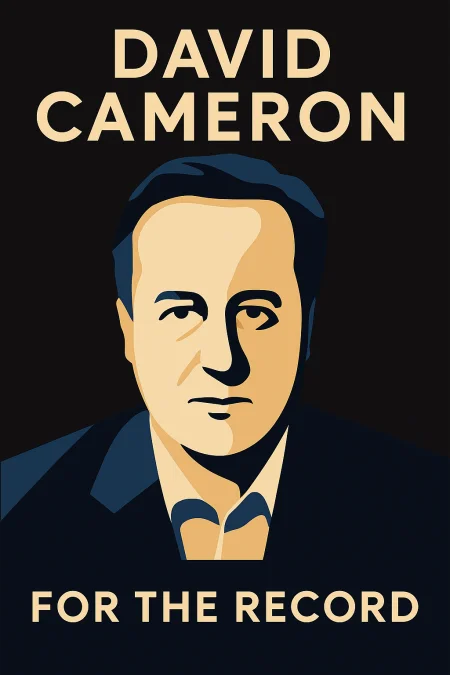
For the Record
An honest account from a prime minister who truly altered his country’s course
Book Edition Details
Summary
Beneath the veneer of political power lies a narrative of seismic decisions and personal revelations in "For the Record." David Cameron, the architect of Britain's controversial EU referendum, unveils the trials of steering a nation through economic turmoil, geopolitical upheavals, and unprecedented social reform. With unflinching honesty, he recounts his journey from reshaping the Conservative Party to navigating the complexities of coalition governance. Here, Cameron offers more than a political chronicle; he shares an intimate glimpse into his personal trials, including the heartache of losing a child. This memoir doesn't just recount history—it provides an insider's reflection on the weight of leadership, the art of compromise, and the enduring question of legacy.
Introduction
In May 2010, Britain found itself at a crossroads that would define a generation. The financial crisis had left the nation's economy in tatters, unemployment was soaring, and for the first time in decades, no single party commanded a parliamentary majority. Against this backdrop of uncertainty, a young Conservative leader stepped into Downing Street to form Britain's first coalition government since the Second World War. What followed was six years of political drama that would reshape not only British conservatism but the very foundations of the nation's relationship with Europe. This remarkable period illuminates three fundamental questions that continue to resonate across democratic societies today: How do nations balance economic recovery with social cohesion during times of crisis? What happens when established political institutions face the rising tide of populist sentiment? And perhaps most critically, how do well-intentioned democratic decisions produce consequences that no one anticipated or desired? The story reveals the complex interplay between personal conviction and political necessity, between pragmatic governance and popular will, offering invaluable insights into the mechanics of power during one of the most turbulent eras in modern British history. This account will particularly appeal to those seeking to understand how democratic leadership operates under extreme pressure, how coalition politics can both enable and constrain reform, and why even the most carefully crafted political strategies can unravel when confronted with forces beyond any single leader's control.
Coalition Formation and Economic Recovery (2010-2012)
The formation of the Conservative-Liberal Democrat coalition in May 2010 marked a dramatic departure from Britain's traditional two-party system. With the nation facing its worst economic crisis since the 1930s, the unlikely partnership between David Cameron and Nick Clegg emerged not from ideological affinity but from shared recognition that Britain required stable government to navigate the treacherous waters ahead. The coalition agreement, hammered out over five intense days of negotiation, would prove more durable and consequential than anyone initially imagined. The new government inherited a daunting economic landscape that demanded immediate action. Britain's budget deficit had reached levels that threatened the nation's credit rating, while unemployment continued to climb and business confidence remained shattered. The coalition's response was swift and decisive: an emergency budget that combined spending cuts with targeted tax increases, following the principle that economic recovery required both fiscal discipline and social responsibility. This approach, which critics would label "austerity," reflected a deeper philosophy about the proper role of government during economic downturns. Beyond the immediate fiscal challenges, the coalition embarked on ambitious structural reforms that would transform British society. The introduction of the pupil premium aimed to close educational achievement gaps, while the raising of income tax thresholds lifted millions of low-paid workers out of taxation altogether. The successful hosting of the 2012 London Olympics provided a spectacular demonstration of what Britain could achieve when ambition was matched with meticulous planning and cross-party cooperation. Yet beneath the surface harmony lay fundamental tensions that would eventually reshape the political landscape. The Liberal Democrats' decision to support university tuition fee increases despite their election promises created a credibility crisis that would haunt them for years. Meanwhile, Conservative backbenchers grew increasingly restive about European integration and immigration, setting the stage for the populist insurgency that would later threaten the established order and ultimately define Cameron's legacy.
Modernization Agenda and European Tensions (2013-2015)
As Britain's economic recovery gained momentum, Cameron turned his attention to the ambitious modernization agenda that had long been central to his political vision. This period witnessed some of the most significant social reforms undertaken by any Conservative government in living memory, culminating in the legalization of same-sex marriage despite fierce opposition from traditional party supporters. The decision reflected Cameron's fundamental belief that conservatism must evolve to remain relevant, embracing social progress while maintaining economic discipline and institutional stability. The international arena presented both opportunities and profound challenges that would ultimately define Cameron's legacy. The Arab Spring had unleashed forces across the Middle East that tested Western assumptions about democracy and intervention. Cameron's response to the Libyan crisis demonstrated both the possibilities and perils of humanitarian intervention, while the subsequent chaos revealed the limitations of Western power to build stable institutions from afar. These lessons would prove crucial when Syria presented even starker choices between action and inaction. The eurozone crisis fundamentally altered the European Union's trajectory, creating new pressures on Britain's already complex relationship with the continent. As eurozone members moved toward closer fiscal union to address their economic challenges, Britain found itself increasingly isolated, facing decisions that would affect its economy without having a meaningful voice in their formulation. The Bloomberg speech of January 2013, promising to renegotiate Britain's EU membership and hold an in-out referendum, represented both a response to immediate political pressures and a longer-term strategy for addressing Britain's anomalous position within the European project. This period also revealed the growing influence of populist movements across Europe, with UKIP's success in the 2014 European elections serving as an early warning of the political earthquake to come. Immigration concerns, European integration, and a broader sense of cultural displacement were coalescing into a potent political force that challenged the established consensus. Cameron's response to these pressures, balancing the need to address legitimate concerns while maintaining Britain's international commitments, would prove crucial in shaping the political landscape for the decisive battles ahead.
Brexit Referendum and Political Reckoning (2015-2016)
The unexpected Conservative victory in the 2015 general election transformed Cameron from coalition manager to majority leader, but it also activated the most fateful promise of his political career: the European Union referendum. What had seemed like a manageable political commitment during the campaign became an existential challenge for both Cameron personally and Britain's place in the world. The decision to hold the referendum reflected a genuine belief that Britain's relationship with Europe needed democratic validation, but it also revealed the limits of political control in an age of populist insurgency. Cameron's renegotiation with European partners, while achieving significant concessions on sovereignty and welfare access, failed to address the deeper emotional currents driving Euroscepticism. The technical achievements of securing opt-outs from ever-closer union and protecting the City of London's interests paled beside the visceral appeal of "taking back control." The campaign exposed the growing disconnect between political elites and public sentiment that would reshape democratic politics across the Western world, as traditional arguments about economic benefits struggled against powerful narratives about national identity and democratic accountability. The referendum battle revealed how personal relationships and party loyalties could fracture under the pressure of fundamental disagreements about national direction. Cameron's inability to secure support from key Conservative figures like Boris Johnson and Michael Gove demonstrated that even the strongest political partnerships could not overcome deep-seated differences about sovereignty and Britain's place in the world. The Leave campaign's ability to frame complex constitutional questions in simple emotional terms showed how modern political communication had evolved beyond traditional party structures and elite consensus. The narrow defeat on June 23, 2016, marked not just the end of Cameron's career but the beginning of a new and uncertain chapter in British history. The decision to resign immediately, while politically understandable given his passionate advocacy for Remain, left the country without experienced leadership at a moment of maximum uncertainty. The referendum's outcome vindicated neither the hopes of its supporters nor the fears of its opponents, instead opening a period of prolonged negotiation and constitutional upheaval whose consequences continue to unfold across British society and politics.
Summary
The Cameron years illuminate a fundamental tension in modern democratic governance: the challenge of maintaining political stability while responding to popular demands for change that may threaten the very foundations of established order. Throughout this transformative period, we witness how well-intentioned attempts to modernize institutions and resolve long-standing questions can produce unintended consequences that reshape entire political systems in ways no single leader can fully control or predict. The lessons from this era extend far beyond British politics, offering crucial insights for contemporary leaders facing similar challenges of national identity, economic inequality, and democratic legitimacy. Cameron's experience demonstrates both the possibilities and limitations of pragmatic centrism in an age of growing polarization, showing how traditional parties can adapt to changing social values while maintaining economic credibility. Yet his ultimate failure to maintain Britain's European membership reveals how even skilled political leadership cannot always overcome deeper currents of popular discontent that have been building for decades. For today's democratic leaders, the key insight may be that the most important political decisions often cannot be controlled by those who make them, but their consequences must be lived with by entire societies for generations to come.
Related Books
Download PDF & EPUB
To save this Black List summary for later, download the free PDF and EPUB. You can print it out, or read offline at your convenience.
By David Cameron
