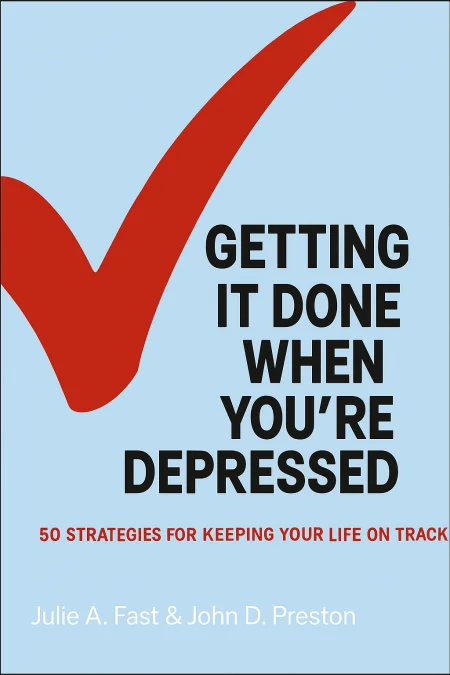
Getting It Done When You're Depressed
50 Strategies for Keeping Your Life on Track
byJulie A. Fast, John D. Preston
Book Edition Details
Summary
Battling the shadowy tendrils of depression often feels like an insurmountable task in a world obsessed with hustle and achievement. "Getting Things Done When You’re Depressed" shatters this narrative by offering a lifeline to those caught in this struggle. This guide doesn't just sympathize—it equips. With fifty meticulously crafted strategies, it helps reshape your environment and mindset, transforming inertia into action. Whether it's reconfiguring your workspace or collaborating with others, each tip is a stepping stone out of the mire. This book is more than advice; it's a practical companion, empowering you to reclaim productivity and joy, even when the weight of depression feels overwhelming.
Introduction
Picture this: You wake up with a heavy feeling in your chest, your mind foggy, and a to-do list that feels like Mount Everest. The simplest tasks seem insurmountable, and your usual motivation has vanished into thin air. If this sounds familiar, you're not alone. Millions of people struggle with the unique challenge of maintaining productivity while battling depression, often feeling trapped between their ambitions and their mental state. Depression doesn't just affect your mood—it fundamentally alters how your brain processes tasks, makes decisions, and sustains energy. The cruel irony is that accomplishing things can actually help lift depression, yet depression makes accomplishing anything feel nearly impossible. This creates a frustrating cycle that leaves many people feeling stuck, ashamed, and convinced they're simply "lazy" or "weak." But here's the truth that changes everything: You can absolutely get things done while depressed. It requires different strategies, adjusted expectations, and a toolkit specifically designed for the depressed brain. The key isn't waiting until you feel better—it's learning to work with your depression rather than against it, creating systems that function even when motivation disappears, and recognizing that productivity while depressed looks different but is equally valid and valuable.
Overcome Mental Barriers and Take Action
The first and most crucial barrier to overcome is the myth that you need to feel motivated before you can act. Depression specializes in stealing motivation, leaving you waiting for a spark that may never come. The revolutionary truth is this: action creates motivation, not the other way around. Consider Alice, a painter who discovered this principle through necessity. For years, whenever depression struck, she would stop painting entirely, convinced that without the joy and excitement she usually felt, her work would be worthless. She would sit in her studio, staring at blank canvases, waiting for inspiration to return. Months would pass with no creative output, deepening her depression and self-doubt. Everything changed when a friend asked her a simple question: "Have you ever painted something while depressed?" Alice realized that yes, she had—and when she looked at those pieces objectively, she couldn't distinguish them from work created during her best moods. The quality was identical; only her internal experience differed. This revelation broke the spell that had kept her paralyzed. Alice began painting regardless of how she felt, sometimes crying while she worked. She discovered that within minutes of starting, her body remembered the motions, her hands knew what to do, and often, the very act of creating began to shift her mood. The key wasn't feeling good first—it was trusting that feeling good could emerge from the doing. To apply this principle, start by choosing one small task you've been avoiding. Instead of asking yourself if you feel like doing it, ask what you would gain by completing it. Sit down, begin the physical motions, and commit to just five minutes. Tell your brain you're simply exploring what happens when you act without permission from your emotions. Often, you'll find yourself continuing past those initial five minutes, momentum building naturally. Remember that your depressed brain will lie to you about your capabilities. It will tell you that nothing you do matters, that you'll fail, or that the task is too difficult. Recognize these thoughts as symptoms, not facts. The most powerful phrase you can learn is: "I don't have to want to do this to do it anyway." This simple shift in thinking can unlock productivity even in your darkest moments.
Build Structure and Support Systems
Depression thrives in chaos and withers in structure. When your internal world feels unpredictable and overwhelming, external structure becomes your lifeline—a framework that can hold you up when you can't hold yourself up. Think of structure as scaffolding around a building under renovation; it provides support while reconstruction happens inside. Michael discovered the power of structure during his deepest depression following a divorce. His days had become shapeless voids where he would wander aimlessly around his apartment, unable to decide what to do next. Simple choices like what to eat for breakfast became overwhelming decisions that could paralyze him for hours. He was losing weight, missing work, and spiraling deeper into isolation. The turning point came when Michael's friend suggested he structure his day like a child's schedule. At first, this felt insulting—he was a grown man, not a kindergartner. But desperation made him willing to try anything. He created a basic schedule: wake up at 7 AM, shower by 7:30, breakfast at 8:00, work from 9:00 to 5:00, gym at 6:00, dinner at 7:30. He even scheduled when to check emails and return phone calls. Within two weeks, Michael noticed a dramatic difference. The constant decision fatigue that had been draining his energy disappeared. Instead of using his limited mental resources to decide what to do next, he simply followed his schedule. On particularly bad days, the structure carried him through when his own willpower failed. The predictability became comforting rather than restrictive, creating pockets of stability in his emotional chaos. Building your structure starts with identifying the non-negotiables—activities that must happen regardless of your mood. These might include getting dressed, eating meals, taking medications, or showing up to work. Write these down and assign specific times to them. Next, add activities that support your mental health: exercise, socializing, creative pursuits, or relaxation time. The key is making these decisions when you're thinking clearly, not when depression is making choices for you. Don't try to create the perfect schedule immediately. Start with basic structure and adjust as you learn what works. Remember that structure isn't imprisonment—it's freedom from the constant burden of decision-making when your brain isn't functioning optimally. The goal is creating a framework that supports you through the storm, ensuring that life continues moving forward even when you feel stuck.
Manage Your Mind and Energy
Depression doesn't just affect your emotions—it fundamentally changes how your brain processes information, makes decisions, and manages energy. Understanding this shift is crucial because it allows you to work with your altered mental state rather than fighting against it. Your depressed brain operates differently, and acknowledging this difference is the first step toward effective management. Dr. Sarah, a successful therapist, found herself struggling with what she later recognized as "brain chatter"—the relentless stream of negative, repetitive thoughts that accompanied her depression. During client sessions, she could focus clearly, but afterward, her mind would race with self-doubt and catastrophic predictions. She would lie awake at night, her brain cycling through the same worries and criticisms like a broken record player. Initially, Sarah tried to suppress these thoughts through willpower alone, but this approach only intensified her mental exhaustion. She was spending more energy fighting her thoughts than actually working or living. The breakthrough came when she learned to observe her thoughts without judgment, recognizing them as symptoms of her condition rather than accurate reflections of reality. Sarah developed what she called "mental aikido"—instead of fighting her thoughts head-on, she learned to redirect their energy. When her brain told her she was a terrible therapist, she would respond with, "Thank you, brain, for trying to protect me from failure, but I have evidence that contradicts this thought." When anxiety made her mind race, she would acknowledge it: "I notice my brain is in overdrive mode right now. This is my depression, not reality." To manage your own mind and energy effectively, start by becoming a curious observer of your thoughts. Notice when your brain starts the familiar patterns of self-criticism or catastrophic thinking. Instead of believing these thoughts or fighting them, practice responding with phrases like "That's depression talking" or "My brain is trying to protect me, but this thought isn't helpful right now." Energy management requires accepting that your daily energy is limited and planning accordingly. Identify your peak energy times and protect them fiercely for your most important tasks. Recognize that some days you'll have abundant energy while others you'll be running on empty—both are valid states that require different approaches. Create "low energy" and "high energy" versions of your goals, allowing flexibility while maintaining forward momentum. The most powerful tool for mind management is the practice of externalizing your depression. Instead of saying "I am depressed," try "I am experiencing depression." This subtle language shift reminds you that depression is something you have, not something you are. It's a temporary state affecting your brain's function, not a permanent definition of your character or capabilities.
Summary
The journey of getting things done while depressed isn't about becoming superhuman or eliminating depression entirely—it's about developing a sustainable relationship with your condition that allows life to continue unfolding. Throughout this exploration, one truth emerges consistently: "Depression may take over my mind, but it doesn't have to take over my actions." This powerful recognition separates your worth and capability from your current emotional state. The strategies we've explored work because they acknowledge a fundamental reality—your depressed brain operates differently, and that's okay. Rather than waiting for perfect conditions or ideal motivation, you can learn to act from wherever you are right now. Structure becomes your external brain when your internal one feels scattered. Action creates the motivation you're waiting for. Support systems provide strength when yours feels depleted. Your next step is beautifully simple: choose one small task you've been avoiding and do it within the next hour, regardless of how you feel about it. Don't wait for enthusiasm, energy, or the "right" moment. Simply begin, observe what happens, and remember that every action you take while depressed is an act of profound courage. You are not broken—you are learning to work with a challenging condition, and that makes you remarkably resilient.
Related Books
Download PDF & EPUB
To save this Black List summary for later, download the free PDF and EPUB. You can print it out, or read offline at your convenience.
By Julie A. Fast
