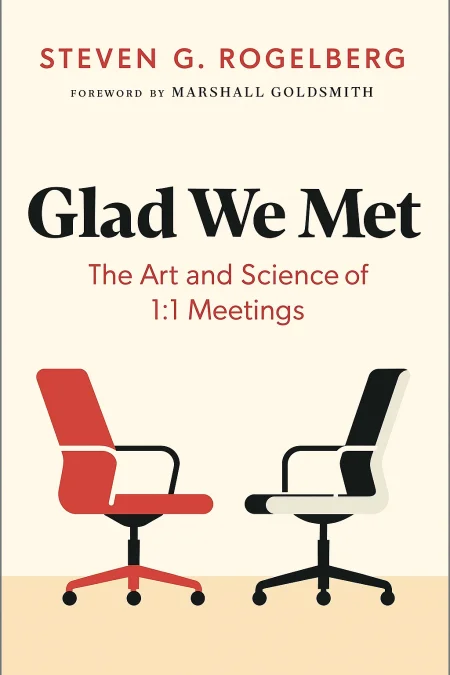
Glad We Met
The Art and Science of 1:1 Meetings
Book Edition Details
Summary
In a world teeming with endless meetings that often feel like time sinks, Dr. Steven Rogelberg offers a radical shift in how we approach the 1:1. In "Glad We Met," he unveils the blueprint for transforming these intimate gatherings into pivotal moments of leadership and growth. Drawing from decades of research and insights from top-tier leaders, Rogelberg crafts a compelling case for why these personal exchanges are the lifeblood of successful management and employee satisfaction. He deftly guides readers on how to tailor these meetings to unlock potential, foster deep connections, and propel both individual and team success. Elevate your 1:1s from mundane to transformative with Rogelberg’s strategic wisdom, ensuring every encounter leaves a lasting impact.
Introduction
In the fast-paced world of modern leadership, managers often find themselves caught in an endless cycle of team meetings, status updates, and firefighting urgent issues. Yet beneath this surface activity lies a profound disconnect—many leaders struggle to truly know their team members, understand their challenges, and foster the deep relationships that drive exceptional performance. The solution isn't found in another team-building exercise or company-wide initiative. Instead, it lies in one of the most underutilized yet powerful tools available to every leader: the regular, intentional one-on-one meeting. These conversations have the potential to transform not just individual relationships, but entire organizational cultures, creating environments where people feel genuinely seen, heard, and empowered to do their best work.
Build the Foundation for Effective 1:1s
At its core, a successful one-on-one meeting serves dual purposes that many leaders fail to recognize. Every effective 1:1 must address both practical needs—the tactical support required for work execution and career advancement—and personal needs—the human desire to feel respected, valued, and psychologically safe. Research consistently shows that when meetings address only one set of needs while ignoring the other, the relationship and outcomes suffer dramatically. Consider the experience of a technology manager who discovered this balance through trial and error. Initially, her one-on-ones felt like extended status updates, focusing solely on project timelines and deliverables. Team members would arrive unprepared, offer minimal input, and leave feeling more overwhelmed than supported. The practical needs were being addressed through task-focused questions, but the personal needs—feeling heard, understood, and valued as individuals—were completely neglected. Everything changed when she began opening each meeting with genuine curiosity about her team members as people, actively listening to their concerns, and involving them in problem-solving rather than simply assigning solutions. The transformation was remarkable: team members started bringing forward creative ideas, openly discussing obstacles, and taking greater ownership of their work. They felt psychologically safe to share struggles and aspirations because their manager had demonstrated through consistent behavior that they were valued as whole human beings. To build this foundation effectively, establish a regular cadence that signals commitment and importance. Weekly meetings of 30 minutes or biweekly meetings of 45-60 minutes work best for most teams, though the frequency should adapt to individual needs and circumstances. Create shared agendas where team members drive the content, ensuring the meeting truly serves their needs rather than simply convenient for management oversight. Most importantly, approach each conversation with genuine curiosity and empathy, recognizing that the quality of your listening will determine the depth of insights and trust you'll build together. Remember that consistency breeds trust, and trust enables transformation. When team members know they have dedicated time with you regularly, they'll begin saving important conversations for these moments rather than interrupting your day with ad-hoc requests. This creates space for deeper, more strategic discussions about career development, creative problem-solving, and relationship building that simply cannot happen in the margins of busy schedules.
Master the Art of Conducting 1:1s
The structure of an exceptional one-on-one follows a natural rhythm that honors both relationship and results. Every meeting should begin with genuine connection—asking about life outside work, acknowledging recent wins, or simply checking in on how someone is showing up that day. This isn't small talk; it's the foundation that makes everything else possible. A senior executive at Deloitte shared how this approach revolutionized her leadership effectiveness. She had always prided herself on efficiency, jumping straight into business matters during one-on-ones to maximize productivity. However, she noticed that her team members seemed hesitant to share challenges and rarely brought forward innovative ideas. Acting on feedback from a trusted colleague, she began dedicating the first five minutes of every one-on-one to personal connection and genuine curiosity about how people were doing. The shift was immediate and profound. When she started with authentic interest in her team members as individuals, they began opening up about work challenges more freely. A direct report mentioned feeling overwhelmed by eldercare responsibilities, which led to adjustments in project timing that prevented burnout and maintained quality. Another team member shared excitement about a professional development opportunity, leading to connections that advanced their career trajectory. These personal moments created the psychological safety necessary for deeper professional conversations. Following the connection phase, move into the heart of the meeting using a structured but flexible approach. Start with any follow-up items from previous conversations to demonstrate continuity and accountability. Then explore current priorities, challenges, and obstacles using open-ended questions that invite problem-solving rather than mere status reporting. Questions like "What's most important for you to accomplish this week?" and "What obstacles are slowing you down that I might help address?" create space for meaningful dialogue. End every meeting by clarifying next steps and commitments for both parties, then expressing genuine appreciation for their time and contributions. This positive conclusion ensures people leave feeling energized and valued rather than drained or criticized. The goal is creating momentum that carries forward until your next conversation, building a continuous cycle of support and growth.
Create Lasting Impact Through Follow-Through
The true measure of one-on-one effectiveness isn't what happens during the meeting—it's what occurs in the days and weeks that follow. Outstanding leaders understand that the conversation is merely the beginning; lasting transformation comes through consistent follow-through on commitments and continuous attention to the relationship between meetings. One particularly striking example comes from a manufacturing leader whose team had struggled with engagement and retention. Despite conducting regular one-on-ones, he noticed minimal improvement in team dynamics or performance. The breakthrough came when he realized that while his conversations were meaningful in the moment, he wasn't creating systems to ensure follow-through on the insights and commitments that emerged. He began taking detailed notes during each meeting and sending brief summaries within 24 hours, clearly outlining both his commitments and those of his team member. More importantly, he started each subsequent one-on-one by reviewing progress on previous commitments and discussing any obstacles that had emerged. This simple practice transformed the dynamic entirely, as team members realized their manager was genuinely invested in their success and would remember their conversations from week to week. To create lasting impact, develop systems that support accountability without feeling punitive. Keep running notes between meetings about important themes, challenges, and growth opportunities for each team member. This documentation serves multiple purposes: it helps you prepare for future conversations, provides rich material for performance reviews, and demonstrates your investment in their development journey. Most critically, follow through on your own commitments with the same rigor you expect from others. If you promise to connect someone with a key stakeholder, make that introduction promptly. If you commit to researching a policy question, provide the answer within the agreed timeframe. When you occasionally fall short—and you will—acknowledge it directly, explain what happened, and outline how you'll prevent similar issues in the future. Create feedback loops that allow you to continuously improve your approach. Periodically ask team members what's working well in your one-on-ones and what could be enhanced. This vulnerability and commitment to growth models the behavior you want to see throughout your team while ensuring these important conversations continue evolving to meet changing needs.
Elevate Your Leadership with Advanced Strategies
Exceptional leaders recognize that mastering one-on-ones opens doors to even more powerful relationship-building opportunities. Skip-level meetings—conversations with your team members' direct reports—provide invaluable insights into organizational health while demonstrating your commitment to developing talent at every level. These conversations require careful navigation to avoid undermining your direct reports while still gathering authentic feedback and building relationships. A technology executive discovered the power of skip-levels when she noticed disconnect between what her managers reported about team morale and subtle signs of disengagement she observed. Rather than making assumptions or creating confrontation, she instituted quarterly skip-level meetings with clear communication about their purpose. She informed her direct reports about these conversations in advance, explaining that the goal was to better understand ground-level challenges and identify ways to support the broader team more effectively. The results exceeded her expectations. Skip-level meetings revealed systemic issues that weren't surfacing through traditional channels, allowed her to recognize high-performing individuals who might otherwise go unnoticed, and demonstrated to the broader organization that every voice mattered regardless of hierarchy level. Most importantly, the insights she gained helped her coach her direct reports more effectively, improving their management capabilities and team outcomes. Advanced one-on-one practitioners also recognize the importance of managing meeting overload while maintaining relationship quality. This requires ruthless prioritization of which meetings truly add value and continuous optimization of meeting effectiveness. Use techniques like silent brainstorming in group meetings to capture more ideas in less time, establish clear criteria for when meetings are necessary versus when asynchronous communication suffices, and regularly audit your calendar to eliminate low-value recurring meetings. The highest level of one-on-one mastery involves recognizing these conversations as vehicles for expressing your deepest leadership values. Whether you value innovation, inclusion, excellence, or service, one-on-ones provide the most direct opportunity to live those values through your actions. When you consistently show up with curiosity, empathy, and genuine investment in others' success, you create ripple effects that extend far beyond individual relationships to influence entire organizational cultures.
Summary
The journey toward exceptional one-on-one meetings begins with a fundamental shift in perspective—from seeing these conversations as administrative obligations to recognizing them as the primary vehicle for leadership impact. As one executive powerfully stated, "1:1s are all about fostering a meaningful human connection. These meetings can have tremendous effects on how your team experiences you as a leader, the work they do, and their relationship with the organization. It can make or break a person's day, week, or even a year." The research consistently demonstrates that when leaders invest in regular, meaningful one-on-one conversations, they create exponential returns in engagement, performance, retention, and organizational culture. Starting this week, commit to scheduling regular one-on-ones with each team member, prepare thoughtfully for these conversations by reviewing previous notes and crafting questions that invite genuine dialogue, and approach each meeting with authentic curiosity about the person sitting across from you. Your willingness to show up consistently and vulnerably in these moments will transform not only individual relationships but your entire leadership legacy.
Related Books
Download PDF & EPUB
To save this Black List summary for later, download the free PDF and EPUB. You can print it out, or read offline at your convenience.
By Steven G. Rogelberg
