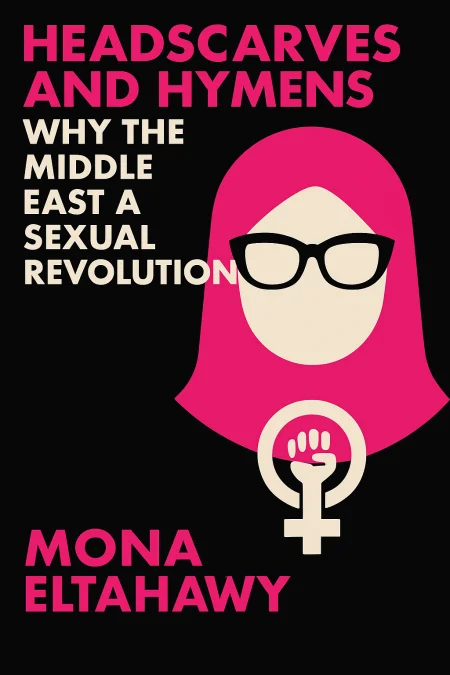
Headscarves and Hymens
Why the Middle East Needs a Sexual Revolution
Book Edition Details
Summary
In a world where silence often cloaks the cries of the oppressed, Mona Eltahawy raises a clarion call against the deeply ingrained misogyny in the Arab world. With a voice both fierce and compassionate, "Headscarves and Hymens" emerges as a testament to the struggles and indomitable spirit of women from Cairo to Riyadh. Eltahawy’s fiery prose challenges the status quo, drawing from her personal encounters and extensive travels across the Middle East and North Africa. Here, women fight not only against patriarchal societies but also against the entangled forces of culture and religion. This book is a rallying cry for justice and a call to arms for a feminist revolution, breaking the shackles of subjugation and igniting a fervor for change. It is as much a beacon of hope as it is an incendiary demand for action, promising to stir hearts and awaken minds.
Introduction
The liberation of women in the Middle East and North Africa cannot be achieved through political revolution alone. The fundamental challenge lies in dismantling an interconnected system of oppression that operates simultaneously through state institutions, public spaces, and domestic spheres. This tripartite structure of patriarchal control creates a comprehensive framework that reduces women to symbols of cultural authenticity while denying them basic human agency. The persistence of gender-based violence, legal discrimination, and social restrictions across the region reveals that misogyny transcends political ideologies, religious interpretations, and class boundaries. Understanding this requires examining how cultural traditions, religious practices, and political power converge to maintain male dominance. The analysis demonstrates that meaningful change demands confronting uncomfortable truths about how societies construct and maintain gender hierarchies, challenging readers to recognize that women's liberation is not a peripheral concern but central to broader social transformation. The examination reveals patterns that extend beyond regional boundaries, offering insights into how patriarchal systems adapt and persist across different contexts while maintaining their essential function of controlling women's bodies and choices.
The Toxic Alliance: How State, Street, and Home Oppress Women
The oppression of women in the Middle East operates through a sophisticated alliance between three distinct but interconnected spheres of patriarchal control. State institutions systematically deny women legal equality through personal status laws that treat women as permanent minors requiring male guardianship for basic decisions. These laws, justified through selective religious interpretation, ensure that women cannot travel, work, or access healthcare without male permission, creating legal frameworks that institutionalize female subordination. Public spaces serve as enforcement mechanisms for this control, where widespread sexual harassment functions as a tool to push women back into domestic confinement. The epidemic of street harassment across the region is not random male behavior but a systematic method of territorial control that makes public space hostile to female presence. When women venture outside, they face constant threats that reinforce the message that their proper place is within the home under male supervision. The domestic sphere completes this triangle of oppression through family structures that socialize women into accepting their subordination as natural and divinely ordained. Parents, particularly mothers who have internalized these values, become agents of patriarchal control by restricting daughters' movements, monitoring their behavior, and preparing them for lives of obedience to male authority. This creates a closed system where women face barriers to liberation at every level of society. This alliance proves remarkably resilient because it provides multiple reinforcement mechanisms. When one sphere fails to control women effectively, the others compensate. Women who challenge state restrictions face family pressure and social harassment. Those who resist domestic control encounter legal barriers and public hostility. This comprehensive system ensures that individual acts of rebellion rarely translate into systematic change, maintaining patriarchal dominance across political transitions and social upheavals.
Bodies as Battlegrounds: From Veiling to Cutting to Sexual Violence
Women's bodies serve as primary sites where cultural, religious, and political battles are fought and won. The practice of veiling illustrates how female bodies become symbols that must be controlled to maintain social order. Far from representing personal choice or religious devotion, veiling often functions as a white flag of surrender to conservative forces that demand female invisibility as proof of social authenticity. The increasing prevalence of veiling across the region reflects the successful political mobilization of patriarchal values rather than genuine spiritual awakening. Female genital mutilation represents the most extreme form of bodily control, where healthy parts of girls' genitalia are removed to prevent future sexual pleasure and ensure male ownership of female sexuality. This practice, affecting millions across the region, demonstrates how cultural traditions weaponize motherhood itself, forcing women to inflict trauma on their daughters to secure social acceptance. The medicalization of these procedures in countries like Egypt shows how modern institutions adapt to perpetuate ancient forms of control. Sexual violence functions as both punishment and prevention, targeting women who transgress prescribed boundaries while terrorizing others into compliance. State forces use sexual assault as a tool of political repression, while civilian men employ harassment and assault to maintain territorial control over public spaces. The systematic nature of this violence reveals its function as social regulation rather than individual pathology. The convergence of these practices creates a comprehensive system of bodily control that begins before birth and continues throughout women's lives. From the moment families express disappointment at female births to the moment elderly women are denied autonomy in end-of-life decisions, women's bodies remain subject to external control. This systematic subjugation of female bodies serves as the foundation for broader social hierarchies, making bodily liberation essential to any meaningful social transformation.
Breaking the Silence: Personal Stories as Political Revolution
The transformation of private suffering into public testimony represents a crucial form of political resistance. When women speak openly about experiences typically shrouded in shame and silence, they challenge the fundamental mechanisms through which patriarchal control operates. The power of personal narrative lies in its ability to make visible the connections between individual trauma and systematic oppression, revealing how private pain serves public political functions. Sexual harassment, domestic violence, and other forms of gender-based violence depend on silence for their perpetuation. Victims are taught to internalize shame and accept responsibility for their victimization, while perpetrators benefit from social codes that prioritize family honor and community reputation over individual justice. Breaking these silences exposes the widespread nature of these practices and challenges their normalization within cultural and religious frameworks. The act of testimony itself becomes revolutionary when it refuses the categories through which patriarchal societies organize female experience. Women who speak publicly about sexuality, desire, and bodily autonomy claim space for female subjectivity within cultures that reduce women to symbols of male honor. These narratives create alternative models of female identity that center women's own experiences rather than their relationships to male relatives. Personal storytelling also serves a crucial consciousness-raising function by helping women recognize shared patterns in their individual experiences. When women hear others articulate struggles they thought were uniquely their own, they begin to understand their personal challenges as political issues requiring collective action rather than individual accommodation. This recognition transforms isolated suffering into shared resistance, creating the foundation for broader social movements that can challenge systematic oppression at its roots.
Towards Liberation: Connecting Individual and Collective Transformation
True liberation requires simultaneous transformation at personal and political levels, refusing the false choice between individual freedom and collective struggle. The path forward demands recognizing that personal battles against internalized oppression and political fights against institutional discrimination are inseparable aspects of the same revolutionary process. Women must claim authority over their own bodies while challenging the legal, cultural, and religious frameworks that deny this authority. The strategy involves creating spaces where women can explore their own experiences while connecting them to broader patterns of oppression. Support groups, consciousness-raising sessions, and shared storytelling provide venues for developing critical analysis that links personal struggles to political action. These spaces allow women to process trauma while building collective understanding of how patriarchal systems operate across different levels of society. Education and legal reform remain essential components of change, but they prove insufficient without concurrent transformation of cultural attitudes and personal relationships. Laws protecting women from violence mean little if police refuse to enforce them and families shame victims into silence. Educational opportunities for girls remain hollow if parents marry them off before graduation and societies punish women for using their education to claim independence. The revolutionary potential lies in the growing recognition among women that their individual liberation depends on collective transformation of the systems that oppress all women. This understanding creates solidarity across class, religious, and national divisions while providing sustainable motivation for long-term struggle. The revolution succeeds when women refuse to accept that their freedom must wait for more important political priorities, insisting instead that women's liberation is central to any meaningful social transformation that claims to advance human dignity and justice.
Summary
The systematic oppression of women in the Middle East operates through an integrated alliance of state, street, and domestic control that cannot be dismantled through political revolution alone. This comprehensive analysis reveals how cultural traditions, religious interpretations, and legal frameworks converge to create a closed system where women face barriers to liberation at every level of society. The path to freedom requires simultaneous personal and political transformation, refusing the false choice between individual autonomy and collective struggle. Women's willingness to break silence about their experiences creates the foundation for broader social change by exposing the connections between private suffering and public oppression. The ultimate insight lies in recognizing that women's liberation is not a peripheral concern but the essential prerequisite for any society claiming to value human dignity, justice, and freedom.
Related Books
Download PDF & EPUB
To save this Black List summary for later, download the free PDF and EPUB. You can print it out, or read offline at your convenience.
By Mona Eltahawy
