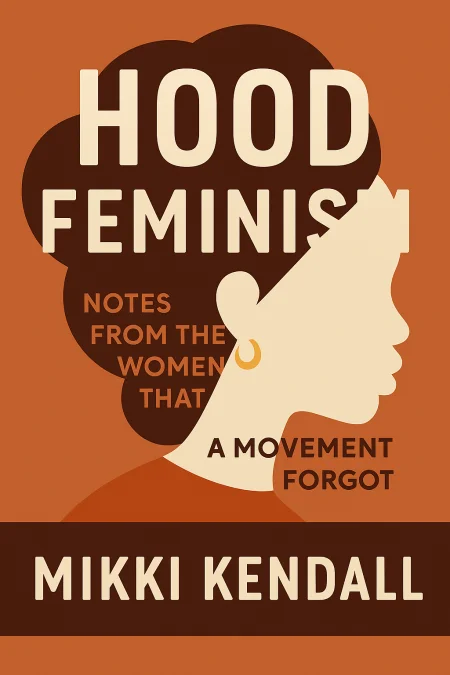
Hood Feminism
Notes from the Women That a Movement Forgot
Book Edition Details
Summary
In a world where the mainstream feminist movement often sidesteps the urgent needs of the many, Mikki Kendall's "Hood Feminism" strikes at the heart of a profound paradox: feminism that overlooks women. Kendall argues that true feminism must address the stark realities of food insecurity, quality education, safe neighborhoods, fair wages, and healthcare access. Yet, too often, the focus narrows on amplifying the voices of the privileged few, sidelining those whose struggles demand solidarity and change. By shedding light on how race, class, sexual orientation, and ability intersect with gender, Kendall challenges the movement to embrace inclusivity and confront the uncomfortable truths of its own biases. This book is a clarion call for a feminism that speaks for all women, especially the most marginalized, urging a powerful reimagining of what solidarity truly means.
Introduction
Contemporary feminism faces a critical reckoning with its own limitations and blind spots. The movement that once promised liberation for all women has increasingly revealed itself to be shaped by the experiences and priorities of a privileged few, leaving vast communities of women to fend for themselves against intersecting systems of oppression. This analysis exposes the fundamental disconnect between mainstream feminist discourse and the lived realities of marginalized women who navigate poverty, racism, violence, and systemic neglect daily. The examination reveals how traditional feminist frameworks often fail to address basic survival needs like food security, housing stability, and protection from violence, instead focusing on workplace advancement and reproductive choice in ways that assume a level of privilege not accessible to all. The critique employed here dismantles the comfortable narratives that allow some women to claim feminist identity while perpetuating harm against others. Through rigorous examination of how race, class, and other identities shape women's experiences, this work challenges readers to confront the ways feminist solidarity has been weaponized to maintain hierarchies rather than dismantle them. The analysis demands that feminism expand beyond its current boundaries to encompass the full spectrum of women's experiences, particularly those most vulnerable to systemic violence and neglect.
The Failure of White-Centered Feminism
Mainstream feminism's central failure lies in its persistent centering of white, middle-class women's experiences as universal, creating a movement that claims to represent all women while systematically excluding the most marginalized. This critique exposes how feminist discourse around issues like workplace equality and reproductive rights consistently frames problems through the lens of privileged women's experiences, rendering invisible the distinct challenges faced by women of color, poor women, and other marginalized groups. The analysis demonstrates how this exclusion operates not merely through oversight but through active harm. When feminists advocate for policies or cultural changes without considering their differential impacts across communities, they often strengthen existing hierarchies. The examination reveals how calls for solidarity frequently translate into demands that marginalized women subordinate their specific needs to support causes that primarily benefit privileged women, creating a one-way relationship that replicates rather than challenges oppressive dynamics. This critique extends beyond policy to examine how mainstream feminism's language and priorities actively alienate potential allies. By focusing on issues like corporate leadership while ignoring basic survival needs, and by demanding emotional labor from marginalized women without reciprocal support, white-centered feminism reveals itself as fundamentally invested in maintaining rather than dismantling systems of oppression. The analysis shows how this approach undermines the movement's own stated goals by fragmenting potential coalitions and perpetuating the very inequalities feminism claims to address.
Intersectional Issues as Core Feminist Concerns
The fundamental reframing proposed here positions issues traditionally relegated to the margins as central to any meaningful feminist analysis. Gun violence, food insecurity, housing instability, and educational inequity emerge not as peripheral concerns but as core feminist issues that disproportionately impact women and children in marginalized communities. This perspective challenges feminism to expand its understanding of what constitutes women's rights beyond the narrow confines of reproductive choice and workplace equality. The argument demonstrates how survival needs must be understood as feminist issues because they disproportionately affect women and directly impact their ability to exercise agency over their lives. When women cannot access stable housing or adequate food, questions of career advancement or political participation become moot. The analysis reveals how addressing these fundamental needs requires confronting the intersecting systems of racism, classism, and sexism that create and maintain these vulnerabilities. This reframing exposes the inadequacy of approaches that treat these issues as separate social problems rather than interconnected manifestations of systemic oppression. The critique shows how mainstream feminism's failure to address basic survival needs reflects its class bias and limited understanding of how oppression operates for the most vulnerable. By repositioning these concerns as central rather than peripheral, the analysis demands a fundamental restructuring of feminist priorities and strategies.
Systemic Barriers Facing Marginalized Women
The examination of systemic barriers reveals how multiple institutions conspire to limit opportunities and increase vulnerabilities for marginalized women and girls. Educational systems that criminalize normal childhood behavior through zero-tolerance policies, healthcare systems that provide substandard care based on racial bias, and housing policies that perpetuate segregation and displacement all function as interconnected mechanisms of oppression that feminist analysis must address comprehensively. The analysis demonstrates how these barriers operate not as isolated problems but as mutually reinforcing systems that compound disadvantage across generations. Educational pushout leads to limited economic opportunities, which increases housing instability, which affects health outcomes and children's educational prospects, creating cycles of marginalization that individual resilience cannot overcome. This systematic understanding challenges narratives that attribute ongoing inequality to personal failings or cultural deficiencies. The critique extends to examine how well-meaning interventions often fail because they address symptoms rather than root causes, and how they frequently impose middle-class values and solutions that are inappropriate or inaccessible for the communities they claim to serve. The analysis reveals how feminist advocacy must move beyond charity models toward structural change that addresses the fundamental distribution of power and resources. This requires acknowledging how some women benefit from systems that oppress others and demanding accountability for that complicity.
From Allies to Accomplices: Transforming Feminist Practice
The distinction between allyship and accomplice-ship represents a fundamental shift in how privileged feminists must understand their role in liberation struggles. While allies offer support while maintaining their comfort and position, accomplices take risks and make sacrifices to actively undermine the systems from which they benefit. This transformation requires moving beyond performative solidarity toward sustained commitment to redistributing power and resources. The analysis exposes how traditional allyship often centers the ally's feelings and learning process rather than the needs of marginalized communities, creating relationships that extract emotional labor while providing minimal tangible benefit. True accomplice-ship demands following the leadership of those most impacted by oppression, even when their strategies or priorities conflict with the preferences of privileged allies. This requires developing comfort with being challenged and criticized rather than praised for good intentions. The framework presented here demands that feminists with privilege use their positions to actively challenge oppressive systems rather than simply avoiding personal participation in them. This means using institutional power to protect and advance marginalized voices, redirecting resources and opportunities, and accepting that meaningful change requires giving up some of the advantages that privilege provides. The analysis shows how this shift from ally to accomplice represents the only viable path toward a feminism that can actually deliver on its promises of liberation for all women.
Summary
The comprehensive critique presented here reveals that authentic feminism must be rebuilt from the ground up, centering the experiences and needs of the most marginalized rather than treating them as afterthoughts to be addressed once privileged women achieve equality. This reconstruction demands abandoning comfortable assumptions about sisterhood and solidarity in favor of honest reckoning with how some women's advancement has come at the expense of others. The path forward requires those with privilege to move beyond allyship toward active accomplice-ship, using their positions to dismantle rather than reform systems of oppression. This work offers essential guidance for readers committed to understanding how feminism can evolve beyond its current limitations to become a force for genuine liberation rather than merely expanding access to existing hierarchies.
Related Books
Download PDF & EPUB
To save this Black List summary for later, download the free PDF and EPUB. You can print it out, or read offline at your convenience.

By Mikki Kendall
