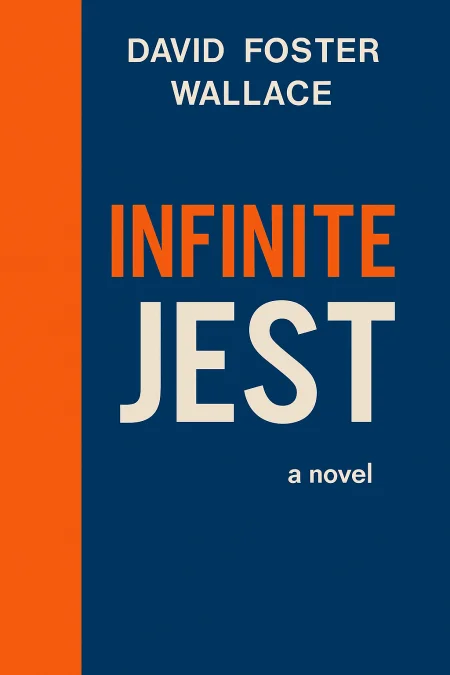
Infinite Jest
Dive Into the Mind-Bending Labyrinth of This Modern Classic
Book Edition Details
Summary
In the chaotic corridors of an American halfway house and a tennis academy, Infinite Jest unravels a tapestry of life’s absurdity and longing. Here, amid a kaleidoscope of flawed yet endearing characters, David Foster Wallace challenges our obsession with entertainment and its insidious grip on human connection. This masterpiece of postmodern literature dances between tragedy and comedy, igniting profound reflections on addiction, identity, and the elusive pursuit of happiness. Through an exhilarating blend of intellectual rigor and comic genius, Wallace reshapes the very fabric of storytelling, offering an exuberant exploration of what it means to be human in a world saturated with distractions.
Introduction
Modern society confronts an unprecedented paradox where unlimited entertainment options coincide with profound spiritual emptiness and social isolation. This examination reveals how the very mechanisms designed to provide pleasure and connection have transformed into sophisticated instruments of dependency that mirror the most destructive forms of addiction. The analysis demonstrates that contemporary culture has systematically replaced authentic human experience with manufactured substitutes, creating populations increasingly incapable of distinguishing between genuine satisfaction and artificial stimulation. The investigation employs a multifaceted approach that weaves together observations of competitive institutions, recovery programs, family dynamics, and entertainment culture to illuminate broader patterns of human behavior in late-stage consumer capitalism. Through detailed examination of characters trapped within various systems of control and dependency, the work demonstrates how the search for authentic human connection becomes increasingly elusive in a world saturated with artificial stimulation. The methodology combines psychological realism with cultural diagnosis, creating a comprehensive portrait of a civilization that has lost its capacity for genuine engagement with both suffering and joy while maintaining the illusion of unprecedented freedom and choice.
The Entertainment Paradox: How Infinite Choice Destroys Genuine Freedom
The fundamental contradiction of modern entertainment lies in its promise to maximize human freedom through unlimited choice while simultaneously creating conditions that eliminate meaningful choice altogether. This paradox operates through a sophisticated mechanism whereby the multiplication of entertainment options creates an illusion of agency that masks the systematic destruction of the capacity for genuine decision-making. The proliferation of choices trains individuals to expect immediate gratification while ensuring that such gratification remains perpetually elusive. Contemporary entertainment culture systematically undermines substantive freedom while appearing to enhance formal freedom. The mechanism functions by exploiting the distinction between the technical ability to select from available options and the preservation of psychological capacities necessary for authentic choice. Each selection for immediate entertainment pleasure weakens the capacity for more demanding forms of engagement, creating a downward spiral where individuals become progressively less capable of choosing anything other than the next entertainment fix. The most insidious aspect of this process lies in its self-reinforcing character and its ability to convince participants that they are exercising liberty while being systematically directed toward choices that eliminate future choice. The entertainment industry operates according to principles identical to drug dealing, providing just enough satisfaction to ensure continued consumption while never delivering true fulfillment. This creates a population of functional addicts who mistake stimulation for engagement and distraction for meaning. The ultimate expression of this dynamic appears in entertainment so compelling it becomes literally irresistible, representing the logical endpoint of a culture that prioritizes immediate gratification over long-term wellbeing. Such perfect entertainment would function as the ultimate drug, providing complete psychological satisfaction while eliminating the capacity for any other form of engagement with reality, revealing how the pursuit of perfect satisfaction leads inevitably to perfect emptiness.
Institutional Systems: Recovery Programs as New Forms of Dependency
Recovery programs and educational institutions create elaborate structures ostensibly designed to foster growth and healing, yet these same systems often replicate the power dynamics and dependencies they claim to address. The institutional response to entertainment addiction operates on the counterintuitive principle that freedom can only be restored through voluntary surrender of individual will to collective wisdom and structured authority. This surrender represents not a betrayal of human agency but its necessary precondition under conditions of systematic addiction. The recovery process begins with recognition that individual willpower has become completely unreliable as a guide to action. Addicted individuals discover that their capacity for rational choice has been so thoroughly compromised that they cannot trust their own desires, preferences, or decision-making processes. Institutional recovery systems function by creating alternative structures of authority that substitute for the compromised individual will through peer support, structured routine, and submission to collective wisdom embodied in program traditions. These environments create therapeutic double-binds where individuals are simultaneously encouraged to take responsibility for their lives while being subjected to constant supervision and control. The resulting psychological tension often manifests as either rebellion against authority or complete submission to it, neither of which represents genuine recovery or growth. The institution becomes both sanctuary and prison, offering safety from chaos while preventing development of skills necessary for independent living. The most insidious aspect lies in these systems' capacity to convince participants that institutional life represents normalcy and health. Residents begin to measure their worth by their ability to navigate institutional demands rather than by their capacity for authentic relationships and meaningful work. The apparent authoritarianism of such systems masks their fundamentally liberating function while demonstrating that authentic freedom often requires temporary abandonment of formal freedom to recover internal resources necessary for genuine self-direction.
Communication Breakdown: Irony and Performance Versus Authentic Connection
Contemporary communication has devolved into performative gestures that maintain the appearance of connection while preventing genuine understanding between individuals. The breakdown of authentic dialogue reflects a broader cultural inability to tolerate the discomfort that genuine intimacy requires, where individuals present carefully curated versions of themselves rather than risk the vulnerability of honest self-expression. This creates a society of people simultaneously over-connected through technology yet profoundly isolated from meaningful human contact. The cultural preference for ironic detachment functions as a defensive mechanism that protects against vulnerability while simultaneously preventing the authentic connections that make life meaningful. Characters who rely heavily on ironic distance find themselves trapped in patterns of communication that preclude real intimacy or understanding. Postmodern irony, while initially liberating in its rejection of false certainties, eventually becomes its own form of prison when deployed as a universal response to emotional complexity. Professional therapeutic relationships often replicate these same patterns, with both therapists and clients engaging in ritualized exchanges that feel meaningful but produce little genuine change or insight. The therapeutic process becomes another form of performance where participants learn to speak the language of recovery without necessarily experiencing underlying transformation. The emphasis on technique and methodology can actually impede the spontaneous moments of connection that facilitate real healing. The collapse of communication creates a feedback loop where the inability to connect authentically drives individuals toward increasingly desperate forms of stimulation and distraction. Unable to find satisfaction in human relationships, people turn to substances, entertainment, and other forms of artificial gratification that provide temporary relief but ultimately deepen their isolation. The constant availability of distraction makes the difficult work of building real relationships seem unnecessary and unappealing, further fragmenting an already atomized social landscape.
The Path to Meaning: Vulnerability and Mutual Aid as Antidotes
Authentic meaning emerges not from the avoidance of pain but from the willingness to engage fully with both suffering and joy as integral aspects of human experience. The characters who achieve genuine growth do so by learning to sit with discomfort rather than immediately seeking relief through substances, entertainment, or other forms of escape. This capacity for presence in the face of difficulty represents a fundamental shift from consumer culture's promise of perpetual comfort and satisfaction toward acceptance of life's inherent challenges. The development of genuine empathy requires direct experience of vulnerability and pain, which creates the emotional foundation necessary for authentic connection with others. Those who have learned to numb themselves to their own suffering inevitably lose the capacity to respond meaningfully to others' suffering. Recovery involves the gradual restoration of emotional sensitivity and the courage to remain open to both beauty and tragedy, recognizing that happiness and satisfaction are temporary experiences to be appreciated rather than permanent states to be achieved. True community emerges when individuals are willing to share their struggles honestly rather than maintaining facades of competence and success. The most healing relationships develop between people who can acknowledge their mutual brokenness without trying to fix each other or themselves. This acceptance of imperfection creates space for genuine intimacy and mutual support, qualities impossible to achieve when individuals focus primarily on managing their image or avoiding discomfort. The path toward meaning requires recognizing that genuine connection often emerges through shared struggle rather than shared pleasure, as individuals find purpose through helping others navigate similar challenges. The human need for genuine relationship cannot be satisfied by any form of consumption or achievement, no matter how sophisticated or intense. Only through the risk of genuine emotional engagement with others can individuals escape the cycles of addiction and isolation that define contemporary existence, finding in authentic community the meaning that no individual pursuit can provide.
Summary
The comprehensive analysis reveals that authentic human flourishing requires abandoning the illusion that external sources can provide internal fulfillment, whether through entertainment, achievement, institutional belonging, or sophisticated communication strategies. True recovery from the various forms of addiction that characterize contemporary life demands developing the capacity for genuine presence with others and honest engagement with one's own experience, rather than seeking increasingly elaborate forms of distraction or control. The work ultimately demonstrates that healing both individual and cultural dysfunction requires recognizing how systems designed to help often perpetuate the very problems they claim to solve, and developing the courage to pursue authentic relationship despite the vulnerability such connection demands. This examination offers essential insights for anyone seeking to understand how genuine freedom might be preserved in an age of infinite entertainment options, revealing that the path beyond postmodern cynicism and contemporary addiction lies in embracing the difficult work of genuine human connection within complexity rather than rejecting it entirely.
Related Books
Download PDF & EPUB
To save this Black List summary for later, download the free PDF and EPUB. You can print it out, or read offline at your convenience.
By David Foster Wallace
