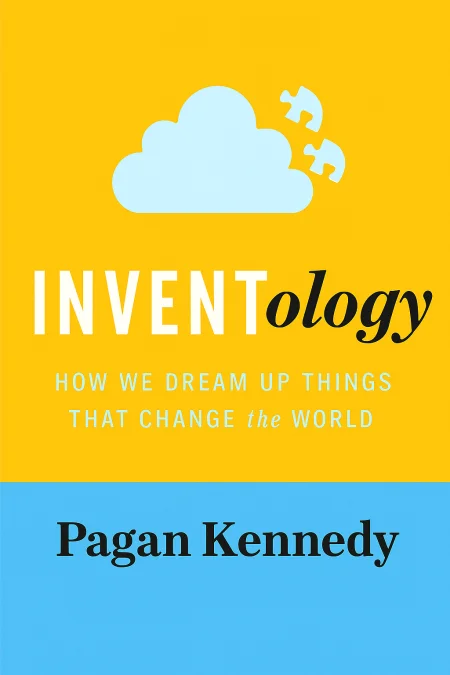
Inventology
How We Dream Up Things That Change the World
Book Edition Details
Summary
What sparks the leap from ordinary to extraordinary? In "Inventology," Pagan Kennedy takes us on an illuminating journey through the ingenious minds who turned everyday challenges into revolutionary inventions. Picture a parent, weary of spills, crafting the first sippy cup; an engineer, inspired by walkie-talkies, paving the way for mobile communication; a doctor, rethinking patient care with a transformative hospital bed. Kennedy deftly weaves these narratives with cutting-edge insights into modern tools like crowdfunding and 3-D printing, demonstrating how anyone can navigate the labyrinth of innovation. This book is a treasure trove for visionaries, creatives, and curious souls eager to decode the alchemy of invention. Embrace a world where imagination meets opportunity, and discover how the seeds of great ideas are sown and nurtured in the fertile ground of possibility.
Introduction
Innovation shapes human civilization, yet the actual process of invention remains mysteriously elusive to most people. While we celebrate breakthrough technologies and their creators, we rarely examine the systematic patterns that govern how transformative ideas emerge from the human mind. This exploration challenges the romantic notion that invention springs from sudden flashes of genius, instead revealing a more nuanced reality where creativity follows identifiable pathways that can be understood, cultivated, and applied. The investigation draws from extensive interviews with inventors, cognitive scientists, and engineers, combined with analysis of patent systems and historical case studies. Rather than accepting invention as an unknowable art, this systematic approach treats it as a learnable skill set with observable patterns. The methodology examines real-world examples across diverse fields, from medical devices to consumer products, extracting common principles that transcend specific industries or technologies. Through rigorous analysis of successful inventors and their methods, five distinct pathways emerge that consistently lead to breakthrough innovations. These pathways represent different cognitive approaches and situational factors that enable humans to identify problems, generate solutions, and navigate the complex journey from initial concept to practical implementation. Understanding these patterns provides a framework for anyone seeking to develop their inventive capabilities and contribute meaningfully to technological progress.
The Five Core Pathways to Invention
Successful invention follows identifiable patterns that can be mapped and understood systematically. The first pathway involves problem identification through deep expertise and repetitive exposure to specific challenges. Individuals who perform the same tasks repeatedly often develop acute awareness of inefficiencies and limitations that remain invisible to casual observers. Tennis instructors picking up thousands of balls, airline pilots dragging heavy luggage across terminals, and doctors performing repetitive procedures all accumulate specialized knowledge about friction points in existing systems. The second pathway emerges through accidental discovery during unrelated activities. Many breakthrough technologies originated when researchers noticed unexpected phenomena while pursuing entirely different objectives. Penicillin, Teflon, and countless other innovations emerged when alert individuals recognized the significance of surprising results and pursued their implications rather than dismissing them as inconvenient anomalies. Prophetic thinking represents the third pathway, where inventors envision future needs and technological possibilities before they become obvious to others. These individuals combine deep technical knowledge with imaginative speculation, essentially time-traveling mentally to anticipate what users will require as technology evolves. Science fiction authors, futurists, and visionary engineers excel at this forward-looking approach. The fourth pathway involves connecting disparate fields and transferring solutions across domains. Cross-pollinating innovators recognize that answers to problems in one area often exist as established practices in completely different fields. Medical techniques inspire manufacturing processes, biological systems inform engineering solutions, and artistic methods influence scientific approaches. Finally, the fifth pathway requires the courage to challenge existing systems and persist despite resistance. Revolutionary inventions often threaten established interests and face significant opposition. Successful inventors must develop the confidence to pursue seemingly impossible ideas and the resilience to overcome technical obstacles, market resistance, and social skepticism.
From Individual Insight to Collective Innovation
The traditional model of the lone inventor working in isolation increasingly gives way to collaborative innovation networks that harness collective intelligence. Modern invention benefits enormously from diverse perspectives and distributed problem-solving capabilities that emerge when different types of expertise converge around shared challenges. Online platforms now enable inventors to tap into global communities of specialists, enthusiasts, and users who contribute unique insights and capabilities. Crowdfunding platforms have revolutionized the relationship between inventors and their audiences, creating feedback loops that shape product development in real-time. Instead of investing years developing products in secrecy, inventors can test concepts publicly, gather user input, and iterate based on market response before committing significant resources. This approach dramatically reduces the risk of developing solutions nobody wants while increasing the likelihood of creating products that genuinely address user needs. User communities themselves have become powerful sources of innovation, particularly in specialized domains where commercial manufacturers lack sufficient market incentives to develop niche solutions. Hobbyists, patients with rare conditions, and professionals working in narrow specialties often possess deeper understanding of specific problems than professional product developers. When these communities organize and share knowledge, they can create solutions that surpass commercially available alternatives. The democratization of manufacturing tools, from 3D printers to circuit boards, enables small teams and individuals to prototype and produce sophisticated products without massive capital investment. This accessibility removes traditional barriers between idea generation and implementation, allowing inventors to move rapidly from concept to functional prototype. Combined with global supply chains accessible through internet platforms, individual inventors can now operate with capabilities that previously required large corporations.
Breaking Down Barriers to Creative Problem-Solving
Psychological barriers often prevent individuals from recognizing their own inventive potential and pursuing innovative solutions to everyday problems. Many people unconsciously limit their creative thinking by accepting current conditions as unchangeable or assuming that important problems have already been addressed by experts. This learned helplessness stems partly from educational systems that emphasize consumption rather than creation, teaching people to be users rather than makers. Mental fixation represents another significant obstacle to innovation, occurring when exposure to existing solutions prevents individuals from imagining alternatives. Engineering students shown flawed designs tend to reproduce those flaws even when explicitly warned against them, demonstrating how powerfully established patterns influence thinking. Breaking free from these cognitive constraints requires deliberate techniques that force consideration of radically different approaches. Institutional resistance can also stifle innovation, particularly when new ideas threaten existing business models or challenge organizational hierarchies. Large organizations often struggle to recognize breakthrough innovations developed by outsiders or to support internal projects that don't fit established categories. Creating "zones of permission" where unconventional thinking is encouraged and protected becomes essential for fostering genuine innovation. Educational approaches that emphasize hands-on problem-solving and spatial reasoning can significantly enhance inventive capabilities. Students who learn to visualize and manipulate objects mentally, who experiment with physical materials, and who practice identifying and addressing real-world problems develop cognitive skills that serve them throughout their careers. Teaching invention as a learnable skill set rather than an innate talent can unlock human potential on a massive scale.
The Democratic Future of Invention
Technological advancement is rapidly democratizing the tools and knowledge required for sophisticated invention, creating unprecedented opportunities for distributed innovation. Internet-accessible databases containing vast amounts of scientific research, engineering specifications, and technical knowledge enable individuals to build upon the collective achievements of human civilization. Manufacturing services that can be accessed remotely, specialized expertise available for hire, and global supply chains accessible through web platforms remove traditional barriers to bringing ideas to market. This democratization has profound implications for addressing global challenges that have proven resistant to conventional approaches. Climate change, disease, poverty, and other complex problems require innovative solutions that may emerge from unexpected sources. When millions of people worldwide gain access to invention tools and knowledge, the probability of discovering breakthrough approaches increases dramatically. Educational systems must evolve to prepare students for this new reality by emphasizing creative problem-solving, systems thinking, and hands-on experimentation. Rather than training people primarily to follow instructions and consume products, educational approaches should cultivate the confidence and capability to identify problems and develop solutions. This shift requires fundamental changes in curricula, assessment methods, and institutional culture. The future belongs to societies that successfully harness the creative potential of all their members rather than relying on small groups of professional innovators. Nations that provide widespread access to invention tools, foster entrepreneurial thinking, and create supportive ecosystems for innovation will gain significant competitive advantages. This transformation represents not just an economic opportunity but a moral imperative to unleash human creativity in service of solving urgent global challenges.
Summary
Human creativity operates through identifiable patterns that can be understood, taught, and systematically applied to generate breakthrough innovations across all domains of human activity. By recognizing invention as a learnable skill rather than mysterious inspiration, individuals and societies can dramatically increase their problem-solving capabilities and contributions to technological progress. The convergence of accessible manufacturing tools, global knowledge networks, and collaborative platforms creates an unprecedented opportunity to democratize innovation and address humanity's most pressing challenges through distributed creative effort.
Related Books
Download PDF & EPUB
To save this Black List summary for later, download the free PDF and EPUB. You can print it out, or read offline at your convenience.
By Pagan Kennedy
