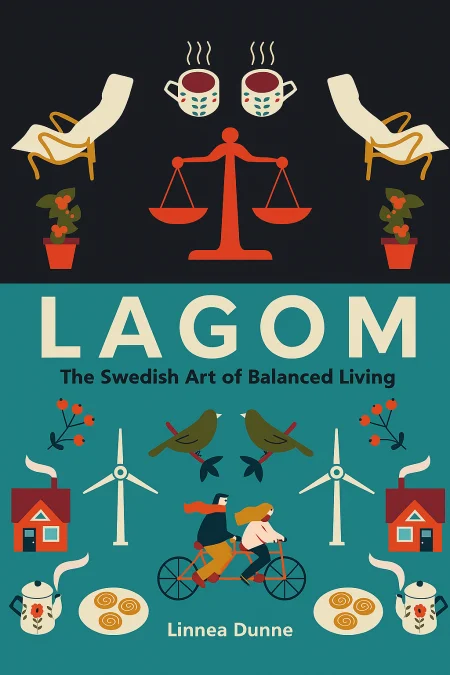
Lagom
The Swedish Art of Balanced Living
Book Edition Details
Summary
Amid the snowy landscapes and tranquil forests of Sweden lies a secret to harmonious living: Lagom. This delightful guide invites you to embrace a life that’s perfectly in balance, where happiness blooms from moderation and mindfulness. Imagine a world where work and life gracefully coalesce, stress ebbs away, and simplicity reigns supreme. Through the lens of Swedish culture, discover how the art of ‘just right’ can transform your daily routines into rituals of joy and sustainability. From savoring the cherished coffee breaks to cultivating a home of uncluttered elegance, Lagom reveals the essence of living with just enough. Perfect for those seeking a nurturing, eco-friendly lifestyle, this book promises a journey to profound contentment, one mindful moment at a time.
Introduction
In a world obsessed with extremes—hustle culture and burnout, minimalism and maximalism, anxiety about having too little or guilt about having too much—Sweden quietly offers a different path. Walk through Stockholm's clean streets, peek into bright apartments with perfectly curated bookshelves, or observe how Swedes leave work precisely on time without guilt, and you'll witness something remarkable: a society that has mastered the art of "just enough." This phenomenon has a name that doesn't translate directly into English: lagom. Pronounced "LAH-gom," it means "not too little, not too much, but just right." It's the Goldilocks principle applied to an entire way of life. While other cultures chase happiness through accumulation or deprivation, Swedes have built their society around balance—from their semi-skimmed milk preferences to their approach to work, relationships, and even emotions. This isn't about mediocrity or settling for less; it's about recognizing that sustainable contentment comes from finding your optimal point rather than pushing toward extremes. Through exploring Swedish work culture, environmental consciousness, and social structures, we'll discover how this deceptively simple concept has created one of the world's most successful societies—and how it might transform your own approach to living well.
The Philosophy of 'Just Right': Understanding Lagom's Origins and Principles
The story of lagom begins with Vikings passing a horn of mead around their circle, ensuring everyone got exactly their fair share—"laget om," meaning "around the team." While this origin tale captures lagom's essence beautifully, linguists trace the word to an older form meaning "law" or "common sense." Both interpretations reveal something profound: lagom isn't just about personal moderation, it's about collective wisdom and social harmony. At its simplest level, lagom describes the perfect amount—like the ideal pressure of a massage or the right amount of milk in your coffee. But as it scales up to social interactions, it becomes far more sophisticated. It's bringing your own bed sheets when staying at a friend's house because sharing the laundry burden is fair. It's having the right to stay home with a sick child but never abusing that privilege. This isn't restrictive rule-following; it's an intuitive understanding of balance that benefits everyone. The lagom mindset fundamentally rejects the "more is better" philosophy that drives much of modern consumer culture. Instead, it asks a different question: What's actually enough? This creates a framework for decision-making that considers not just immediate desires but long-term consequences and collective impact. When Swedes paint just one feature wall in their living room, leaving the rest white, they're not being conservative—they're demonstrating that restraint can be more powerful than excess. Perhaps most importantly, lagom creates psychological space. By refusing to chase extremes, it allows room for authentic living, genuine relationships, and sustainable happiness. It's not about perfection or rigidity, but about finding your personal and collective equilibrium—a balance point that can adapt and evolve while maintaining its essential stability.
Work-Life Balance and Social Harmony: The Swedish Model
Swedish workplaces operate on a principle that might seem radical elsewhere: trust. When an employee asks how long to spend on a task, the typical Swedish boss replies, "Until it's ready." This isn't vague management—it's a sophisticated understanding that if you create the right conditions, people will naturally find the appropriate balance between quality and efficiency. This trust extends throughout Swedish work culture. Employees routinely leave precisely when their contracted hours end, take proper coffee breaks called "fika" twice daily, and enjoy up to four consecutive weeks of summer vacation. Yet Sweden ranks sixth globally in competitiveness while working fewer hours than most developed nations. The secret lies in their non-hierarchical company structures and consensus-building process called "förankringsprocessen"—running ideas by everyone affected before making decisions. The Swedish approach to parental leave exemplifies lagom's collective benefits. Since 1974, Sweden has offered shared parental leave, now totaling 480 days that can be taken by either parent until the child turns eight. Three months are reserved specifically for each parent—use it or lose it. This isn't just progressive policy; it's practical economics. Gender-equal couples are happier, healthier, and more productive. Their children perform better in school and show fewer behavioral problems. Perhaps most telling is the concept of "fredagsmys"—Friday coziness—where families deliberately embrace comfort food, soft clothes, and mindless television after a week of productivity. This isn't laziness; it's intentional balance. By officially sanctioning downtime, Swedish culture prevents the guilt and burnout that plague societies where rest must be earned or justified. The result is a workforce that's not just productive, but sustainably so, capable of maintaining high performance without sacrificing wellbeing or family relationships.
Sustainable Living and Environmental Consciousness: Lagom's Green Impact
Sweden's environmental achievements seem almost magical: only 1% of household waste reaches landfills, 90% of aluminum cans get recycled, and renewable sources provide over half their energy. But this isn't magic—it's lagom applied to planetary stewardship. When balance becomes a cultural value, waste naturally becomes offensive and excess consumption seems irrational. The Swedish language reveals this mindset through untranslatable concepts like "köpstopp"—committing to buy nothing new for a set period—and "plastbanta," meaning plastic detox. These aren't extreme environmental activism but common-sense responses to overconsumption. When you truly understand "enough," the constant pressure to acquire more loses its power. Swedish homes showcase this principle through their famous minimalism: not austere emptiness, but carefully curated spaces that prioritize function, beauty, and mental clarity over accumulation. This environmental consciousness extends beyond individual choices to systematic innovation. Sweden's deposit system for bottles and cans makes recycling automatic rather than aspirational. Their district heating systems turn waste into energy. Fashion giant H&M, despite criticism, has committed to zero chemical discharge by 2020 and operates clothing recycling programs in every store. These aren't perfect solutions, but they demonstrate how lagom thinking—finding the right balance rather than accepting false extremes—drives practical progress. Perhaps most importantly, Swedish environmental culture rejects the either-or thinking that paralyzes many sustainability efforts. You don't have to choose between modern convenience and environmental responsibility; you find the point where both can coexist. This might mean cycling to buy craft beer, growing vegetables in urban allotments, or choosing quality items that last decades over cheap alternatives that create waste. The goal isn't environmental perfection but conscious, consistent improvement—exactly enough effort to create real change without becoming overwhelmed or giving up entirely.
Psychological Wellbeing and Cultural Values: The Science Behind Swedish Happiness
Sweden consistently ranks among the world's happiest countries, but this might not be the happiness you'd expect. Swedes don't score highest on measures of joy or excitement—instead, they excel at what researchers call "sustainable happiness." This is contentment that can weather life's inevitable storms, based not on peak experiences but on steady wellbeing and social trust. The Swedish approach to emotions perfectly exemplifies lagom psychology. As children's character Alfons Åberg wisely notes, "If you're always having fun, you won't notice that you're having fun, so you have to be bored sometimes, too." This isn't pessimism; it's emotional intelligence. By refusing to pathologize normal human experiences like sadness, anxiety, or frustration, Swedish culture creates space for authentic feeling and genuine resilience. This emotional balance extends to their famous directness. When you ask a Swede how they are, they'll actually tell you—because they take language literally and mean what they say. This isn't rudeness; it's efficiency that builds trust. When communication is honest and straightforward, relationships become more reliable and less energy-intensive. You don't have to decode hidden meanings or navigate complex social performances. Swedish mental health approaches emphasize "good enough" parenting and living—a concept remarkably similar to lagom. Attachment theory suggests children thrive with adequate rather than perfect care, while mindfulness practices focus on accepting present moments without judgment. This creates psychological resilience through balance rather than extremes. The result is a society where 92% of people feel they have someone to rely on in times of need—not because they never face difficulties, but because they've built sustainable systems for handling them together.
Summary
The Swedish concept of lagom offers a revolutionary alternative to our culture of extremes: the radical idea that "just enough" might actually be perfect. Rather than chasing more money, more productivity, more happiness, or more stuff, lagom suggests that sustainable contentment comes from finding your optimal balance point—whether in work schedules, environmental choices, or emotional responses. This isn't about settling for mediocrity or suppressing ambition. Swedish society demonstrates that lagom thinking can produce remarkable results: high productivity with shorter work weeks, environmental leadership through conscious consumption, and genuine happiness through balanced expectations. The key insight is that optimization often lies in the middle ground between extremes, where systems can sustain themselves over time rather than burning out in spectacular fashion. As we face global challenges from climate change to mental health crises, lagom's wisdom becomes increasingly relevant. How might your life change if you asked "What's actually enough?" instead of "How can I get more?" Could finding your personal and professional balance points create more space for what truly matters—relationships, creativity, and genuine wellbeing? The Swedish experiment in balanced living suggests that the path to both individual fulfillment and collective prosperity might be simpler than we think: not too little, not too much, but just right.
Related Books
Download PDF & EPUB
To save this Black List summary for later, download the free PDF and EPUB. You can print it out, or read offline at your convenience.
By Linnea Dunne
