
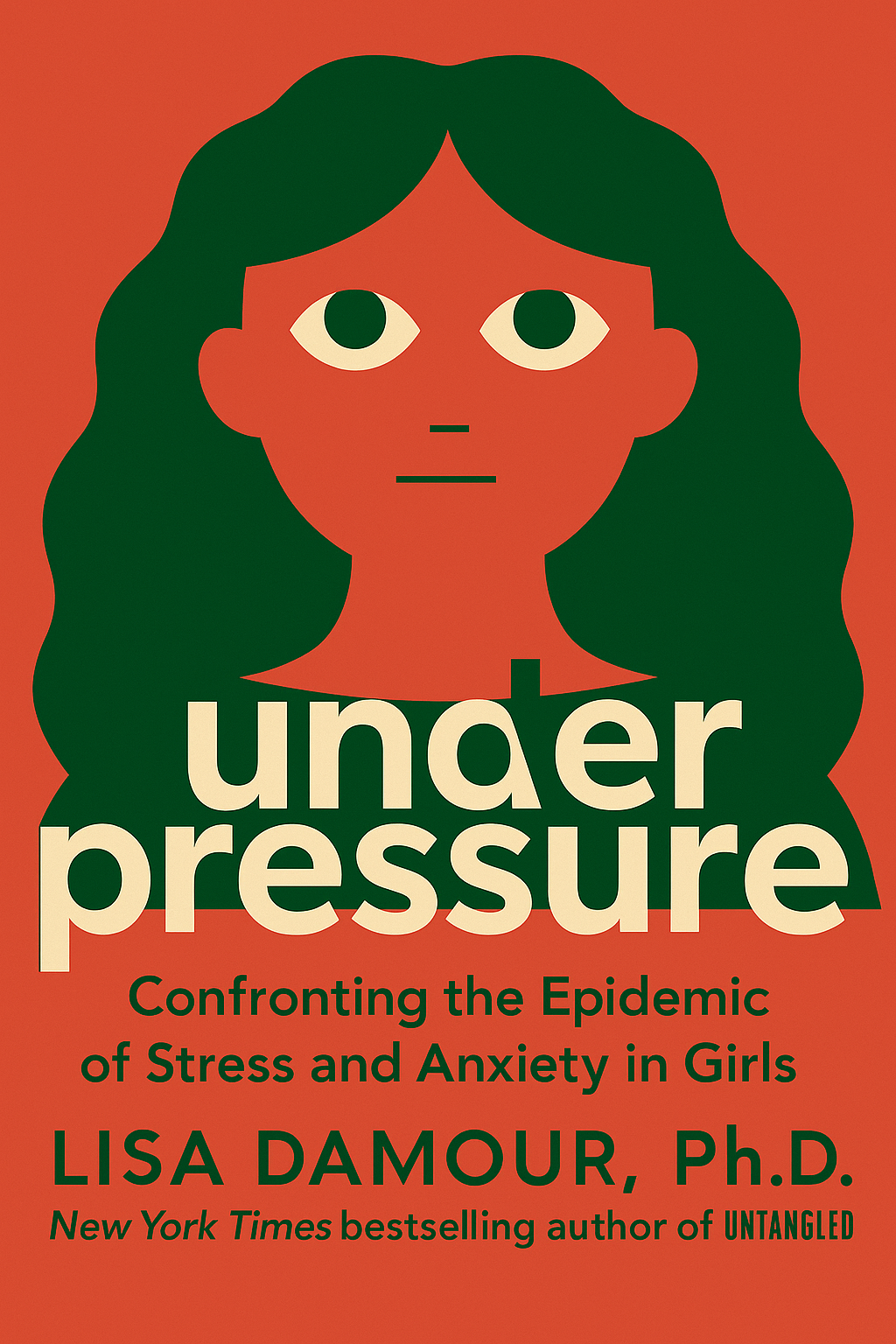
Under Pressure
Confronting the Epidemic of Stress and Anxiety in Girls
Book Edition Details
Summary
In the swirling storm of modern adolescence, one truth emerges: girls are bearing the brunt of rising anxiety levels, more so than their male peers. Lisa Damour, Ph.D., a seasoned clinical psychologist, steps into this maelstrom with her insightful book, "Under Pressure." With a deft touch, she uncovers the paradoxical power of stress and anxiety, not as foes, but as catalysts for growth and safety. Damour's narrative, enriched by her vast experience and engaging storytelling, guides readers through the intricate tapestry of young girls' lives—where societal pressures and parental expectations collide. Her work is a beacon for parents, educators, and mentors, offering transformative strategies to nurture resilience and protect against the often overwhelming cultural currents. This book isn't just an exploration; it's a call to action for those committed to empowering the next generation of women.
Introduction
Contemporary discourse around adolescent mental health often treats stress and anxiety as purely pathological conditions requiring immediate elimination. This perspective fundamentally misunderstands the adaptive nature of these psychological states and inadvertently contributes to the very problems it seeks to solve. The central argument challenges the prevailing medical model that positions all stress and anxiety as harmful, instead proposing that these experiences serve crucial developmental functions when properly understood and managed. The analysis draws upon decades of clinical research, developmental psychology, and real-world therapeutic practices to demonstrate how cultural messaging about emotional distress has created a generation of young women who fear their own natural responses to challenge and uncertainty. Through systematic examination of how stress and anxiety manifest across different domains of girls' lives, the work reveals how well-intentioned protective approaches often amplify the very distress they aim to reduce. This exploration invites readers to reconsider fundamental assumptions about emotional health and to recognize how reframing these experiences as growth opportunities rather than threats can transform both individual outcomes and broader cultural attitudes toward psychological resilience.
The Healthy Necessity of Stress and Anxiety in Development
Stress functions as a biological imperative for growth, operating through mechanisms that parallel physical conditioning. Just as progressive overload in strength training requires gradually increasing demands to build muscle capacity, psychological development necessitates encounters with challenging situations that stretch individuals beyond their comfort zones. Research demonstrates that manageable stress exposure creates stress inoculation effects, wherein individuals who successfully navigate difficulties develop enhanced resilience for future challenges. The neurobiological systems underlying stress responses evolved specifically to mobilize resources during demanding situations, preparing organisms for optimal performance when stakes are highest. Anxiety serves as an equally sophisticated warning system, alerting individuals to potential threats while motivating protective behaviors. This emotional response operates through four interconnected systems: physiological arousal that primes the body for action, emotional experiences that signal importance, cognitive processes that focus attention on relevant information, and behavioral impulses that guide appropriate responses. The integration of these systems creates a comprehensive threat-detection and response mechanism that has proven essential for human survival and adaptation. The pathologization of normal stress and anxiety responses creates a paradoxical situation where individuals become anxious about experiencing anxiety, effectively doubling their psychological burden. When stress and anxiety are reframed as information-providing systems rather than malfunctions, individuals can learn to interpret these experiences as signals requiring attention rather than symptoms requiring elimination. This shift in perspective transforms potentially overwhelming experiences into manageable challenges that contribute to personal growth and enhanced coping capabilities. Clinical evidence consistently supports the principle that avoidance of anxiety-provoking situations invariably increases fear over time, while graduated exposure combined with appropriate coping strategies leads to mastery and confidence. The therapeutic implications extend beyond individual treatment to suggest that families and educational systems should actively help young people develop comfort with manageable levels of psychological discomfort rather than seeking to eliminate all sources of stress from their environments.
Cultural and Environmental Pressures That Overwhelm Girls Today
Modern technological connectivity has fundamentally altered the landscape of adolescent stress by eliminating natural recovery periods that previous generations experienced automatically. Digital platforms create unprecedented opportunities for social comparison through carefully curated presentations that bear little resemblance to authentic lived experiences. The constant availability of peer interaction through social media removes the temporal boundaries that once allowed for emotional processing and restoration between social encounters. Educational environments have intensified competitive pressures through expanded Advanced Placement offerings, increasingly selective college admissions processes, and cultural expectations that students optimize every aspect of their academic performance. The transformation of education from progressive skill-building into high-stakes competition creates chronic rather than episodic stress, overwhelming natural coping mechanisms that evolved to handle intermittent challenges rather than sustained pressure. Gender-specific cultural expectations compound these universal pressures by demanding that girls maintain agreeability while simultaneously achieving at high levels across multiple domains. The expectation of constant accommodation creates internal conflicts between authentic self-expression and social acceptance, generating persistent low-level anxiety about potential disapproval or rejection. These contradictory demands become particularly problematic during adolescence when identity formation requires experimentation with different ways of being in the world. Family dynamics inadvertently contribute to stress amplification when parents attempt to shield daughters from all sources of discomfort rather than helping them develop coping skills. Well-intentioned protective responses can communicate that the young person is incapable of handling normal life challenges, undermining confidence and creating dependency rather than resilience. The availability of extensive information about children's activities through digital monitoring can also create anxiety-provoking surveillance that prevents natural problem-solving development.
Harmful Coping Strategies That Amplify Rather Than Reduce Distress
Avoidance behaviors provide immediate relief from anxiety-provoking situations but create long-term amplification of fear through prevention of corrective learning experiences. When individuals consistently escape from or avoid challenging situations, they never discover that their fears are often disproportionate to actual threats, maintaining and strengthening anxiety responses over time. This pattern becomes particularly problematic when avoidance strategies receive external reinforcement through reduced immediate distress or sympathetic responses from others. Perfectionist approaches to managing anxiety often develop as attempts to control outcomes through exhaustive preparation and flawless performance. While these strategies may produce impressive short-term results, they create unsustainable standards that inevitably lead to failure experiences, which then trigger intense distress due to the perfectionistic framework. The excessive effort required to maintain perfectionist standards also prevents individuals from learning to trust their natural capabilities and to develop efficient approaches to challenges. Social media behaviors designed to manage anxiety about peer relationships frequently create additional sources of stress through constant monitoring of others' responses and comparisons with idealized presentations. The pursuit of external validation through digital platforms creates dependence on unpredictable reinforcement schedules that maintain anxiety rather than resolving it. These behaviors also interfere with the development of authentic self-knowledge and intrinsic motivation by focusing attention on external metrics rather than internal satisfaction. Reassurance-seeking represents another counterproductive coping strategy that provides temporary relief while ultimately maintaining anxiety by preventing individuals from learning to tolerate uncertainty and to trust their own judgment. The repeated seeking of reassurance from others communicates to the anxiety system that the situation truly is dangerous and requires external verification for safety, strengthening rather than weakening the underlying fear response.
Evidence-Based Approaches to Help Girls Master Life's Challenges
Effective anxiety management begins with psychoeducation that reframes stress and anxiety as normal, adaptive responses that provide valuable information about environmental demands and personal resources. Understanding the physiological, emotional, cognitive, and behavioral components of anxiety responses enables individuals to recognize these experiences as systematic rather than chaotic, reducing the secondary anxiety that develops from fear of the anxiety itself. This educational approach transforms mysterious and frightening experiences into comprehensible processes that can be influenced through specific interventions. Graduated exposure techniques systematically help individuals approach feared situations in manageable steps, allowing for the development of confidence through successful mastery experiences. These approaches work by providing opportunities to gather corrective information about actual versus anticipated outcomes while building behavioral repertoires for handling challenging situations. The key principle involves moving toward rather than away from anxiety-provoking experiences, but doing so in a structured way that maximizes the likelihood of successful outcomes. Mindfulness-based interventions teach individuals to observe their thoughts and emotions without immediately acting on them, creating space between internal experiences and behavioral responses. These techniques help people recognize that thoughts and feelings are temporary experiences rather than permanent truths or commands that must be obeyed. The development of observational stance toward internal experiences reduces the intensity of emotional responses while increasing behavioral flexibility and choice. Family and school interventions focus on creating environments that balance support with appropriate challenges, avoiding both the extremes of overwhelming pressure and excessive protection. Effective approaches help adults recognize their own anxiety-driven responses that may inadvertently reinforce avoidance behaviors in young people. The goal involves creating systems that communicate confidence in young people's capabilities while providing scaffolding for skill development and emotional processing.
Summary
The fundamental insight emerging from this analysis reveals that treating stress and anxiety as inherently pathological creates the very problems these approaches seek to solve, while recognizing their adaptive functions opens pathways to genuine resilience and growth. Rather than eliminating these experiences, the optimal approach involves helping young people develop sophisticated understanding of their internal responses and building behavioral repertoires for engaging effectively with life's inevitable challenges. This perspective shift transforms psychological distress from a sign of dysfunction into information about environmental demands and opportunities for capability development. The work demonstrates particular value for parents, educators, and mental health professionals who seek evidence-based alternatives to purely protective approaches that inadvertently undermine the resilience they aim to foster.
Related Books
Download PDF & EPUB
To save this Black List summary for later, download the free PDF and EPUB. You can print it out, or read offline at your convenience.
By Lisa Damour
