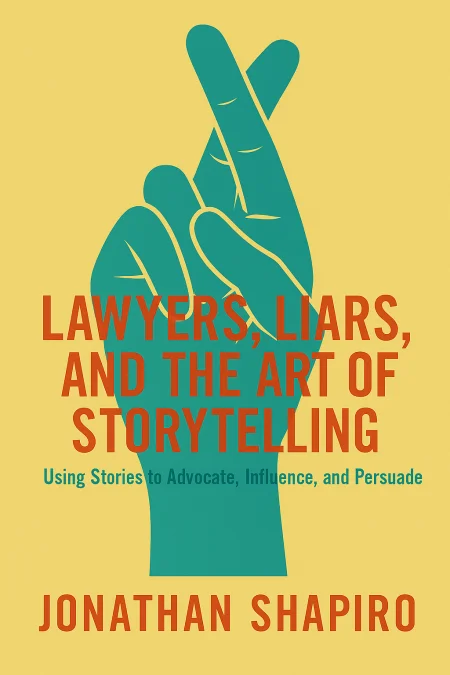
Lawyers, Liars and the Art of Storytelling
Using Stories to Advocate, Influence, and Persuade
Book Edition Details
Summary
Courtrooms and television studios might seem worlds apart, but Jonathan Shapiro's "Lawyers, Liars, and the Art of Storytelling" deftly unravels their shared lifeline: the power of a well-told story. With razor-sharp wit and a treasure trove of real-life courtroom drama and TV scripts, Shapiro masterfully guides you through the art of persuasion. This book isn't just a how-to manual or a memoir—it's a thrilling ride through the trenches of legal battles and scriptwriting rooms, where every word matters and every story could be a game-changer. Whether you're a legal eagle or a drama aficionado, this is your invitation to uncover the storyteller within, armed with the wisdom of years spent at the crossroads of justice and entertainment.
Introduction
Picture this: You're standing before a jury, your client's future hanging in the balance. The facts are murky, the law is complex, but you have something more powerful than precedents or procedures—you have a story that can change everything. In courtrooms across America, in boardrooms where deals are struck, and in countless moments where persuasion matters most, lawyers discover daily that their greatest weapon isn't their legal expertise—it's their ability to craft and tell compelling stories. We live in an age where information floods our senses from every direction, yet we remain creatures fundamentally drawn to narrative. The lawyer who understands this truth, who can weave facts and law into stories that move hearts and change minds, possesses an almost magical power. This isn't about manipulation or deception—it's about the ancient art of connecting human experience to justice, of making complex legal concepts accessible and meaningful to those who must decide our fates. Every case tells a story. Every legal argument is, at its core, a narrative seeking to persuade. The question isn't whether you're telling stories as a lawyer—you are, whether you realize it or not. The question is whether you're telling them well enough to serve your clients and the cause of justice. The most successful attorneys understand that in a world oversaturated with data, the story that resonates becomes the truth that prevails.
The Power of Narrative in Legal Practice
In the bustling corridors of the Los Angeles federal courthouse, a young prosecutor faced an impossible case. The defendant had robbed a bank, but there were no fingerprints, no DNA, and the witnesses couldn't identify him with certainty. What they had was a story—and sometimes, that's everything. The prosecutor knew that facts alone rarely win cases; it's the narrative that gives those facts meaning and emotional resonance. During opening statements, the prosecutor didn't begin with evidence or legal technicalities. Instead, he painted a picture of an ordinary Tuesday morning when bank tellers arrived at work, never knowing their day would be forever changed by one man's desperate choices. He described the moment when normalcy shattered, when fear entered a place meant to be safe. The story wasn't fiction—it was the human truth behind the legal facts, made real and relatable through the power of narrative. The defense attorney, equally skilled in storytelling, presented a counter-narrative. This wasn't a story of guilt, but of mistaken identity and rushed judgment. His client wasn't a predator but a victim of circumstances, caught in law enforcement's eagerness to close a high-profile case. Two stories, same facts, entirely different meanings. What emerged from this courtroom drama wasn't just a verdict, but a profound truth about legal practice: lawyers are not merely advocates for their clients—they are storytellers whose narratives shape reality. In every motion filed, every argument presented, every witness examined, attorneys are constructing narratives that compete for acceptance in the marketplace of justice. The power of these stories extends far beyond individual cases, influencing how society understands right and wrong, justice and fairness, truth and deception.
Building Stories: Ethos, Logos, and Pathos
Twenty-five hundred years ago, Aristotle identified three pillars of persuasion that remain as relevant today as they were in ancient Athens. In a federal courtroom in downtown Los Angeles, a defense attorney demonstrated their enduring power without even realizing it. The case seemed hopeless—his client had been caught with drugs in his car during a routine traffic stop. But this lawyer understood something that many of his colleagues had forgotten: winning isn't about having the best facts, it's about building the strongest story. First, he established his credibility—his ethos. He didn't boast about his record or display his diplomas. Instead, he began by acknowledging the prosecutor's competence and the seriousness of the charges. He spoke with quiet authority about his years of experience, not to intimidate, but to assure everyone that this case would receive the thorough examination it deserved. He dressed impeccably, spoke respectfully to all, and demonstrated through every gesture that he was worthy of trust. Next came logos—the logical backbone of his argument. He methodically dismantled the prosecution's timeline, pointing out inconsistencies in the police report. He presented evidence that his client had borrowed the car from a friend, had no knowledge of what was hidden in the spare tire. Each point built upon the last, creating an edifice of reasonable doubt that stood firm against scrutiny. Finally, he appealed to pathos—the emotional core that connects legal arguments to human experience. He spoke of his client's children, waiting at home for their father's return. He described the dreams deferred, the community work left undone, the ripple effects of one moment that could destroy an entire family. He wasn't manipulating emotions; he was revealing the human stakes hidden within the legal abstractions. These three elements—credibility, logic, and emotion—form what Aristotle called the rhetorical triangle. Every successful legal story must incorporate all three, though the proportions may vary depending on the situation. A lawyer who relies solely on logic may win the mind but lose the heart. One who appeals only to emotion may stir feelings but fail to convince. But the attorney who masterfully weaves all three together creates stories that don't just argue—they transform.
From Script to Performance: Crafting Legal Arguments
The most brilliant legal argument ever conceived remains powerless until it's delivered with skill and conviction. In a small courtroom in Orange County, an immigration attorney faced perhaps the most challenging audience of her career: a judge known for his skepticism toward asylum cases and a government attorney determined to send her client back to almost certain death in his homeland. Her client's story was compelling, but she knew that how she told it would matter as much as what she had to say. She had spent weeks crafting her presentation like a playwright preparing a script. Every piece of evidence had its place, every witness testimony its moment, every legal argument its emotional resonance. She understood that in the theater of law, there are no second chances for first impressions. The opening statement would set the tone, establish the themes, and create the framework within which all subsequent evidence would be understood. But having a perfect script meant nothing without flawless execution. She had rehearsed not just her words, but her gestures, her tone, her pacing. She knew when to pause for emphasis, when to raise her voice in righteous indignation, when to lower it to draw the audience closer to an intimate truth. She understood that legal arguments aren't just about conveying information—they're about creating an experience that moves people to action. When she stood to address the court, everything came together. Her opening painted a vivid picture of the persecution her client had fled, making abstract concepts of political oppression feel immediate and real. She presented her evidence not as dry facts but as chapters in a larger narrative of injustice and hope. Her cross-examination of government witnesses revealed inconsistencies not through aggressive confrontation, but through careful questioning that allowed the truth to emerge naturally. The performance aspect of legal practice isn't about theatrical artifice—it's about authentically connecting with your audience in service of truth and justice. Every lawyer is both writer and actor, crafting stories and bringing them to life. The attorneys who embrace this dual role, who understand that persuasion requires both excellent preparation and compelling presentation, find themselves capable of achieving results that seemed impossible when they began.
Truth, Fiction, and the Future of Legal Storytelling
In the digital age, the line between truth and fiction has become increasingly blurred, and nowhere is this more apparent than in legal storytelling. A corporate attorney in Silicon Valley discovered this firsthand when she found herself defending a tech company whose algorithms had inadvertently created discriminatory hiring practices. The case wasn't just about software code—it was about competing narratives of intention, responsibility, and the role of technology in perpetuating age-old biases. The plaintiffs' attorneys crafted a story of deliberate discrimination, painting the company as a modern incarnation of historical prejudice, using technology to mask bias rather than eliminate it. They presented their case as a David versus Goliath narrative, with ordinary job seekers facing off against algorithmic giants programmed to exclude them. Their story was emotionally compelling and legally sound, but it relied on a simplified version of complex technological realities. The defense attorney faced a dilemma that increasingly confronts legal practitioners in our interconnected world: how do you tell a truthful story when the truth itself is multilayered and nuanced? She couldn't simply deny that discrimination had occurred—the data was clear. But she could tell a different story about how it happened and what it meant. Her narrative focused on unintended consequences, on the complexity of eliminating bias from systems created by imperfect humans, on her client's genuine efforts to create fair hiring practices. The case ultimately settled, but it raised profound questions about the future of legal storytelling. In an era of big data, artificial intelligence, and social media echo chambers, lawyers must grapple with new forms of truth and fiction. They must craft narratives that acknowledge complexity while remaining accessible, that embrace nuance while making clear moral arguments, that honor both the letter and spirit of the law in an age of rapid technological change. The lawyers who will thrive in this new landscape are those who understand that storytelling isn't about choosing between truth and fiction—it's about finding the most honest, compelling way to present complex realities to audiences who must make difficult decisions. They are the modern inheritors of an ancient tradition, using the timeless power of narrative to serve the cause of justice in a world that desperately needs their skill.
Summary
The courtrooms, boardrooms, and conference rooms where lawyers practice their craft are fundamentally theaters of storytelling, where competing narratives vie for acceptance and the most compelling story often determines the outcome. This isn't about manipulation or deception—it's about the profound responsibility that comes with the power to shape how others understand reality. Every legal document drafted, every argument presented, every case tried contributes to the larger story our society tells itself about justice, fairness, and truth. The lawyers who recognize this truth, who embrace their role as storytellers while honoring their obligations to clients and the legal system, possess a remarkable ability to create positive change. They understand that facts don't speak for themselves—they require skilled advocates to give them voice and meaning. These attorneys craft narratives that not only win cases but also advance the cause of justice, making complex legal concepts accessible to judges, juries, and the public who ultimately determine the fate of our laws and institutions. In a world increasingly divided by competing versions of truth, the legal profession's commitment to rigorous storytelling—grounded in evidence, bound by ethical obligations, and dedicated to the pursuit of justice—becomes more crucial than ever. The future belongs to lawyers who can weave together credibility, logic, and emotion into stories that don't just argue legal points but illuminate the human experiences at the heart of every case, inspiring others to choose the path of justice and fairness in their own lives and work.
Related Books
Download PDF & EPUB
To save this Black List summary for later, download the free PDF and EPUB. You can print it out, or read offline at your convenience.
By Jonathan Shapiro
