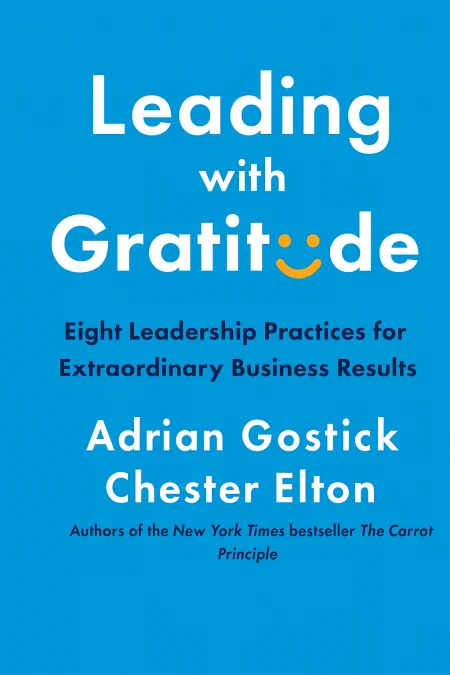
Leading with Gratitude
Eight Leadership Practices for Extraordinary Business Results
byAdrian Gostick, Chester Elton
Book Edition Details
Summary
In the bustling corridors of corporate life, a silent revolution awaits—one led not by strategy or profit margins, but by the humble power of gratitude. Chester Elton and Adrian Gostick, revered architects of workplace appreciation, unveil a transformative blueprint in "Leading with Gratitude." This isn't just a guide; it's a manifesto for change, challenging executives to bridge the profound gratitude gap that stifles potential. Through riveting narratives of industry giants like Ford's Alan Mulally and Best Buy's Hubert Joly, the book reveals gratitude as a catalyst for unprecedented productivity and morale. Embrace this underutilized tool and watch as your team flourishes, turnover diminishes, and creativity thrives. Gratitude isn't a luxury—it's the smartest investment you'll ever make.
Introduction
Picture a CEO walking through his company headquarters during one of the worst financial crises in modern history. Employee morale is plummeting, competitors are closing in, and every meeting feels like a war council. But instead of barking orders or issuing ultimatums, this leader does something unexpected. He stops at each department, looks his people in the eye, and asks genuinely: "How are we doing? Not the numbers, not the metrics – how are you doing?" When Garry Ridge of WD-40 Company made this shift during the 2008 financial meltdown, something remarkable happened. His company didn't just survive – it thrived, delivering record-breaking financial results while achieving 99% employee satisfaction. This story illuminates a profound truth that countless leaders have overlooked: gratitude isn't soft management fluff or feel-good rhetoric. It's a powerful business tool that transforms cultures, drives performance, and creates sustainable success. Yet research reveals a staggering reality – while 96% of executives believe grateful leaders are more successful, most workplaces suffer from what researchers call a "gratitude gap." Employees consistently report feeling undervalued, while their managers remain puzzled by disengagement and turnover. The journey ahead reveals how authentic appreciation becomes the bridge between struggling teams and thriving organizations. You'll discover why gratitude works when other motivational tactics fail, and more importantly, how to practice it in ways that feel genuine and create lasting impact. The transformation begins not with grand gestures, but with the simple act of truly seeing the people who make success possible.
From Fear to Appreciation: Breaking Leadership Myths
For decades, conventional wisdom whispered that fear motivated excellence. Picture the stereotypical manager – arms crossed, jaw clenched, wielding criticism like a precision instrument. This was leadership, we believed. Keep them guessing, keep them hungry, keep them afraid of falling short. But Alan Mulally discovered something entirely different when he took the helm at Ford Motor Company during its darkest hour. In his first executive meeting, Mulally watched sixteen top leaders from around the world present their progress reports using a color-coded system. Green meant on track, yellow signaled issues, red indicated serious problems. Week after week, everything glowed green – even as the company hemorrhaged billions. The culture of fear was so entrenched that admitting problems felt like career suicide. Then North American president Mark Fields took an extraordinary risk. He presented a red slide, acknowledging a critical vehicle launch delay. The room fell silent. Everyone expected Fields to be publicly executed. Instead, Mulally began applauding. "Thank you so much, Mark. That is great visibility," he said, then asked the group, "What can we do to help?" Within moments, solutions flew across the table. That single act of gratitude for honesty transformed Ford's culture from fear-based secrecy to collaborative problem-solving. The company emerged from the financial crisis stronger than ever, with employee engagement soaring from 20% to 91%. The shift from fear to appreciation doesn't diminish standards or lower expectations. Rather, it creates psychological safety where people can take intelligent risks, admit mistakes before they metastasize, and channel their energy toward solutions instead of self-preservation. When leaders replace intimidation with authentic recognition, they unlock the full creative and productive potential of their teams.
The Art of Seeing: Noticing Excellence Daily
Rebecca Douglas founded Rising Star Outreach to transform lives in India's leprosy colonies, working with people society had literally cast aside. During one of her visits, she encountered two brothers, David and Daniel, who had fled their colony with nothing but the clothes on their backs. When presented with an unprecedented opportunity to study in America, Daniel paused before adding something to his admission essay that stunned Rebecca: "Please add that of all the boys in the world, I am the most blessed." This malnourished child, afflicted with one of humanity's most feared diseases and owning absolutely nothing, possessed something many successful leaders lack – the ability to see abundance where others see scarcity. His perspective reveals the first essential skill of grateful leadership: learning to truly see what's happening around us. Most managers rush through their days firefighting and problem-solving, their attention consumed by what's broken rather than what's working. Consider Teresa Amabile's groundbreaking research following 26 project teams through months of daily work journals. Her findings shattered assumptions about motivation: the single most powerful driver of engagement wasn't money, recognition, or even achievement – it was making visible progress in meaningful work. People thrived when they could see their daily contributions adding up to something significant. Yet most leaders remained blind to these small wins, focusing solely on major milestones while overlooking the incremental victories that sustained momentum. The art of seeing requires intentional practice. It means walking the floors not to catch mistakes but to spot excellence in action. It means asking different questions – not "What went wrong?" but "What's going right that we should do more of?" When leaders develop eyes for the positive, they discover an endless supply of authentic reasons for gratitude, transforming both their perspective and their people's performance.
Expressing Gratitude: Making It Personal and Meaningful
Kent, a learning and development director, had just saved his company $75,000 by revolutionizing their employee orientation program, cutting training time in half without sacrificing quality. At the next staff meeting, his manager presented him with a $25 gift card. Moments later, a colleague correctly guessed the teams in that weekend's Super Bowl and received the identical reward. The message was unmistakable: months of innovation and thousands of dollars in savings held the same value as sports trivia knowledge. This scenario illustrates the critical difference between generic appreciation and meaningful gratitude. When recognition feels scripted or arbitrary, it often creates more cynicism than motivation. Authentic appreciation requires understanding what truly matters to each individual. Research reveals that all humans share 23 fundamental workplace motivators – from autonomy and creativity to teamwork and purpose – but each person prioritizes them differently. Some thrive on public recognition and team celebrations, while others prefer private acknowledgment and independent challenges. The most effective leaders become students of their people, learning not just what motivates them but how they prefer to receive appreciation. Consider the manager who discovered one employee's passion for vintage baseball and presented him with autographed baseballs from his favorite player on his work anniversary. Another leader learned that a team member valued work-life balance above all else and expressed gratitude by offering flexible scheduling rather than overtime pay. These weren't expensive gestures – they were personal ones. Timing matters as much as customization. Gratitude, like fresh produce, doesn't keep well. The closer appreciation follows achievement, the more powerful its impact. When leaders stockpile praise for annual reviews or quarterly meetings, they waste countless opportunities to reinforce positive behaviors in real-time. The most meaningful recognition happens in the moment, when emotions are fresh and connections can be made between specific actions and their value.
Beyond the Office: A Grateful Life
Mike thought he knew his boss Phil pretty well – smart, personable, always generous with appreciation and support. Phil seemed like the kind of leader everyone wanted to work for, someone who had mastered the art of bringing out the best in people. Then Mike attended a neighborhood party and met "Mr. Grumpy Pants," the notoriously difficult neighbor his brother complained about constantly. The man who made everyone's life miserable, who cut down branches hanging over his fence and treated his family with barely concealed contempt. Mike's jaw dropped when he realized Mr. Grumpy Pants was Phil. This jarring discovery reveals one of leadership's most troubling contradictions – the compartmentalization of gratitude. Too many people excel at appreciation in professional settings while remaining stingy with recognition at home, or vice versa. They pour their best energy into impressing colleagues while taking family members for granted, or they're wonderful parents and partners but withhold appreciation from their teams. This split personality approach not only limits personal happiness but undermines authentic leadership development. The practice of gratitude cannot be confined to office hours or professional relationships. It must become a way of being that permeates every interaction. When leaders learn to notice and appreciate excellence wherever it occurs – from a child's improved math grade to a server's exceptional attention to detail – they strengthen the very neural pathways that make workplace recognition feel natural and genuine. Research by Robert Emmons shows that people who keep gratitude journals sleep better, exercise more, and report significantly higher life satisfaction than those who focus primarily on problems and complaints. The most transformative leaders understand that gratitude is not a management technique to be deployed strategically, but a life philosophy that enriches every relationship. They write thank-you notes not just to employees but to teachers, service providers, and family members. They celebrate small victories at the dinner table with the same enthusiasm they bring to team meetings. They practice random acts of appreciation while traveling, shopping, or simply moving through their daily routines.
Summary
The stories woven throughout this exploration reveal a profound truth: gratitude transforms not just organizations, but the very people who practice it. From Garry Ridge's crisis leadership to Alan Mulally's culture revolution, from malnourished Daniel's abundant perspective to Phil's split personality warning, we witness the extraordinary power of authentic appreciation to reshape human dynamics. These aren't isolated success stories but evidence of a fundamental principle – when leaders genuinely see and celebrate the contributions of others, they unlock potential that fear, indifference, and generic motivation can never access. The gratitude gap that plagues modern workplaces isn't a mystery requiring complex solutions. It's the predictable result of leaders who've forgotten that business success flows through human hearts and minds, not spreadsheets and systems. Every employee who leaves feeling unappreciated, every team that operates in fear-based silence, every manager who wonders why engagement surveys disappoint – these represent missed opportunities to harness gratitude's transformative force. The research is clear: organizations led by grateful leaders deliver superior financial performance, higher customer satisfaction, and dramatically better employee retention. Yet perhaps the most compelling reason to embrace grateful leadership lies beyond business metrics. When you learn to truly see the daily heroics of your people – the late nights, creative solutions, patient problem-solving, and quiet acts of excellence – you join a community of leaders whose influence extends far beyond quarterly results. You model a way of being that ripples through families, communities, and future generations. The gratitude you express today doesn't just improve tomorrow's performance – it transforms tomorrow's leaders.
Related Books
Download PDF & EPUB
To save this Black List summary for later, download the free PDF and EPUB. You can print it out, or read offline at your convenience.
By Adrian Gostick
