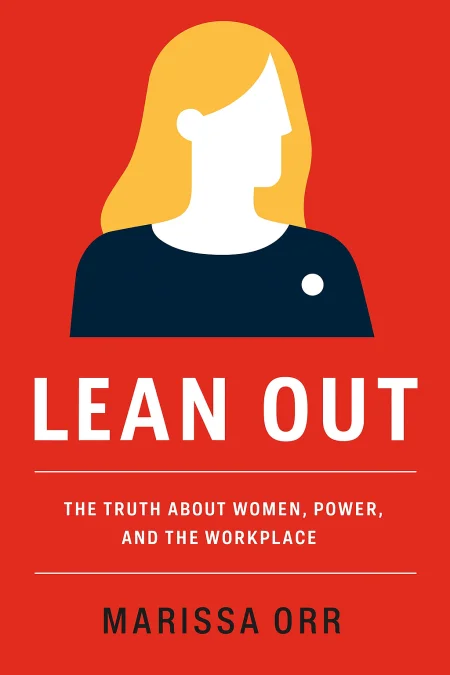
Lean Out
The Truth about Women, Power, and the Workplace
Book Edition Details
Summary
Amidst the pulsating nerve centers of Silicon Valley, where tech titans sculpt the future, Marissa Orr charts a different course through the labyrinth of corporate life. As a single mother navigating the stormy seas of the tech elite, Orr pulls no punches in "Lean Out," a provocative narrative that challenges the orthodoxies of feminist discourse in the workplace. She dismantles the myth of the corporate climb, questioning whether emulating patriarchal paradigms truly serves women's ambitions. With wit and candor, Orr paints a vivid picture of a world where the loudest voices often drown out the most innovative ideas, urging a shift toward genuine listening and valuing authentic female strengths. This book is a manifesto for those who dare to redefine success on their own terms, offering a blueprint for transforming corporate America into a realm where both men and women can thrive.
Introduction
The prevailing narrative surrounding women in the workplace has focused relentlessly on changing women themselves—urging them to be more assertive, confident, and ambitious. This perspective fundamentally misdiagnoses the problem by treating symptoms rather than causes. The real issue lies not with women's behavior or aspirations, but with organizational systems designed by and for a different era and workforce composition. These systems continue to reward male-dominant traits while penalizing collaborative and relationship-oriented approaches that many women naturally embody. The traditional approach to achieving gender equality has been to help women adapt to existing corporate structures, essentially asking them to become more like men to succeed. This strategy has proven largely ineffective, with female representation in senior leadership remaining stubbornly low despite decades of effort and resources. A more fundamental examination reveals that the problem is systemic rather than personal. Corporate hierarchies, performance evaluation methods, and reward systems all contain inherent biases that favor certain personality traits and working styles over others. Rather than continuing to focus on fixing women, a more productive approach involves examining why organizational systems consistently produce homogeneous leadership teams and what structural changes might create genuinely inclusive environments. This analysis challenges readers to think beyond individual behavior modification toward systemic transformation that benefits not just women, but all employees who don't fit the traditional corporate mold.
The Flawed Premise of Modern Feminism
Contemporary feminist discourse in corporate America rests on a fundamentally problematic assumption: that women's career challenges stem primarily from cultural conditioning that makes them less ambitious and assertive than men. This premise suggests that women have been socialized to be passive, accommodating, and risk-averse, traits that supposedly hinder their professional advancement. The solution offered is typically behavioral modification—teaching women to speak up more, negotiate harder, and suppress their natural tendencies toward collaboration and consensus-building. This framework is deeply flawed because it accepts male-dominated corporate culture as the standard to which women should aspire. It implicitly suggests that traditionally feminine traits like empathy, listening skills, and relationship-building are professional liabilities rather than valuable assets. The entire narrative positions women as deficient versions of men who need correction rather than as individuals bringing different but equally valuable perspectives and skills to the workplace. The emphasis on changing women rather than changing systems reflects a profound misunderstanding of where the real problem lies. When research consistently shows that women often don't want the same career outcomes as men—such as CEO positions that require sacrificing work-life balance—dismissing these preferences as products of oppression ignores the possibility that women might simply have different definitions of success and fulfillment. This approach has proven ineffective precisely because it tries to force diverse individuals into a narrow template of success. True gender equality cannot be achieved by convincing women to adopt male behavioral patterns, but rather by creating environments where different working styles and career priorities are equally valued and rewarded.
Systemic Bias Favors Male-Dominant Behaviors
Corporate environments systematically reward traits that correlate more strongly with male behavior patterns while penalizing or overlooking qualities more commonly associated with women. This bias operates through multiple mechanisms, from performance evaluation criteria to promotion processes, creating an invisible but powerful filter that shapes who rises to leadership positions. The problem is not deliberate discrimination but rather the use of male-dominant behaviors as proxies for competence and leadership potential. Visible traits like assertiveness, self-promotion, and decisive action naturally draw attention and are interpreted as signs of strong performance, even when they may not correlate with actual results or effectiveness. Meanwhile, less visible but equally valuable contributions—such as building team cohesion, mentoring others, or facilitating consensus—often go unrecognized and unrewarded. This creates a feedback loop where the behaviors that get noticed and promoted become the organizational definition of excellence. The manufacturing-era origins of current corporate structures help explain this bias. These systems were designed when work involved tangible, measurable output and when the workforce was predominantly male. As the economy shifted toward knowledge work and became more diverse, the evaluation systems remained largely unchanged, creating a mismatch between what organizations actually need and what they recognize and reward. Performance evaluations that rely heavily on subjective assessments and self-advocacy particularly disadvantage those who prefer collaborative approaches or who are uncomfortable with aggressive self-promotion. When success depends more on how loudly one talks about their work than on the quality of the work itself, the system inevitably selects for certain personality types while systematically overlooking others, regardless of their actual capabilities or contributions.
Redefining Success Beyond Corporate Hierarchies
The narrow definition of professional success as climbing the corporate ladder fundamentally misaligns with how many women define fulfillment and achievement. This disconnect explains why efforts to push women into executive roles often fail to gain traction—they address a problem that many women don't actually have or want solved. Success metrics focused exclusively on titles, salaries, and hierarchical advancement ignore the diverse ways people find meaning and satisfaction in their work lives. Alternative definitions of success might emphasize impact, autonomy, work-life integration, or the ability to contribute meaningfully to causes one cares about. Many individuals, regardless of gender, find these aspects more fulfilling than traditional markers of corporate achievement. The current system's inability to recognize or reward these alternative success paths creates unnecessary career dissatisfaction and wastes human potential. The fixation on hierarchical advancement also overlooks the reality that many leadership qualities can be exercised without formal authority. Influence, mentorship, innovation, and positive cultural impact often flow from individuals who may never hold C-suite positions but who nonetheless shape their organizations in profound ways. Expanding recognition for these contributions would create more pathways to professional fulfillment. Personal well-being must become a central consideration in how individuals evaluate their career choices. This means honestly assessing one's own values, priorities, and motivational drivers rather than accepting externally imposed definitions of what constitutes a successful career. When people align their professional choices with their authentic preferences and strengths, they typically experience greater satisfaction and often perform better as well.
Building Trust-Based Organizations for True Diversity
Genuine organizational diversity requires creating environments where people feel psychologically safe to be themselves rather than forcing everyone to adopt similar behavioral patterns. Trust forms the foundation of such environments, enabling individuals to contribute their unique perspectives and capabilities without fear of judgment or career damage. This psychological safety is not just morally important but also drives better business outcomes through increased creativity, innovation, and employee engagement. Trust-based organizations implement systems and structures that minimize the impact of individual bias and arbitrary decision-making. This might include more objective performance metrics, diverse decision-making processes, and checks on concentrated power. When employees trust that they will be evaluated fairly and that success doesn't depend on fitting a narrow behavioral template, they can focus their energy on contributing their best work rather than on impression management. Creating multiple pathways to recognition and advancement acknowledges that people are motivated by different things and excel in different ways. Rather than offering only hierarchical promotions as rewards, organizations could provide opportunities for increased autonomy, specialized expertise recognition, or project leadership that don't require managing people. This diversification of success paths naturally leads to more diverse leadership styles and perspectives. The shift toward trust-based organizations requires fundamental changes in management philosophy and organizational structure. This includes reducing the absolute authority of individual managers, creating meaningful feedback mechanisms, and designing reward systems that recognize collaborative achievements alongside individual accomplishments. Such changes benefit all employees while particularly enabling those whose strengths have been historically undervalued to contribute more fully to organizational success.
Summary
The persistent focus on changing women to fit existing corporate structures has failed because it addresses symptoms rather than causes of workplace inequality. True progress requires recognition that organizational systems themselves contain biases that systematically advantage certain personality types and working styles while disadvantaging others. Instead of continuing to ask diverse individuals to conform to narrow templates of success, leaders must redesign structures, evaluation methods, and reward systems to harness the full range of human capabilities. This fundamental shift from trying to fix people to fixing systems offers the most promising path toward creating genuinely inclusive organizations that benefit from the diverse talents and perspectives of their entire workforce.
Related Books
Download PDF & EPUB
To save this Black List summary for later, download the free PDF and EPUB. You can print it out, or read offline at your convenience.

By Marissa Orr
