
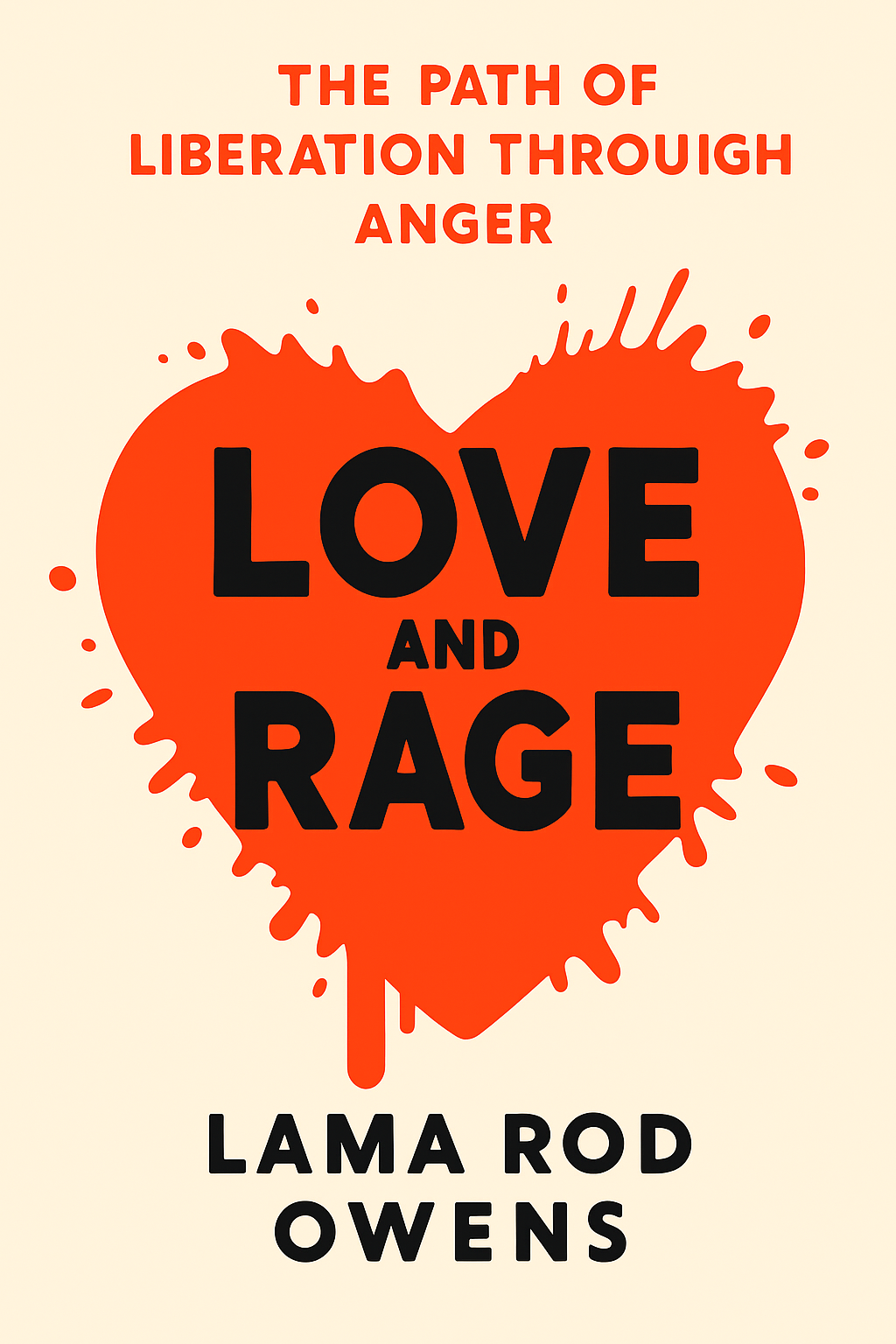
Love and Rage
The Path of Liberation through Anger
Book Edition Details
Summary
In a society where anger is often seen as a destructive force to be suppressed, Rod Owens flips the narrative, presenting it as a vital catalyst for personal and societal transformation. "Love and Rage" is not merely a book—it's a radical rethinking of how we perceive and utilize our fury. Owens, a social activist and Kagyu lama, infuses his journey as an African-American gay man with Buddhist teachings, painting anger not as an enemy, but as a powerful ally in the fight against systemic injustice. This book offers readers a roadmap to harness their rage, turning it into a source of empowerment and healing. Through deeply personal stories and practical meditations, Owens invites you to embrace the raw energy of anger, channeling it towards meaningful change and spiritual liberation. A profound guide for those seeking to wield their inner fire with compassion and purpose.
Introduction
Conventional wisdom teaches us to suppress anger, viewing it as a destructive force that threatens spiritual development and social harmony. Yet this approach fundamentally misunderstands anger's true nature and transformative potential. Rather than being an obstacle to liberation, anger serves as a crucial teacher, pointing us toward deeper wounds that require healing and offering powerful energy for personal and social transformation. The intersection of contemplative practice with lived experience of oppression reveals how traditional spiritual frameworks often fail those who face systemic violence and marginalization. By combining Buddhist meditation techniques with embodied awareness practices, ancestral wisdom, and social justice principles, we can develop a more complete understanding of how difficult emotions serve our liberation rather than hinder it. This integration challenges both spiritual bypassing and reactive activism, offering instead a path that honors the full spectrum of human experience while working toward genuine freedom. Through examining anger's relationship to heartbreak, trauma, and the body's wisdom, we discover how loving what appears unlovable becomes the key to transformation. This exploration invites readers to question their assumptions about spirituality, emotions, and social change while developing practical tools for working skillfully with life's most challenging experiences.
The Wisdom of Anger: Reclaiming Rage as Teacher
Anger emerges from the tension between being hurt and struggling to care for ourselves when we don't know how. This understanding reframes anger not as an enemy to be defeated, but as information pointing toward wounds that need attention. When we avoid or suppress anger, we miss crucial data about what requires healing in our lives and communities. The energy of anger, when approached with awareness rather than reactivity, reveals itself as protective rather than destructive. It guards our deeper vulnerabilities while simultaneously indicating where boundaries have been crossed and where care is needed. This protection serves an important function, but problems arise when we remain caught in anger's surface energy rather than following it to the heartbreak beneath. For marginalized communities, anger often carries additional complexity as it becomes both a survival mechanism and a source of potential danger. The conditioning to fear our own anger creates disconnection from vital information about injustice and harm. Yet when anger is welcomed with compassion and given space to reveal its message, it transforms from a compulsive reaction into a source of clarity and directed action. The wisdom of anger lies not in its expression but in its capacity to illuminate truth. When we learn to see anger as a teacher rather than a problem, we develop the ability to respond from clarity rather than reactivity, channeling anger's energy toward healing both personal wounds and systemic violence.
Embodied Practice: Transforming Anger through Compassion
Embodiment forms the foundation for working skillfully with difficult emotions because the body never lies about our experience. Disembodiment, often resulting from trauma and oppression, disconnects us from vital information about our emotional reality, making it impossible to respond wisely to what arises. Returning home to the body through contemplative practice creates the conditions for genuine transformation. The practice of loving our anger requires first learning to love ourselves completely, including the parts we've been taught to reject. This love manifests as acceptance rather than approval, creating space around difficult experiences without pushing them away or getting lost in them. When anger is held within the container of self-compassion, it naturally reveals the hurt it has been protecting. Meditation techniques specifically adapted for working with strong emotions help develop the capacity to experience anger without being overwhelmed by it. These practices include earth-touching meditations that ground energy in the body, breathing techniques that create space around intense feelings, and visualization practices that call upon sources of support and wisdom. The goal is not to eliminate anger but to develop a different relationship with it. The Seven Homecomings practice exemplifies this approach by creating a circle of care that includes guides, wisdom texts, community, ancestors, earth, silence, and ourselves. Within this supportive container, even the most challenging emotions can be welcomed and allowed to teach. This embodied approach recognizes that transformation happens not through mental understanding alone but through the full integration of body, mind, and spirit.
Social Liberation: Anger, Identity, and Systemic Justice
Personal liberation and social justice cannot be separated because individual suffering often stems from collective systems of oppression. Anger about racial injustice, economic inequality, or other forms of systematic harm carries important information about conditions that require change. However, reacting from unprocessed anger often perpetuates cycles of harm rather than creating sustainable transformation. The intersection of contemplative practice with social activism offers a third way beyond both spiritual bypassing and reactive rage. When activists learn to work with their own anger skillfully, they can sustain their engagement with injustice without burning out or causing additional harm. This approach requires facing the heartbreak beneath anger about social conditions while maintaining the energy needed for sustained action. Identity-based anger carries particular complexity because it often contains both personal wounds and intergenerational trauma passed down through families and communities. For example, the anger experienced by Black Americans about racism includes not only present-day discrimination but also the unhealed trauma of slavery, segregation, and ongoing systemic violence. Working with this anger requires acknowledging both its validity and its potential to cause harm when expressed without awareness. Collective healing becomes possible when communities learn to hold space for difficult emotions while working toward justice. This means creating containers where people can express anger, fear, and grief about social conditions while also developing the resilience needed for long-term change. Such approaches honor both the reality of systemic harm and the possibility of transformation through love-based action.
Skillful Response: From Reactive Rage to Conscious Action
The transition from reactive patterns to conscious response requires developing what traditional Buddhism calls "the space between stimulus and response." This space, cultivated through consistent practice, allows us to choose our actions based on wisdom rather than being driven by unconscious conditioning. With anger, this means learning to feel its energy fully while maintaining agency over how we respond. Skillful response to anger begins with the SNOELL practice: See it, Name it, Own it, Experience it, Let it go, Let it float. This framework provides a systematic approach to working with difficult emotions that honors their presence while preventing them from overwhelming our capacity for wise action. The practice recognizes that trying to immediately let go of anger often backfires, requiring first a complete acknowledgment of what is present. The distinction between reaction and response becomes crucial in moments of crisis or conflict. Reaction happens automatically, driven by past conditioning and unconscious patterns. Response emerges from presence and choice, informed by our values and long-term intentions rather than immediate impulses. Developing this capacity requires ongoing practice during calm moments so the skills are available during challenging times. Ultimately, skillful response with anger serves both personal freedom and collective wellbeing. When we can meet our anger with compassion while channeling its energy toward beneficial action, we become agents of healing rather than sources of additional harm. This transformation doesn't eliminate anger but reveals its essential nature as energy that, when directed wisely, serves love and justice rather than destruction and separation.
Summary
The path of liberation through anger reveals that what we resist often contains the very medicine we need for healing and growth. By learning to love even our most difficult emotions, we discover they are not obstacles to spiritual development but essential teachers guiding us toward wholeness. This approach challenges conventional spiritual wisdom while offering practical tools for transformation that honor both individual healing and collective liberation, demonstrating that genuine freedom emerges not from perfection but from the courage to embrace our full humanity with compassion and wisdom.
Related Books
Download PDF & EPUB
To save this Black List summary for later, download the free PDF and EPUB. You can print it out, or read offline at your convenience.
By Lama Rod Owens
