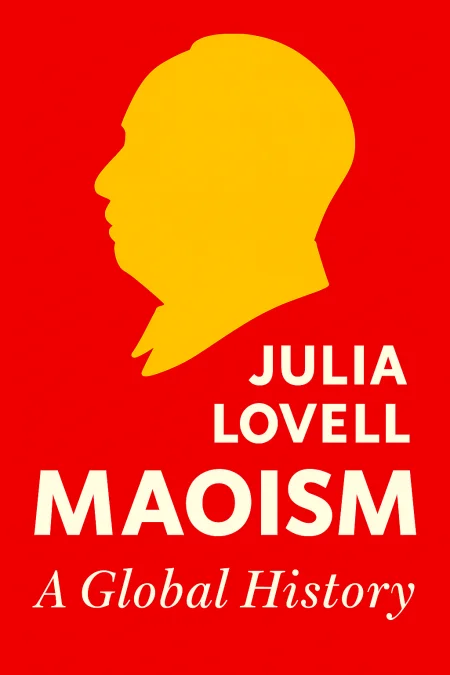
Maoism
A Global History
Book Edition Details
Summary
Amidst a backdrop of global upheaval, the specter of Maoism looms large, transcending its Chinese origins to ignite revolutions and insurgencies across continents. Julia Lovell's gripping narrative peels back the layers of this ideology, revealing its potent influence on the tides of history. From the fervent streets of 1960s Paris to the remote guerrilla camps in the Andes, the reverberations of Mao's vision echo with a vitality that defies time. This is not merely a tale of political theory; it is a journey through the fiery crucible of struggle and transformation. As ideological rifts deepen between East and West, Lovell's incisive exploration becomes an essential compass, guiding readers through the intricate web of past and present shaped by Maoist thought. Here, history is not a distant echo but a living, breathing force that continues to shape the world in unforeseen ways.
Introduction
In the dusty hills of northwestern China during the 1930s, a young American journalist named Edgar Snow sat mesmerized as Mao Zedong outlined his vision of peasant revolution that would sweep across the world. Few could have imagined that this conversation in a remote cave would spark one of history's most influential political movements, spreading from the rice paddies of Vietnam to the universities of Paris, from the mountains of Peru to the tribal forests of India. This extraordinary journey reveals how ideas born in China's countryside became a global force that reshaped nations, inspired revolutionaries, and terrified governments across six decades. The global spread of Maoism illuminates three fundamental questions that remain urgent today. How do radical ideologies transcend cultural boundaries to capture the imagination of diverse peoples worldwide? What role did ideological competition between communist powers play in escalating conflicts throughout the developing world? How do revolutionary movements adapt and survive long after their original context has vanished? Understanding these dynamics helps explain not only the turbulent decades of the Cold War, but also contemporary patterns of insurgency, digital radicalization, and authoritarian revival that continue to shape our interconnected world. This narrative will particularly resonate with readers seeking to understand the hidden connections between seemingly unrelated global conflicts, the true extent of Chinese influence during the twentieth century, and the persistent appeal of revolutionary ideologies in an age of rising inequality and political upheaval. The story demonstrates that ideas, once unleashed, follow unpredictable paths far beyond their creators' intentions.
Revolutionary Seeds: Early Export and Global Appeal (1930s-1950s)
The foundations of global Maoism were laid not through grand strategic planning, but through the power of narrative and carefully crafted imagery that would prove irresistible to audiences worldwide. During the 1930s and 1940s, as Mao's Communist forces struggled for survival in China's remote borderlands, they demonstrated a sophisticated understanding of international opinion that would become crucial to their eventual global influence. Edgar Snow's 1936 visit to the Communist stronghold marked the pivotal moment when local Chinese rebellion became international inspiration. Mao's presentation of himself as a humble peasant philosopher, sharing simple meals with his troops while discussing poetry and revolution, created an image that resonated far beyond China's borders. Snow's resulting book portrayed the Chinese Communists not as dangerous extremists, but as patriotic reformers fighting against feudalism and foreign domination. This carefully orchestrated encounter would become the template for decades of successful Chinese propaganda efforts. The genius of early Maoist messaging lay in its universal appeal to the colonized and dispossessed. Unlike Soviet Communism, which often seemed alien and industrial, Maoism spoke directly to the experience of agricultural societies struggling against foreign control. The message was elegantly simple yet powerful: a poor, rural nation could defeat the world's great powers through correct political organization and unwavering determination. This theme struck deep chords across Asia, Africa, and Latin America, where millions lived under colonial rule or in the shadow of Western economic dominance. The establishment of the People's Republic in 1949 transformed these inspirational ideas into practical possibilities. China's stunning victory over well-equipped Nationalist forces, despite American support for their opponents, seemed to validate Mao's theories of guerrilla warfare and mass mobilization. The new regime immediately began systematically training foreign revolutionaries, establishing schools and exchange programs that would spread Maoist techniques across the developing world, planting seeds for decades of global insurgency and political transformation.
Peak Influence: Cultural Revolution Goes Worldwide (1960s-1970s)
The 1960s witnessed Maoism's explosive transformation from regional Asian phenomenon into a truly global revolutionary force, driven by China's bitter split with the Soviet Union and Mao's audacious bid to lead world revolution. This period saw the unprecedented export of Chinese revolutionary ideology, as Beijing positioned itself as the authentic voice of oppressed peoples everywhere while denouncing Soviet leaders as betrayers of the revolutionary cause. The Sino-Soviet split provided the crucial catalyst for this global expansion. As Mao condemned Moscow's leaders as "revisionists" who had abandoned true socialism, he offered China as the genuine alternative to both American imperialism and Soviet bureaucracy. The resulting competition between Beijing and Moscow for influence in the developing world led to an extraordinary outflow of Chinese resources, training, and ideological support to revolutionary movements worldwide. From Southeast Asian jungles to European universities, Mao's ideas found eager audiences among those seeking alternatives to existing power structures. The Cultural Revolution, beginning in 1966, amplified this message of continuous rebellion against established authority to unprecedented levels. Mao's call for young people to "bombard the headquarters" and challenge all forms of traditional power resonated powerfully with student movements across the globe. In Paris, Berlin, and Berkeley, protesters carried Little Red Books and quoted Mao's aphorisms about the necessity of permanent revolution. The chairman's image as an elderly sage who remained perpetually youthful in spirit, constantly challenging ossified institutions, proved irresistible to a generation coming of age during the tumultuous 1960s. This period witnessed the practical application of Maoist theories in major Cold War conflicts with devastating consequences. Chinese support proved crucial to North Vietnamese success in their war against American forces, while Beijing's endorsement helped bring Cambodia's Khmer Rouge to power with catastrophic results. The Indonesian massacre of 1965, partly triggered by the local Communist Party's adoption of Maoist confrontational tactics, demonstrated the deadly serious nature of these ideological exports. These events established patterns of proxy conflict and revolutionary warfare that would define the remainder of the Cold War era and beyond.
Violent Translations: Insurgencies and Tragic Implementations (1980s-2000s)
Even as China itself abandoned revolutionary rhetoric under Deng Xiaoping's pragmatic reforms, Maoist movements in other countries entered their most violent and destructive phase. The 1980s and 1990s witnessed the emergence of particularly brutal insurgencies that combined Mao's theories with local grievances to create some of the late twentieth century's most devastating conflicts. Peru's Shining Path represented perhaps the purest and most terrifying expression of exported Maoism. Led by philosophy professor Abimael Guzmán, who had studied in China during the Cultural Revolution, the movement launched a "People's War" in 1980 that would claim 70,000 lives over two decades. Guzmán's fanatical devotion to Maoist doctrine, combined with his complete disregard for human suffering, created a reign of terror that brought Peru to the brink of state collapse. The movement's systematic use of extreme violence against civilians, justified through rigid ideological formulas, demonstrated how Mao's ideas could be twisted into instruments of pure destruction when implemented by true believers. India's Naxalite movement followed a different but equally persistent trajectory, emerging from the same Cultural Revolution inspiration that had motivated Guzmán. Beginning with peasant uprisings in West Bengal in 1967, Indian Maoists established an enduring presence in the country's poorest regions, exploiting genuine grievances about land rights, government neglect, and corporate exploitation of natural resources. Unlike their Peruvian counterparts, the Indian Maoists maintained stronger connections to legitimate social concerns, even as their methods remained violent and their ultimate goals unrealistic. Nepal provided yet another variation on the global Maoist theme, with a movement that successfully combined guerrilla warfare with eventual participation in democratic politics. The Nepalese Maoists' decade-long insurgency from 1996 to 2006 demonstrated both the continued appeal of Mao's theories and their potential for adaptation to changing circumstances. Their eventual integration into the political system, while imperfect and often disappointing to supporters, suggested possibilities for channeling revolutionary energy into constructive democratic change rather than endless destruction.
Digital Renaissance: Xi's China and Contemporary Revival (2010s-Present)
The twenty-first century has witnessed an unexpected revival of Maoist symbols, rhetoric, and political techniques, most dramatically in China itself under Xi Jinping's increasingly authoritarian leadership. After decades of market-oriented reforms that seemed to consign Mao to historical irrelevance, Xi has deliberately rehabilitated key elements of the Maoist political repertoire, adapting mass campaigns and personality cult construction to the needs of contemporary digital-age governance. Xi's rise to power coincided with growing nostalgia for Mao among ordinary Chinese citizens disillusioned with corruption, inequality, and environmental degradation. Online Maoist communities emerged as vocal critics of China's capitalist transformation, calling for a return to socialist values and more egalitarian policies. The brief but spectacular political career of Bo Xilai in Chongqing demonstrated the popular appeal of neo-Maoist politics, combining anti-corruption campaigns with red culture revival and populist rhetoric about serving the people's interests against elite privilege. Beyond China's borders, Maoist movements have shown remarkable resilience and adaptability to contemporary conditions. In India, the Communist Party of India (Maoist) continues to operate across vast territories, exploiting government failures to provide basic services while positioning itself as defender of tribal peoples against corporate land grabs and mining projects. In Nepal, former Maoist guerrillas have become key players in the country's democratic system, though their transformation from revolutionaries to conventional politicians has disappointed many supporters who expected more radical social change. The digital age has fundamentally transformed how Maoist ideas spread and evolve, enabling rapid global transmission while also facilitating new forms of surveillance and control. Social media platforms allow instant sharing of Maoist symbols and concepts, often stripped of their original context but retaining their emotional appeal to those frustrated with inequality and injustice. This digital Maoism demonstrates how revolutionary ideologies can persist and adapt across generations, finding new expressions that speak to contemporary grievances while drawing on the symbolic power of historical struggle.
Summary
The global history of Maoism reveals a fundamental paradox that continues to shape our understanding of revolutionary politics and ideological influence in the modern world. Throughout its remarkable eight-decade journey across continents and cultures, Maoism has simultaneously inspired genuine liberation movements and enabled some of the twentieth century's most devastating atrocities, often within the same historical moment and geographic region. This contradiction reflects the deeper tension between Maoism's democratic rhetoric and authoritarian practice, between its promise of empowerment for ordinary people and its reality of concentrated power in the hands of self-appointed revolutionary elites. The pattern repeated itself across diverse contexts, from Cambodia's killing fields to Peru's mountains, from India's tribal forests to Nepal's villages, demonstrating how revolutionary ideologies can serve as tools for both liberation and oppression depending on the circumstances and motivations of those who wield them. For contemporary observers grappling with rising global inequality, democratic backsliding, and the spread of extremist ideologies through digital networks, the history of Maoism offers both essential warnings and crucial insights. It reminds us that radical solutions to genuine problems can easily become sources of new injustices, that the language of popular empowerment can mask elite manipulation, and that the appeal of simple answers to complex social problems remains dangerously seductive across cultures and generations. Most importantly, it suggests that addressing the root causes of social discontent through patient democratic reform and institution-building, however slow and imperfect, remains preferable to the false promises of revolutionary transformation that have so often led to tragedy rather than genuine human progress.
Related Books
Download PDF & EPUB
To save this Black List summary for later, download the free PDF and EPUB. You can print it out, or read offline at your convenience.
By Julia Lovell
