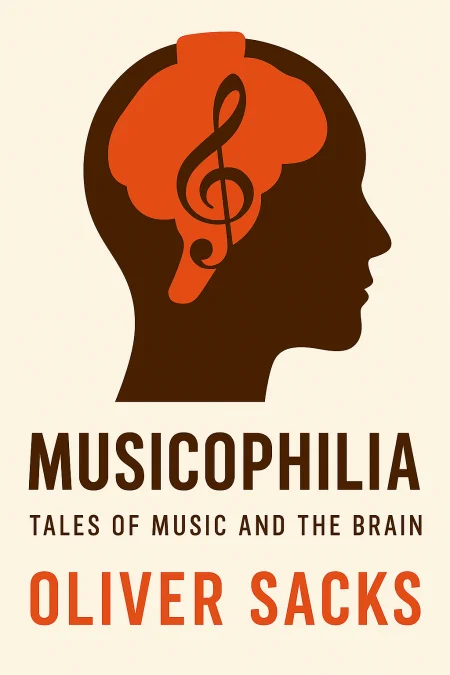
Musicophilia
Tales of Music and the Brain
Book Edition Details
Summary
In the mesmerizing interplay between melody and mind, Oliver Sacks’ "Musicophilia" takes readers on an enthralling journey through the neurological wonders of music's effect on the human spirit. From a lightning strike awakening a dormant passion for piano in a middle-aged man, to children with Williams syndrome whose lives are intricately woven with sound, Sacks reveals the peculiar yet profound connections music forges within us. With cases like the man who remembers nothing beyond a fleeting seven seconds—except for the music that anchors him—this collection unravels mysteries of musical perception and its power to heal, disrupt, and transform. Sacks’ compassionate and insightful storytelling offers an unforgettable exploration of our symphonic brains, leaving readers both enlightened and inspired.
Introduction
Have you ever wondered why a simple melody from your childhood can instantly flood you with vivid memories, or why your grandmother with Alzheimer's disease can still sing every word of songs from her youth even though she can't remember your name? The relationship between music and the human brain is far more extraordinary and mysterious than most of us realize. Music doesn't just provide entertainment or emotional comfort—it literally rewires our neural pathways, unlocks frozen movements in Parkinson's patients, and can even survive when other cognitive abilities completely disappear. Our brains are essentially sophisticated musical instruments, constantly processing rhythm, melody, and harmony through networks that connect memory, emotion, movement, and language in ways that scientists are only beginning to understand. As we explore these remarkable connections, you'll discover how lightning strikes can suddenly transform someone into a passionate pianist, why musical memories remain intact even in severe dementia, and how the simple act of listening to a waltz can help paralyzed patients dance again. These discoveries reveal that being musical isn't just a talent some people possess—it's a fundamental aspect of human nature that shapes how we think, remember, and connect with others.
When Lightning Strikes: Sudden Musical Obsessions and Brain Changes
Imagine living your entire adult life with little interest in music, then suddenly waking up one day with an overwhelming, almost desperate craving to hear piano compositions. This extraordinary transformation happened to Tony Cicoria, a surgeon who was struck by lightning while making a phone call. Within weeks of his near-death experience, he developed what can only be described as a musical obsession, spending hours listening to Chopin and teaching himself to play pieces he had never cared about before. Even more remarkably, he began composing original music, claiming it came to him like tuning into a radio frequency that had always been there but never accessible. This phenomenon, called sudden musicophilia, reveals something profound about how musical ability is wired into our brains. The lightning strike likely caused subtle changes in Cicoria's temporal lobes, brain regions crucial for processing music and emotion. These areas became hyperactive, creating new neural pathways that made music irresistibly appealing and meaningful. What's particularly fascinating is that this wasn't just passive appreciation—his brain had somehow unlocked creative musical abilities that had been dormant his entire life. Similar cases have been documented following strokes, seizures, brain tumors, and even certain medications. A research chemist developed sudden musical passion after brain surgery, while another patient's musical cravings emerged only after taking epilepsy medication. These cases suggest that musicality isn't simply about talent or training, but about the delicate balance of brain chemistry and neural connections. When this balance shifts, whether through trauma, illness, or treatment, it can reveal the profound musical potential that may lie hidden within all of us. The implications are staggering. If musical abilities can emerge so suddenly and dramatically, what does this tell us about the untapped capacities in our own brains? These remarkable transformations show us that the musical mind isn't fixed or predetermined, but rather a dynamic system that can be awakened, enhanced, or completely reorganized by changes in neural activity, opening new possibilities for understanding human creativity and potential.
Musical Memory Mysteries: Why Melodies Survive When Everything Else Fades
When Clive Wearing contracted a devastating brain infection that destroyed his ability to form new memories, he became trapped in an eternal present lasting only seconds. He would greet his wife as if seeing her for the first time, even if she had left the room just moments before, and lived in a constant state of confusion about where and when he was. Yet when Clive sat at the piano, something miraculous happened—he could still play complex pieces flawlessly, conduct choirs with sensitivity and grace, and even improvise with sophisticated musical intelligence completely intact. This extraordinary preservation of musical ability in the face of profound amnesia reveals a fundamental truth about how our brains organize different types of memory. Unlike other memories that depend heavily on the hippocampus and temporal lobe structures damaged in Clive's case, musical memory appears to be distributed across multiple brain networks, including motor areas, emotional centers, and pattern-recognition systems. When we learn music, we're not just storing information in one place—we're creating what neuroscientists call procedural memories that become deeply embedded throughout our neural architecture. The robustness of musical memory extends far beyond professional musicians to ordinary people facing various forms of brain damage. Patients with Alzheimer's disease may forget their children's names but can still sing songs from their youth with perfect recall. Stroke victims who lose the ability to speak often retain the capacity to sing lyrics, accessing language through musical pathways that remain intact. This suggests that music creates a special kind of memory that's more resistant to neurological damage than almost any other cognitive function. What makes musical memory so resilient is its multi-layered nature. A single song simultaneously engages our sense of rhythm, melody, harmony, emotion, and personal associations. This redundancy means that even when some neural pathways are damaged, others can compensate, allowing the musical experience to remain largely intact. Understanding this principle has revolutionized approaches to therapy and rehabilitation, showing us that music isn't just entertainment for the brain, but a powerful tool for maintaining human connection and identity even in the face of devastating neurological conditions.
Rhythm as Medicine: How Music Unlocks Frozen Bodies and Minds
The relationship between music and movement runs far deeper than the simple urge to tap your foot to a beat. For people with Parkinson's disease and similar movement disorders, rhythm can literally unlock frozen bodies, transforming patients who cannot take a single step into graceful dancers who move with fluid precision. This remarkable phenomenon occurs because musical rhythm activates motor areas of the brain through pathways that bypass the damaged circuits responsible for initiating voluntary movement. In Parkinson's disease, the brain regions that normally coordinate smooth, automatic movements become impaired, leaving patients trapped in their own bodies. However, when external rhythmic cues are provided through music, alternative neural networks can take over, essentially providing a substitute timing system that allows natural movement to emerge. The effect is often instantaneous and dramatic—patients who have been frozen in place for minutes suddenly begin walking normally when they hear the right musical accompaniment. The therapeutic power of rhythm extends beyond simple walking to encompass complex motor skills and even speech patterns. Patients who struggle with the broken, halting speech characteristic of Parkinson's can often sing lyrics smoothly and clearly, accessing language through musical pathways that remain functional. This has led to innovative treatments like melodic intonation therapy, where patients learn to sing their words before gradually transitioning back to normal speech patterns. What makes rhythm so effective as medicine is its ability to provide external structure that the damaged brain can latch onto. Just as a metronome helps musicians keep time, musical rhythm gives the nervous system a reliable framework for organizing movement and speech. This discovery has revolutionized our understanding of neuroplasticity, demonstrating that the brain's capacity for adaptation and compensation extends far beyond what we previously imagined. Music therapy is now recognized as a legitimate medical intervention, offering hope and improved quality of life for millions of people worldwide who struggle with movement and communication disorders.
The Spectrum of Musical Minds: From Perfect Pitch to Musical Hallucinations
Musical ability exists on a vast and fascinating spectrum, from those who can instantly identify any note they hear to others who cannot distinguish between simple melodies, and even some who hear complex orchestras playing when no music is present at all. At one extreme lies absolute pitch, a rare ability possessed by perhaps one in ten thousand people. Those with perfect pitch don't just recognize a G-sharp—they experience its unique character as distinctly as we see the color blue, with each note having its own unmistakable identity that remains constant throughout their lives. This extraordinary ability appears to result from a combination of genetic factors and early musical training, and is remarkably more common among speakers of tonal languages like Mandarin Chinese, where pitch changes alter word meanings. Brain imaging reveals that people with perfect pitch show enhanced connectivity between auditory and memory centers, suggesting they maintain specialized neural templates for absolute pitch recognition that most of us lose during childhood development. At the opposite end of the spectrum lies amusia, a condition where people cannot process musical information normally. Some individuals with amusia hear music as nothing more than noise, describing orchestral pieces as sounding like pots and pans being thrown around. Others can hear individual notes perfectly but cannot string them together into melodies, like being able to see letters but not read words. These conditions reveal that musical perception isn't a single ability but a complex orchestra of different brain processes working together. Perhaps most intriguing are musical hallucinations, where people hear vivid, detailed music when none is actually present. These phantom melodies typically occur when the auditory system is deprived of normal input, much like phantom limb sensations after amputation. The brain begins generating its own music to fill the silence, often replaying familiar songs from the person's past with startling clarity and emotional resonance. Far from being distressing, these hallucinations usually provide comfort and connection to cherished memories, demonstrating that our brains are constantly humming with musical potential, even in the depths of silence.
Summary
The most profound revelation from exploring our musical minds is that music isn't merely an artistic luxury or cultural decoration, but a fundamental aspect of human cognition that reveals the brain's extraordinary capacity for pattern recognition, emotional processing, memory formation, and social connection. Music engages our brains more comprehensively than almost any other activity, simultaneously activating networks for hearing, movement, memory, emotion, and social bonding, which explains why musical experiences can be so transformative and why musical abilities can emerge, disappear, or dramatically change when the brain is altered by injury, disease, or intense experience. These discoveries raise fascinating questions about music's role in human evolution and development—did our musical abilities evolve alongside language as complementary systems for communication and social bonding, and how might understanding the musical brain help us develop better treatments for neurological conditions or enhance learning and memory in healthy individuals? The intersection of neuroscience and music offers a uniquely accessible window into the brain's most sophisticated processes, suggesting that in our increasingly visual and digital world, we may be overlooking one of our most powerful tools for cognitive health, emotional wellbeing, and human connection. For anyone curious about the hidden workings of consciousness, the mysteries of memory, or the remarkable adaptability of the human mind, these insights remind us that we are all fundamentally musical beings, carrying within our neural networks an ancient capacity for rhythm, melody, and harmony that connects us not only to our own memories and emotions, but to the shared musical heritage of our species.
Related Books
Download PDF & EPUB
To save this Black List summary for later, download the free PDF and EPUB. You can print it out, or read offline at your convenience.
By Oliver Sacks
