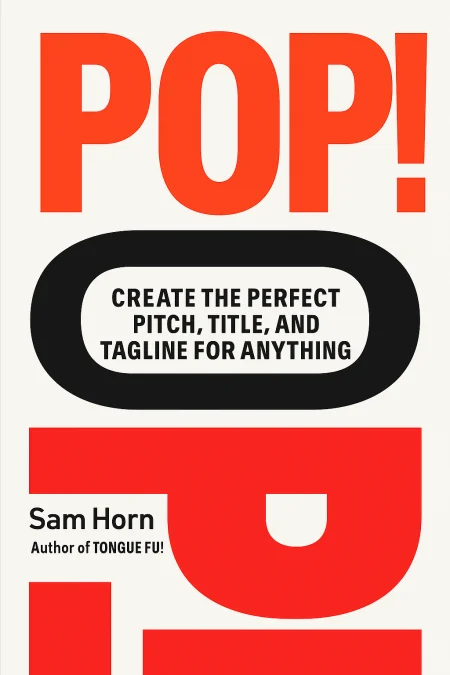
POP!
Create the Perfect Pitch, Title and Tagline for Anything
bySam Horn
Book Edition Details
Summary
In a world teeming with ideas, how does one ensure theirs stands out and resonates? Sam Horn, a celebrated author and consultant, deciphers the secret recipe for ideas that ignite imaginations and captivate audiences. With her POP! formula—Purposeful, Original, Pithy—she guides you through crafting messages that not only capture attention but linger in the minds of those who encounter them. Dive into her transformative approach and learn to create pitches, titles, and taglines that rise above the clamor and carve a niche in the crowded marketplace. Whether you're aiming to launch a product, pitch an idea, or communicate a message, Horn's insights will empower you to break through the noise and leave a lasting impression.
Introduction
In today's saturated marketplace, talent alone isn't enough. You could have the most innovative product, the most compelling service, or the most important message, but without the ability to capture attention in sixty seconds or less, your brilliance remains invisible. Every day, decision-makers are bombarded with countless proposals, pitches, and presentations. The harsh reality is that if your communication doesn't immediately grab their interest and clearly articulate your value, they'll move on to the next option. The challenge isn't just being good at what you do; it's being perceived as the only one who does what you do. This requires mastering the art and science of making your message pop out from the crowd. When you learn to craft communication that is purposeful, original, and pithy, you transform from being one of many into being one of a kind. Your ideas gain traction, your products find their market, and your voice cuts through the noise to reach the people who need to hear it most.
Be PURPOSEFUL: Address Your Audience's Needs
Being purposeful means your communication must do two essential things: accurately articulate the essence of your offering and position you favorably with your target audience. Too many people create clever wordplay that impresses them but confuses their customers. Brilliance without relevance is worthless. Your message must address real problems that real people face and offer genuine solutions they can understand and value. The foundation of purposeful communication lies in answering what Sam Horn calls the W9 Form, nine critical questions that clarify your intent and impact. Consider Robin, who witnessed the worst and best member showcase at a networking meeting. The first presenter droned on about his services in language nobody understood. Then Michele Powers from NutrientChef took the stage and brought four strategically selected clients who enthusiastically explained how hiring Michele had transformed their lives. One woman proudly shared her weight loss success, a busy executive described having healthy meals ready after sixty-hour work weeks, and a mother explained how Michele taught her college-bound son to cook nutritious, budget-friendly meals. Michele's approach worked brilliantly because she had researched her audience and knew they were tired of boring presentations. Her show-don't-tell testimonials captured attention while proving the concrete benefits of her services in just ten minutes. She understood that people don't care about your credentials until they understand how you can solve their problems. To create purposeful communication, you must understand your audience's pain points, desires, and circumstances. What keeps them awake at night? What challenges do they face that your offering can address? When you speak directly to their needs using language they understand, your message becomes magnetic rather than forgettable. The key is being crystal clear about what you want people to do after experiencing your communication. Vague messages produce vague results. Specific, purpose-driven communication that addresses real needs with real solutions creates the foundation for everything else to follow.
Be ORIGINAL: Stand Out from the Crowd
Originality is what transforms you from being one of many to becoming one of a kind. When you're original, there is no competition because you've created your own category. This doesn't mean reinventing the wheel; it means presenting your wheel in a way that's never been done before. As one wise person noted, if people haven't heard it before, it's original to them. Take the story of author Lynne Truss, who grew weary of poor grammar and punctuation she observed everywhere. Writing a book about proper grammar seemed like commercial suicide since most people don't share that passion. But Truss discovered the power of originality through a clever title based on a simple joke about a panda who "eats, shoots, and leaves" due to poor punctuation. That title, "Eats, Shoots & Leaves," transformed what could have been a dry grammar book into an international bestseller. The lesson is profound: the right original approach can turn any topic, no matter how mundane, into something compelling. Consider thirteen-year-old Jack McShane, who was bothered by the terrible condition of New Orleans' City Park after Hurricane Katrina. Instead of just complaining, he got his family's lawnmower and started cleaning up. He recruited friends and initially called themselves the "Mow-Rons" with the slogan "The Mow-Rons are in City Park; the idiots are in City Hall." While the media attention was welcome, Jack realized this negative approach didn't represent his true mission of inspiring community action. He kept brainstorming until he discovered something more meaningful: "Weeding by Example." This simple phrase captured both the literal and metaphorical nature of his work. It showed that leadership means taking action rather than waiting for others to solve problems. Jack's original approach to naming his cause helped it gain national attention and inspired similar movements in other cities. Originality often comes from combining familiar elements in unfamiliar ways, challenging assumptions, or presenting common ideas from uncommon perspectives. The goal is to make people stop, think, and say, "I never thought of it that way before." When you achieve this reaction, you've created something original that will stick in their minds long after your competitors' messages have been forgotten.
Be PITHY: Make Every Word Count
In our information-saturated world, brevity isn't just preferred; it's essential. The human brain can hold approximately seven bits of information in short-term memory, which means if your description exceeds seven words, people probably won't remember it. The most successful slogans of the twentieth century all follow this rule: "Just do it," "Where's the beef?," "We try harder." These phrases prove that when it comes to communication, less is more. Pithy doesn't mean shallow; it means distilled to essence. Like a master chef who reduces a complex sauce to its most flavorful form, effective communicators eliminate everything unnecessary and keep only what delivers maximum impact. This requires discipline and skill because, as Mark Twain noted, making something short takes longer than making it long. Sam Horn learned this principle firsthand when appearing on "The Tonight Show" to pitch her book about dealing with difficult people. Her fifteen-second pitch began simply: "I've written a book on how to deal with difficult people without becoming one yourself. It's called Tongue Fu! Tongue Fu! is martial arts for the mouth." She then shared three quick examples: "Fun Fu! for handling hassles with humor, Tongue Sue! for lawyers, and Run Fu! for when Tongue Fu! doesn't work." The audience immediately understood the concept and voted it "sold" overwhelmingly. This pitch worked because every word earned its place. She paused between sentences for clarity, used alliteration to make phrases memorable, and employed the "power of three" to reinforce her concept. The playful tone suggested the book would be enjoyable rather than preachy, addressing a common fear that helpful books are boring. The art of being pithy requires ruthless editing. You must ask of every word, every phrase, every sentence: Does this serve my purpose? Does it help my audience understand and remember my message? If not, eliminate it. Your goal is to create what comedians call a "tight five," where every element works together seamlessly to create maximum impact in minimum time. When you master the art of pithy communication, your words become memorable, repeatable, and actionable. People can easily share your message with others, which turns every person who hears it into a potential ambassador for your cause, product, or idea.
Keep Their Interest: Seven Secrets for Lasting Impact
Capturing attention is just the beginning; keeping that attention requires different skills entirely. Once people are listening, you must engage both their minds and hearts to create lasting impact. This means moving beyond clever phrases to deliver genuine value through stories, insights, and actionable guidance that transforms how they think and act. The secret lies in making your content come alive through first-person stories that put people "in the pool" of experience. Rebecca Morgan demonstrated this perfectly when speaking about marketing approaches. Instead of lecturing about hard-sell tactics being counterproductive, she told the story of her mall visit where an aggressive food court employee repeatedly thrust chicken samples at her face despite her clear refusals. The pushy approach made her vow never to eat at that establishment. Later, the irresistible aroma of fresh-baked cookies naturally drew her across the food court to make a purchase. This "chocolate chip cookie marketing" approach worked because she let customers choose rather than forcing decisions on them. Stories work because they switch people from their analytical left brain to their emotionally engaged right brain. Instead of judging your ideas from the outside, they experience them from within. This creates the foundation of genuine buy-in because people aren't just hearing about concepts; they're living through situations that demonstrate those concepts in action. The most effective communicators also craft memorable "money phrases" that capture their core message in words people can't forget. These signature lines become verbal business cards that spread your influence far beyond your immediate audience. When someone can repeat your key insight word-for-word months later, you know you've created something that sticks. Finally, you must inspire specific action by giving people clear next steps. Use phrases like "next time you encounter this situation" or "from now on, when you face this challenge" to plant seeds for future application. The goal isn't just to inform or entertain; it's to equip people with tools they'll actually use to improve their circumstances.
Summary
The ability to create communication that pops out from the crowd isn't just a nice skill to have; it's essential for anyone who wants their ideas to find their audience and their voice to be heard. As the book demonstrates through countless examples, "You've got to be a good date for your customers." This means crafting messages that are purposeful enough to solve real problems, original enough to stand apart from competitors, and pithy enough to be remembered and repeated. The techniques aren't complicated, but they require thoughtful application and genuine concern for your audience's needs and interests. Whether you're naming a product, writing a pitch, or developing a presentation, these principles can transform your communication from forgettable to unforgettable. The most important insight is this: if you're not getting the response you want, it's not because people aren't listening; it's because you haven't yet found the right way to make your message pop. Start today by examining one piece of communication you use regularly and ask yourself how you can make it more purposeful, original, and pithy. Your breakthrough might be just one compelling phrase away.
Related Books
Download PDF & EPUB
To save this Black List summary for later, download the free PDF and EPUB. You can print it out, or read offline at your convenience.
By Sam Horn
