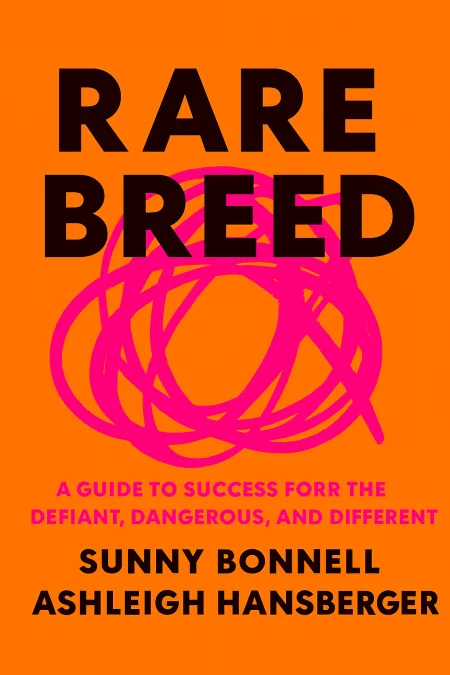
Rare Breed
A Guide to Success for the Defiant, Dangerous, and Different
bySunny Bonnell, Ashleigh Hansberger
Book Edition Details
Summary
In a world where blending in is the norm, "Rare Breed" dares you to stand out. Sunny Bonnell and Ashleigh Hansberger shatter conventional wisdom, arguing that the very traits often dismissed as flaws—rebelliousness, audacity, and emotional intensity—are, in fact, the keys to success. This isn't your typical business manual; it's a rallying cry for the misfits, the outsiders, and the dreamers who refuse to conform. Through vivid storytelling and bold advice, Bonnell and Hansberger guide you to harness your inner "vices" as superpowers. Dive into this electrifying manifesto that celebrates those who challenge the status quo and lead with authenticity, paving their own paths to greatness.
Introduction
Society conditions us to believe that success requires conformity, that we must sand down our rough edges and fit neatly into predetermined molds. This fundamental assumption permeates everything from educational systems to corporate cultures, creating a world where deviation from the norm is treated as a liability rather than an asset. Yet history reveals a different truth: the individuals who transform industries, challenge conventions, and create lasting change are precisely those who refuse to be ordinary. The conventional wisdom suggests that traits like rebelliousness, obsessiveness, and emotional intensity are obstacles to overcome rather than strengths to harness. This perspective stems from a misunderstanding of how excellence actually emerges in competitive environments. Rather than being flaws that need correction, these characteristics often represent the raw materials of extraordinary achievement when properly understood and directed. The evidence supporting this counterintuitive claim comes from examining the common threads among breakthrough innovators, influential leaders, and cultural pioneers. Their success stories consistently reveal that what others perceived as problematic behavior was actually the source of their competitive advantage. The key lies not in suppressing these traits but in learning to channel them constructively, transforming apparent weaknesses into distinctive strengths that set one apart in an increasingly homogenized world.
The Seven Rare Breed Virtues: Reframing Perceived Weaknesses as Strengths
The foundation of this reframing lies in recognizing that seven commonly criticized traits actually represent powerful virtues when properly understood and applied. These characteristics—rebelliousness, audacity, obsessiveness, passion, weirdness, charisma, and emotional sensitivity—have been mislabeled by a culture that prizes predictability over innovation. Rebelliousness, rather than being mere defiance, represents the courage to challenge systems that no longer serve their intended purpose. History's most significant advances have come from individuals willing to question established norms and propose alternative approaches. This virtue manifests not as destructive opposition but as constructive disruption that opens new possibilities for progress. Audacity transcends simple risk-taking to become visionary leadership that sees possibilities others cannot imagine. While conventional thinking focuses on incremental improvements within existing frameworks, audacious individuals envision entirely new paradigms and possess the conviction to pursue seemingly impossible goals. Their willingness to attempt what others consider unrealistic often leads to breakthrough innovations that reshape entire industries. The obsessive pursuit of excellence, frequently dismissed as unhealthy perfectionism, actually represents the relentless drive that transforms good ideas into extraordinary achievements. This virtue involves an unwillingness to accept mediocrity and a commitment to continuous refinement that eventually produces work of exceptional quality. The difference between competence and mastery often lies in this obsessive attention to detail and persistent improvement.
Strategic Application: How to Harness Each Virtue for Professional Success
Transforming these traits into competitive advantages requires understanding how to apply them strategically rather than allowing them to operate without direction. The key principle involves channeling the energy of these characteristics toward specific outcomes that create value for others while advancing personal goals. Rebelliousness becomes most effective when directed toward solving genuine problems rather than simply opposing authority for its own sake. This means identifying systems, processes, or conventional approaches that produce suboptimal results and proposing concrete alternatives. The most successful rebels combine criticism with construction, offering not just opposition but better solutions that address underlying issues. Audacious vision gains practical power when combined with systematic execution and realistic assessment of constraints. While maintaining ambitious long-term goals, effective application involves breaking down seemingly impossible objectives into manageable steps that build momentum over time. This approach allows individuals to pursue transformational goals while maintaining credibility and gathering the resources necessary for success. The strategic use of obsessiveness requires learning to distinguish between productive perfectionism that improves outcomes and counterproductive perfectionism that prevents completion. This involves developing judgment about when additional refinement will meaningfully enhance results versus when the pursuit of perfection becomes an obstacle to progress. The most effective obsessive individuals learn to channel their drive toward the elements that matter most while accepting reasonable compromises elsewhere. Emotional sensitivity transforms into leadership strength when channeled toward understanding and responding to the needs of others. Rather than being overwhelmed by feelings, emotionally intelligent individuals use their heightened awareness to build stronger relationships, anticipate challenges, and create environments where others can thrive. This virtue becomes particularly powerful in roles requiring influence, collaboration, and cultural change.
Managing the Dark Side: Preventing Virtues from Becoming Self-Destructive Vices
Every strength contains the seeds of its own dysfunction when taken to extremes or applied without wisdom. Understanding these potential pitfalls is crucial for maintaining the benefits of these traits while avoiding their destructive manifestations. The challenge lies in recognizing when virtues begin to undermine their own purposes. Rebelliousness becomes destructive when it transforms from principled opposition to reflexive contrarianism. This occurs when the desire to oppose authority becomes more important than achieving positive outcomes, leading to destructive behavior that serves no constructive purpose. The warning signs include opposing reasonable proposals simply because they come from establishment sources and prioritizing disruption over improvement. Audacity crosses into recklessness when confidence becomes disconnected from competence and feedback. This manifests as pursuing impossible goals without adequate preparation, ignoring legitimate constraints, or refusing to adapt plans when evidence suggests they are fundamentally flawed. Healthy audacity involves pushing boundaries while remaining grounded in reality and responsive to new information. Obsessiveness becomes pathological when the pursuit of perfection prevents completion or when standards become so extreme that they paralyze action. This includes spending disproportionate time on minor details while neglecting major priorities, or setting requirements so high that nothing can ever meet them. Productive obsessiveness focuses intensely on important outcomes while maintaining perspective on relative priorities. The emotional virtue turns destructive when sensitivity becomes overwhelming or when empathy leads to poor boundaries and decision-making. This can manifest as taking on others' problems to the point of personal dysfunction or making choices based purely on feelings rather than balanced consideration of multiple factors. Healthy emotional intelligence involves feeling deeply while maintaining the capacity for rational analysis and self-care.
Building Your Rare Breed Identity: Practical Implementation and Leadership Framework
Developing a sustainable rare breed identity requires creating systems and practices that support the productive expression of these traits while providing safeguards against their destructive potential. This involves both personal development work and environmental design that reinforces positive patterns. The foundation involves honest self-assessment to identify which virtues represent core aspects of your personality versus which ones you admire but don't naturally possess. Authenticity becomes crucial because attempting to force traits that don't align with your natural tendencies often produces artificial behavior that undermines credibility. Focus energy on developing the virtues that feel most natural while learning to work effectively with others who complement your strengths. Environmental design plays a crucial role in supporting rare breed development. This includes choosing work contexts that value innovation and independent thinking, building relationships with people who appreciate unconventional approaches, and creating physical and social environments that reinforce productive expression of your distinctive traits. The goal is to position yourself where your natural tendencies become assets rather than liabilities. Leadership development for rare breeds involves learning to inspire and guide others while honoring your authentic nature. This means developing the communication skills to help others understand your vision and approach, building teams that complement your strengths and compensate for your weaknesses, and creating organizational cultures that encourage the kind of thinking and behavior you naturally exhibit. Effective rare breed leaders don't try to become conventional but instead create environments where unconventional excellence can thrive. The ultimate framework involves viewing rare breed identity as an ongoing practice rather than a fixed destination. This requires continuous learning about how to apply your traits more effectively, regular reflection on when you're using your strengths productively versus destructively, and willingness to evolve your approach as you gain experience and wisdom. The goal is not to perfect these traits but to become increasingly skillful in their application.
Summary
The central insight emerges that what society labels as problematic personality traits often represent the raw materials of exceptional achievement when properly understood and channeled. Success in competitive environments frequently requires the very qualities that conventional wisdom discourages: the willingness to challenge established norms, pursue seemingly impossible goals, demand excellence beyond normal standards, and lead with authentic emotion and vision. Rather than viewing these characteristics as obstacles to overcome, recognizing them as distinctive strengths provides a foundation for building careers and making contributions that would be impossible through conventional approaches alone.
Related Books
Download PDF & EPUB
To save this Black List summary for later, download the free PDF and EPUB. You can print it out, or read offline at your convenience.
By Sunny Bonnell
