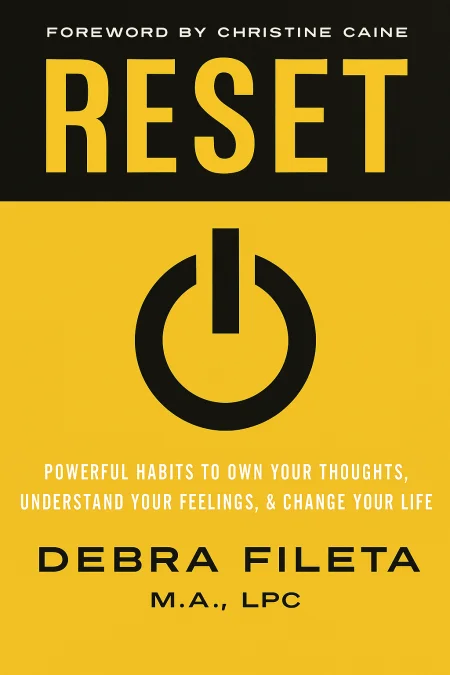
Reset
Powerful Habits to Own Your Thoughts, Understand Your Feelings, and Change Your Life
byDebra Fileta, Christine Caine
Book Edition Details
Summary
Tired of cycling through the same old patterns without progress? Meet your liberator: Debra Fileta's "Reset." This compelling guide isn't just another self-help book—it's a lifeline for those yearning for real transformation. Fileta, a licensed counselor with a faith-based approach, offers 31 actionable habits that transcend mere routine change. Each practice is meticulously crafted, fusing psychological insight with biblical wisdom, to forge lasting behavioral shifts. Whether you've stumbled in the past or feel trapped by habits that refuse to die, Fileta's strategies promise renewal. "Reset" is your invitation to harness God's power and a fresh perspective to thrive from the inside out, igniting change that truly sticks.
Introduction
Sarah had always been the one everyone turned to. Her phone buzzed constantly with friends needing advice, family members seeking support, and colleagues requesting help with projects. She wore this role like a badge of honor, believing her worth came from being indispensable to others. But late one evening, after spending three hours on the phone consoling a friend through another relationship crisis, Sarah caught her reflection in the bathroom mirror and barely recognized herself. Dark circles shadowed her eyes, her shoulders slumped with exhaustion, and something vital seemed missing from her gaze. She was giving everything to everyone else while slowly disappearing inside. This moment of stark recognition represents where many of us find ourselves today. We live our lives on autopilot, following patterns and responding to demands without truly examining what drives us from within. We react to emotions rather than understanding them, chase external validation while neglecting our inner world, and find ourselves stuck in cycles that leave us drained and unfulfilled. The truth is, lasting change doesn't begin with adjusting our external circumstances or forcing ourselves to behave differently. It starts with understanding the intricate connection between our thoughts, emotions, and behaviors. This journey toward authentic transformation requires courage to pause, examine our internal landscape, and develop new ways of responding to life's challenges. Through practical tools and deep insights, we'll explore how to break free from destructive patterns and create space for genuine healing. The path ahead promises not just relief from what burdens us, but discovery of the abundant life we're meant to live.
The Prison of Default Thinking: One Woman's Journey to Self-Awareness
Hannah's marriage was struggling, her friendships felt shallow, and despite all her efforts to be the perfect mother, she constantly battled feelings of inadequacy. In therapy, she initially couldn't understand why she felt so insecure in every relationship. She described herself as someone who tried incredibly hard to make others happy, always anticipating their needs and adjusting her behavior accordingly. Yet somehow, she never felt truly accepted or valued. During one session, Hannah began exploring her earliest memories. She had been adopted as an infant into a loving family, and she'd always insisted this had no negative impact on her life. But as she dug deeper, a pattern emerged. Her young mind had needed to make sense of why her biological parents had given her up, and the easiest explanation was that something must have been wrong with her. This unconscious conclusion had shaped decades of thinking: "I'm not good enough as I am. I need to prove my worth. If I don't work hard enough to please people, they'll leave me." These thoughts had become so automatic that Hannah didn't even recognize them anymore. They ran like background music in her mind, influencing every interaction and decision. When her husband seemed distant, her first thought wasn't about his stressful day at work, but about what she had done wrong. When friends made plans without her, she immediately assumed they didn't really want her around. Her default thinking had become a prison, keeping her trapped in patterns of people-pleasing and self-doubt. The revelation transformed Hannah's understanding of herself. She realized that her feelings of inadequacy weren't based on present reality but on conclusions her young mind had drawn decades earlier. By recognizing these automatic thought patterns and replacing them with truth, she could finally break free from the invisible chains that had bound her for so long. Her journey illustrates how our minds can hold us captive through unconscious beliefs, but also how awareness and intentional change can unlock the door to freedom.
Emotions as Signals: Learning to Listen to Your Inner Alarm System
Marcus had always prided himself on being rational and controlled, viewing emotions as inconvenient interruptions to clear thinking. He came from a family where expressing feelings was seen as weakness, and he had learned to suppress any emotional response that arose. This strategy seemed to serve him well in his demanding career, but it was wreaking havoc on his personal relationships. His wife complained that he was distant and unresponsive, and his teenage children had stopped confiding in him altogether. The turning point came during a particularly difficult period at work. Marcus began experiencing physical symptoms he couldn't ignore: racing heart, sweating palms, and difficulty concentrating. When medical tests revealed nothing wrong physically, he reluctantly agreed to explore whether stress and emotions might be contributing factors. In therapy, he learned that emotions serve as an internal alarm system, providing crucial information about our needs, boundaries, and well-being. Marcus discovered that his anxiety wasn't a sign of weakness but a signal that he was overwhelmed and needed support. His irritability wasn't a character flaw but an indication that his boundaries were being crossed. His sadness about his distant relationship with his children wasn't something to suppress but important information about what he truly valued. As he began to tune into these emotional signals rather than dismissing them, he could respond more appropriately to life's challenges. Learning to listen to his emotions transformed Marcus's relationships. Instead of shutting down when his wife expressed concerns, he could acknowledge the fear underneath her words and respond with empathy. When his children came to him with problems, he could sit with their emotions without immediately trying to fix everything. His emotions had become valuable allies rather than enemies to be conquered, guiding him toward more authentic and connected relationships with the people he loved most.
From Pressure to Peace: Building Healthy Boundaries in a Chaotic World
Jennifer's life looked perfect from the outside. She volunteered at church, served on the PTA, maintained a spotless home, and was always available when others needed help. But inside, she felt like a pressure cooker ready to explode. She couldn't remember the last time she had said no to a request, taken a genuine break, or engaged in an activity purely for her own enjoyment. Her calendar was packed with obligations, her phone buzzed constantly with needs from others, and she fell into bed each night exhausted yet somehow feeling like she hadn't done enough. The breaking point came when Jennifer found herself snapping at her young daughter over something trivial. The guilt and shame that followed were overwhelming, but they also served as a wake-up call. She realized that in trying to be everything to everyone, she had lost herself entirely. Her desire to help others had become compulsive, driven more by fear of disappointing people than by genuine love and service. She was running on empty, trying to give from a depleted reservoir. Jennifer began the difficult work of examining why saying no felt so threatening. She discovered deep-seated beliefs about her worth being tied to her usefulness to others. She feared that if she stopped giving constantly, people would abandon her. These insights helped her understand that boundaries weren't selfish barriers but necessary structures that protected her ability to serve authentically. She started small, declining one non-essential commitment and using that time for rest and reflection. As Jennifer learned to set boundaries, something unexpected happened. Instead of losing relationships, many of them deepened. When she gave from a place of fullness rather than depletion, her contributions became more meaningful. Her family received a more present, peaceful mother instead of a stressed, overwhelmed martyr. She discovered that taking care of herself wasn't selfish but essential to her ability to love and serve others well. The pressure that had once threatened to destroy her had been transformed into sustainable peace through the wisdom of healthy limits.
Attachment and Connection: Healing Wounds to Find True Community
David had always struggled with relationships, though he couldn't quite articulate why. He found himself either clinging desperately to people, becoming anxious when they seemed distant, or pushing them away before they could hurt him. His romantic relationships followed a predictable pattern: intense connection followed by conflict and eventual dissolution. He longed for deep, lasting relationships but seemed incapable of maintaining them. In therapy, David explored his attachment style, tracing its roots back to his early childhood experiences. His mother had battled depression, creating an unpredictable emotional environment where her availability and responsiveness fluctuated dramatically. Young David learned to be hypervigilant about her moods, desperately trying to keep her happy so she wouldn't withdraw. This created a deep-seated fear of abandonment coupled with an intense need to control relationships to feel secure. As an adult, David carried these patterns into every significant relationship. He would monitor his partner's every expression and tone, interpreting normal human moments of distraction or stress as signs of impending rejection. His attempts to prevent abandonment often created the very outcome he feared, as partners felt suffocated by his need for constant reassurance. When relationships ended, David's worst fears seemed confirmed, reinforcing his belief that he was somehow unworthy of lasting love. Understanding his attachment style gave David the tools to change these destructive patterns. He learned to recognize when his childhood wounds were driving his adult behavior and to respond from his present reality rather than his past fears. He practiced trusting that temporary distance didn't mean permanent abandonment and that healthy relationships could survive conflict and difficulty. Through patient work on his own healing, David gradually developed the capacity for secure attachment, finding the deep, lasting connections his heart had always craved. His journey revealed how understanding our attachment patterns can unlock the door to authentic intimacy and belonging.
Summary
The journey from mental imprisonment to spiritual freedom begins with a simple yet profound recognition: we are not victims of our thoughts, emotions, and behavioral patterns, but active participants who can choose transformation. Through the stories shared, we witness how automatic thoughts can become invisible prisons, how suppressed emotions create barriers to connection, how lack of boundaries leads to burnout, and how unhealed attachment wounds sabotage our relationships. Yet each story also reveals the remarkable human capacity for change when we courageously examine our inner world. The path forward requires three essential commitments: developing awareness of our internal processes, accepting responsibility for our responses while extending grace for our struggles, and taking consistent action to implement healthier patterns. True transformation happens not through willpower alone but through understanding the deep connections between our thoughts, feelings, and behaviors. When we learn to pause before reacting, listen to our emotions as valuable signals, and create healthy boundaries, we discover that freedom has been within reach all along. This work is not about achieving perfection but about embracing the ongoing process of growth and healing. Each day offers new opportunities to choose awareness over autopilot, response over reaction, and connection over isolation. As we learn to tend our inner world with the same care we give to our external responsibilities, we create space for the abundant life that awaits us. The reset button is always available, ready to help us begin again with wisdom, compassion, and hope.
Related Books
Download PDF & EPUB
To save this Black List summary for later, download the free PDF and EPUB. You can print it out, or read offline at your convenience.
By Debra Fileta
