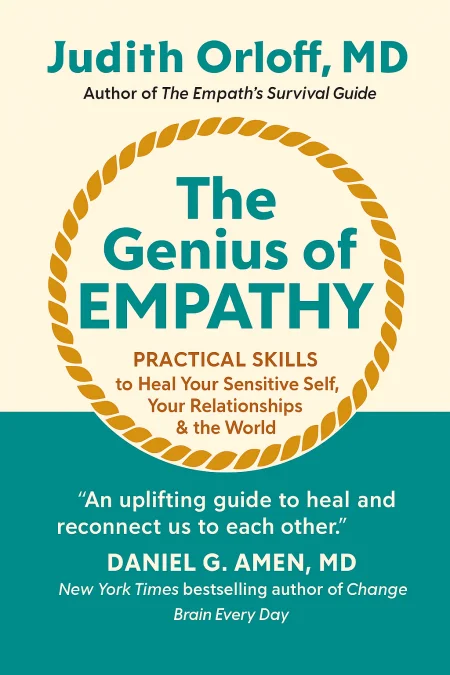
The Genius of Empathy
Practical Skills to Heal Your Sensitive Self, Your Relationships, and the World
Book Edition Details
Summary
What if empathy wasn't just an emotion, but a powerful force for personal and communal transformation? In "The Genius of Empathy," Dr. Judith Orloff redefines this often-underestimated skill as a daily practice that transcends mere sensitivity. Whether you're a natural empath or a seeker of deeper emotional intelligence, this guide unravels the secrets of harnessing empathy to heal trauma, foster genuine connections, and thrive in your professional life. By blending insights from neuroscience, psychology, and energy medicine, Dr. Orloff equips readers with practical tools to nurture their empathetic abilities—helping them set boundaries, listen with intent, and cultivate a balanced, compassionate life. Embrace empathy as your superpower and unlock a world where strength and love coexist in harmony.
Introduction
In a world increasingly divided by technology, noise, and disconnection, many of us feel emotionally drained and spiritually empty. We struggle with overwhelming emotions, difficult relationships, and the weight of global suffering. Perhaps you've found yourself absorbing others' stress like a sponge, or feeling paralyzed by the pain you see around you. Maybe you've been told you're "too sensitive" or that caring deeply is a weakness rather than a strength. The truth is, your capacity for empathy isn't a burden to overcome—it's a superpower waiting to be properly channeled. This journey will show you how to transform your sensitivity from a source of exhaustion into a wellspring of healing energy that can restore your inner peace, strengthen your relationships, and create ripples of positive change in the world. When you learn to wield empathy with wisdom and boundaries, you become not just a survivor of life's challenges, but a beacon of hope and transformation.
Master Self-Empathy: Your Foundation for Healing
Self-empathy is the radical act of treating yourself with the same kindness you naturally extend to others. It means recognizing that the biggest treasure of all is yourself—your body, mind, and spirit grateful for any kindness you might show them. Too often, we become our own harshest critics, punishing ourselves with negative thoughts and fears while offering compassion freely to everyone else around us. Consider Diana, a workshop participant who discovered she was caught in a painful pattern of giving endlessly to others while neglecting her own needs. When friends needed support, she dropped everything to help, but when she fell ill or faced challenges, no one showed up for her. Diana realized she had unconsciously believed that compassionate people always give unconditionally, viewing boundaries and self-care as selfish indulgences. This belief kept her trapped in relationships where support flowed only one direction—outward. Through gentle self-examination, Diana began to understand that her overgiving stemmed from a deep fear of abandonment. She unconsciously believed that if she kept giving, people wouldn't leave her. But this strategy was backfiring, leaving her exhausted and resentful. As she learned to set loving boundaries and communicate her needs, something remarkable happened. Most of her friends were happy to reciprocate, with one saying, "I was so used to you giving that I blanked out on also supporting you since you never asked for it!" To begin practicing self-empathy, start each morning by checking in with yourself as you would a dear friend. Ask "How are you feeling today? What do you need?" Then listen with genuine care to your inner response. Place your hand over your heart and breathe kindness into any areas of tension or pain. Remember, self-empathy is unconditional—you deserve it whether you're succeeding or struggling, whether you're in pain or feeling joy. Create daily rituals of self-kindness, even small ones. Take breaks when you need them, honor your energy levels, and speak to yourself with the same gentle tone you'd use with a beloved friend. This isn't indulgence—it's the foundation that makes all other forms of empathy sustainable and genuine.
Build Empathic Relationships: Connect Without Burnout
Empathic listening is the secret to creating deep connections while protecting your own emotional well-being. It's about offering your complete presence to another person without losing yourself in their experience. The key lies in understanding the crucial difference between observing someone's emotions and absorbing them into your own body. During her psychiatric training, the author learned this lesson powerfully while working with patients experiencing intense emotional pain. Initially, she would unconsciously take on their suffering, leaving sessions feeling drained and overwhelmed. She realized that while she wanted to help heal their pain, absorbing it into her own system didn't actually help anyone—it just meant two people were suffering instead of one. The breakthrough came when she learned to practice "loving detachment"—maintaining a gracious boundary that allowed her to witness and understand patients' experiences without making their emotions her own. She would silently affirm, "I am a separate person. This is their experience, not mine. I can be empathic and supportive without taking on their emotions." This shift transformed her ability to be truly present and helpful. To practice empathic listening, create a safe container for the conversation by choosing a quiet space and setting clear time boundaries. Listen with your whole being—notice not just words but body language, energy, and what remains unspoken. When someone shares their struggles, resist the urge to immediately offer solutions or relate similar experiences from your own life. Instead, simply acknowledge their feelings with phrases like "I can see how difficult this is for you" or "Thank you for trusting me with this." Protect your energy by visualizing a shield of white light around your body that allows compassion to flow while keeping out overwhelming emotions. Practice conscious breathing throughout the conversation, exhaling any stress or discomfort you might absorb. Remember, your role is to witness and support, not to fix or cure. This approach creates space for genuine healing while preserving your own emotional balance.
Lead with Heart: Empathic Leadership for Change
Empathic leadership represents a revolutionary shift from the old authoritarian model of "command and control" to a people-first approach that brings out the best in everyone. This style recognizes that true strength comes not from domination but from the ability to understand, inspire, and elevate others. Empathic leaders create environments where people feel seen, valued, and empowered to contribute their unique gifts. The contrast becomes clear when examining how different leadership styles handle workplace challenges. Consider the old-school approach when a team member makes an unintentional mistake. A traditional leader might say, "How could you make this mistake? Your work is below company standards. You've put the whole team back." This response creates shame, fear, and defensiveness. In contrast, an empathic leader would say, "I appreciate how hard you've worked on this project. I know you didn't mean to make this mistake. Let's figure out ways to prevent it from happening again." This shift in approach transforms workplace culture dramatically. Research shows that empathic leadership increases team innovation, engagement, and productivity while improving employee mental health and job satisfaction. When leaders show genuine interest in their team members' perspectives and well-being, it creates psychological safety that allows creativity and collaboration to flourish. To develop your empathic leadership skills, start by truly listening to your team members' concerns and ideas without immediately jumping to judgment or solutions. Show appreciation regularly—acknowledge not just results but effort, growth, and unique contributions. When conflicts arise, remain calm and curious, seeking to understand different perspectives before moving toward resolution. Practice "managing up" by modeling empathy even if your own leaders haven't embraced this approach yet. Be the person who shows appreciation to colleagues, who stays calm during stressful periods, and who creates positive emotional contagion through your interactions. Remember that leadership isn't just a title—anyone can lead by example and influence their environment through consistent acts of empathy and understanding.
Practice Global Empathy: Forgiveness and Unity
Global empathy extends beyond our immediate circle to embrace the interconnectedness of all humanity. It recognizes that healing ourselves and our relationships creates ripples that can transform the world. One of the most powerful expressions of this expanded empathy is forgiveness—not as a spiritual ideal, but as a practical tool for releasing the weight of resentment and freeing ourselves to love more fully. The author shares a profound example from her own family: her Uncle Sidney was murdered while working in his furniture store, shot by a teenager desperate for drug money. The senseless violence devastated the family, creating wounds that seemed impossible to heal. Yet years later, her cousin—Sidney's eldest son—had developed an unexpected perspective on his father's killer. While still feeling pain and loss, he recognized that "two lives were taken that day—my dad's and that of the young man who killed him." This wasn't a forced or premature forgiveness, but rather a natural evolution of his heart toward understanding the profound brokenness that drives people to commit such acts. He didn't excuse the behavior or seek to minimize his own suffering. Instead, he found a way to hold both his grief for his father and his empathy for the lost young man simultaneously. This perspective didn't erase the pain, but it prevented the poison of endless resentment from consuming his life. Forgiveness, as practiced here, isn't about pardoning harmful actions or returning to toxic relationships. It's about recognizing the emotional damage in others that leads them to cause harm, then releasing our attachment to their healing journey. Start with smaller resentments—the friend who forgot an appointment, the colleague who interrupted you in a meeting. Try to see their limitations with empathy rather than judgment. When you feel ready for deeper work, bring to mind someone who has hurt you more significantly. Place your hand over your heart and breathe compassion into the space where anger lives. You're not excusing their behavior; you're freeing yourself from carrying their emotional baggage. This practice of radical empathy transforms you from victim to victor, from someone controlled by past hurts to someone empowered to create positive change in the world.
Summary
True transformation begins when we recognize that empathy isn't just a nice quality to have—it's the very medicine our world desperately needs. As the author beautifully states, "The genius of empathy is that it points you on a positive, affirming trajectory. You'll always be asking yourself, How can I be a better person? How can I love more? How can I heal?" This daily choice to lead with our hearts while maintaining healthy boundaries creates a ripple effect that extends far beyond our immediate relationships. When we practice self-empathy, we model self-respect. When we listen empathically to others, we create safety for authentic connection. When we lead with empathy, we inspire others to bring their best selves forward. And when we extend empathy globally through forgiveness and understanding, we contribute to healing the deep wounds that divide our human family. Start today by placing your hand over your heart, taking three deep breaths, and asking yourself one simple question: "How can I show more kindness—to myself and to one other person—right now?" Then take that small step, knowing that every act of empathy sends ripples of healing into a world that needs your unique contribution to its transformation.
Related Books
Download PDF & EPUB
To save this Black List summary for later, download the free PDF and EPUB. You can print it out, or read offline at your convenience.
By Judith Orloff
