
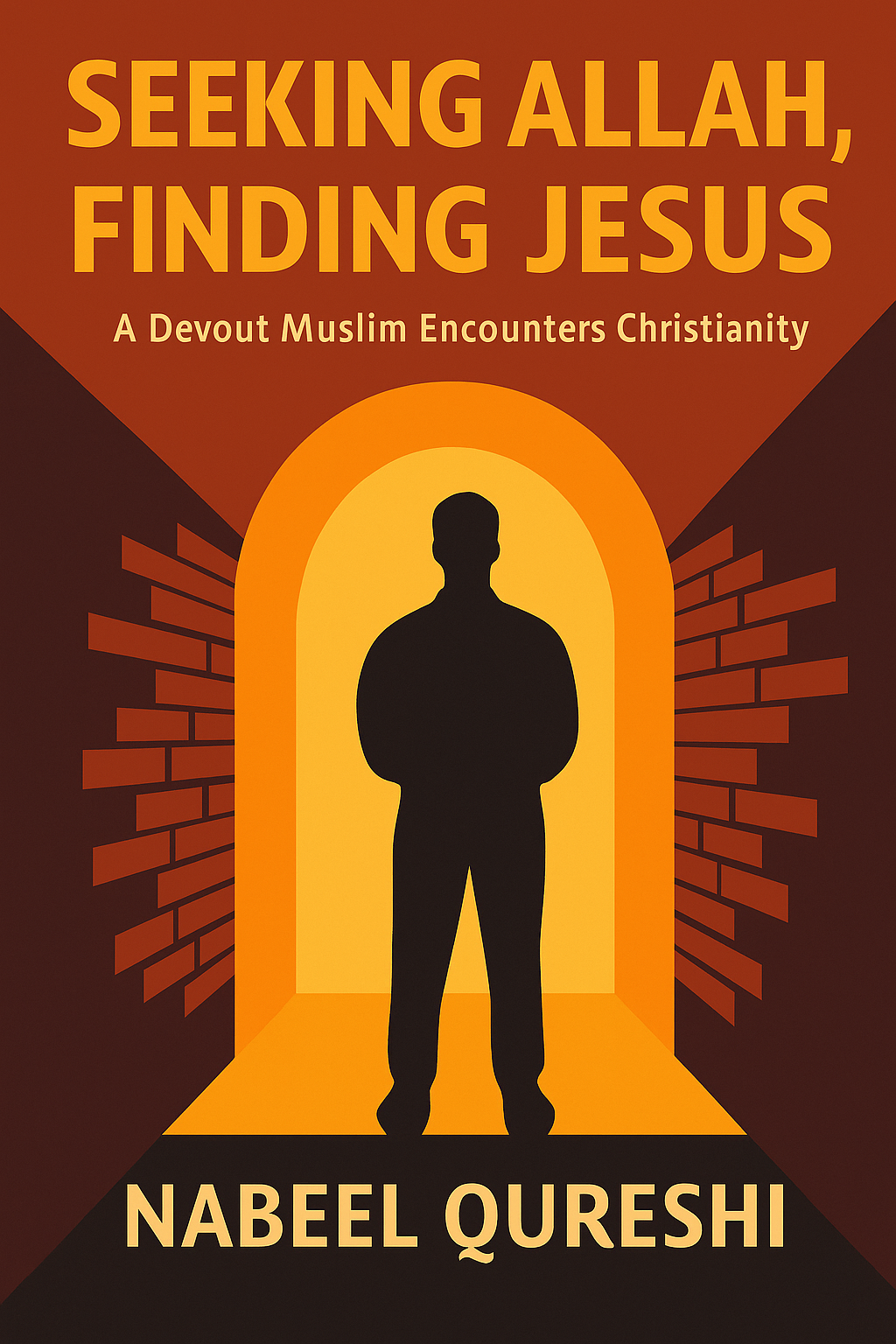
Seeking Allah, Finding Jesus
A Devout Muslim Encounters Christianity
Book Edition Details
Summary
In the heart of Nabeel Qureshi's soul-stirring narrative lies a profound transformation—a metamorphosis from devotion to Islam to embracing Christianity. "Seeking Allah, Finding Jesus" unravels the intricate tapestry of Qureshi's life, where friendships are tested, truths are challenged, and dreams become harbingers of a new reality. Raised in a loving Muslim household, Qureshi's quest for spiritual truth leads him down a path fraught with internal conflict as he grapples with irrefutable evidence of Christ's divinity and resurrection. This deeply personal account, woven with rich cultural insights and poignant introspection, invites readers into the heart of a spiritual crossroads, compelling both Christians and Muslims to confront the boundaries of faith and family loyalty. It's a journey not just of belief, but of discovering the peace that emerges from the tension between two worlds.
Introduction
In the quiet moments before dawn, when most of the world still sleeps, a young man kneels in prayer, his forehead pressed against a worn prayer rug. His whispered Arabic prayers echo through the darkness, carrying the weight of generations of faith. Nabeel Qureshi represents countless second-generation Muslims in the West, caught between the deep devotion of their heritage and the questioning spirit of modern inquiry. Born into a family of Pakistani immigrants who carried the torch of Islamic scholarship and missionary work, he seemed destined for a life of unwavering faith and religious leadership. Yet beneath this surface of certainty lay profound questions that would ultimately reshape his entire understanding of God, truth, and identity. His story illuminates the extraordinary personal cost of seeking truth, regardless of where that search might lead. Through his journey, readers will witness the intimate struggle of a brilliant mind grappling with competing truth claims, the heart-wrenching tension between family loyalty and personal conviction, and the supernatural ways God reveals Himself to those who earnestly seek Him. This account offers rare insight into the lived experience of Islamic faith in America, the rigorous intellectual examination of religious claims, and the transformative power of divine revelation in directing a human heart toward ultimate truth.
Called to Prayer: Growing Up in Islamic Faith
Nabeel's earliest memories were shaped by the rhythmic cadence of Islamic prayer and the warm embrace of a deeply devout family. His father, bearing the noble name Qureshi—the same tribe as the Prophet Muhammad—had sacrificed everything to provide for his family in America, sending money from his Navy paychecks back to Pakistan even when it meant going without. His mother, daughter of missionaries who had served in Indonesia, carried forward a legacy of Islamic dedication with unwavering commitment and gracious hospitality that transformed their Virginia home into a beacon of faith. The young boy's world revolved around the five daily prayers, the melodic recitation of the Quran, and stories of prophets that painted Islam as the culmination of divine revelation. Every aspect of daily life was infused with Islamic consciousness—from the Arabic phrases that punctuated conversation to the careful observance of dietary laws and the anticipation of Ramadan's spiritual intensity. In this cocoon of faith, Nabeel learned to see himself not merely as a child, but as an ambassador for Islam, carrying the responsibility to represent his faith with honor and excellence. Yet even in childhood, he began to glimpse the complexity of his position. As one of the few Muslim students in his school, he felt the weight of being a bridge between two worlds—the sacred traditions of his ancestors and the secular environment of American education. His parents instilled in him both pride in his heritage and the understanding that he would always be watched, always be judged as a representative of his faith. This early awareness of his unique position would prove crucial as he later embarked on his quest for truth. The foundation of his Islamic identity was built not just on ritual observance, but on a genuine love for Allah and deep respect for the Prophet Muhammad. Family gatherings became theological seminars where Islamic history came alive through storytelling, where young Nabeel learned about the miraculous battles, the mercy of conquests, and the perfect character of Islam's final messenger. These weren't merely lessons—they were the building blocks of his very identity.
Testing the Foundations: Christianity Challenges Islam
The collision between Nabeel's Islamic worldview and Christian arguments began in the most unlikely of places—a college forensics tournament. His friendship with David Wood, a brilliant philosophy student with an unshakeable Christian faith, introduced him to intellectual challenges he had never encountered. For the first time, someone questioned the fundamental assumptions that had shaped his entire understanding of reality. David didn't attack Islam with hostility or ignorance, but with careful scholarship and genuine respect for the search for truth. The initial debates centered on the reliability of Christian scriptures, which Nabeel had been taught were hopelessly corrupted over time. Yet as he delved into the historical evidence, he discovered a wealth of early manuscripts and scholarly analysis that painted a far different picture than what he had learned in Islamic apologetics. The textual foundation of Christianity proved far more solid than he had imagined, forcing him to confront the possibility that his cherished beliefs about biblical corruption were unfounded. More challenging still were the arguments about Jesus' identity and mission. Islamic teaching had prepared him to see Jesus as a great prophet who never claimed divinity, but careful study of the earliest Christian sources revealed a figure who made claims that could only be understood as assertions of divine identity. The historical evidence for Jesus' crucifixion proved overwhelming, directly contradicting the Quranic account that he neither died nor was crucified. Each investigation seemed to chip away at another pillar of his Islamic framework. Perhaps most troubling was the discovery that many of the arguments he had learned to deploy against Christianity were based on outdated scholarship or selective reading of evidence. When he tried to defend Islamic positions in formal debates with knowledgeable Christians, he found himself consistently outmatched not by superior rhetoric, but by superior evidence. The intellectual honesty that his parents had instilled in him demanded that he acknowledge these difficulties, even as his heart rebelled against the implications of what he was learning.
The Cost of Truth: Wrestling with Divine Revelation
As the intellectual foundations of his Islamic faith crumbled under scholarly scrutiny, Nabeel faced a crisis that went far beyond academic debate. To accept the truth of Christianity would mean betraying everything and everyone he had ever loved. His parents, who had sacrificed so much to raise him in the faith, would see his conversion as the ultimate act of ingratitude and rebellion. His extended family, his community, his very identity—all would be lost in an instant should he embrace the cross. The anguish of this realization drove him to his knees in the most desperate prayer of his life. In mosques across Virginia, he prostrated himself before Allah, begging for clarity, for a way to reconcile the evidence he had discovered with the faith he had inherited. His prayers took on the character of wrestling matches with the divine, as he pleaded for dreams and visions that might provide supernatural guidance beyond the reach of human argument and evidence. Islamic tradition taught that Allah sometimes speaks to the faithful through dreams, and Nabeel clung to this hope with increasing desperation. Night after night, he begged God to reveal Himself through supernatural means, to show him whether the path of truth led toward Christianity or back to Islam. The silence seemed deafening, yet beneath his conscious awareness, God was already preparing to answer in ways that would exceed his wildest expectations. The internal tension became almost unbearable as he continued attending mosque while harboring secret doubts about Islam's truthfulness. He threw himself into Islamic scholarship with renewed vigor, hoping to find answers that might restore his confidence in the faith of his fathers. Yet each investigation seemed only to confirm what he had learned from his Christian friends—that Islam's historical and textual foundations were far more fragile than he had been taught to believe. The weight of truth, once welcomed as liberating, now felt like a crushing burden threatening to destroy his entire world.
Finding Jesus: Embracing the Cross Despite All Costs
In a hotel room in Orlando, far from the familiar surroundings of his Virginia home, God finally broke through Nabeel's desperate prayers with a vision that would change everything. As he pleaded once more for divine guidance, the wall of his hotel room seemed to dissolve, revealing an endless field of glowing crosses stretching beyond the horizon. Though he tried to dismiss the vision as imagination or demonic deception, it was followed by a series of dreams so vivid and meaningful that their divine origin could not be denied. Each dream built upon the previous revelation, using symbols from Islamic dream interpretation to point unmistakably toward Christianity. The narrow door of salvation, the stairway leading out of the mosque, the overwhelming presence of Jesus calling him to follow—each supernatural encounter confirmed what the evidence had already suggested. God was indeed revealing Himself, but not as Allah of the Quran. He was calling Nabeel to acknowledge Jesus Christ as Lord and Savior. The final surrender came not in a moment of emotional ecstasy, but in the quiet desperation of a broken man who had exhausted every alternative. At three o'clock in the morning, alone in his apartment, Nabeel finally spoke the words that would transform his eternal destiny: "Christ, I accept You into my life." The decision brought immediate relief from years of agonizing uncertainty, but it also ushered in the most painful period of his existence. Telling his parents proved even more devastating than he had imagined. The sight of his father's tears, the knowledge that he had extinguished the light in his mother's eyes, the realization that his decision would be seen as the ultimate betrayal—all of this nearly crushed his spirit entirely. Yet even in the depths of his anguish, God provided a perspective that transcended personal pain. This was not ultimately about Nabeel or his family, but about the billions of souls around the world who needed to hear the good news of salvation through Jesus Christ. His suffering had purpose, and his sacrifice would bear fruit in ways he could not yet imagine.
Summary
Nabeel Qureshi's journey from devoted Muslim to committed Christian illustrates the profound truth that authentic faith must be grounded in evidence and divine revelation rather than cultural inheritance or emotional attachment. His story demonstrates that the pursuit of truth, while often painful, leads ultimately to the deepest satisfaction the human soul can know. Those who find themselves questioning inherited beliefs can take courage from his example, knowing that God honors sincere seekers and provides supernatural confirmation to those who genuinely desire to know Him. His experience also challenges Christians to approach Muslims with the same combination of intellectual rigor and personal love that characterized David Wood's patient friendship. Perhaps most importantly, his transformation reminds us that following Jesus often requires sacrificing our most cherished earthly relationships and identities, but in return offers us eternal life and the incomparable joy of knowing our Creator personally. For anyone wrestling with questions of faith, whether Christian, Muslim, or seeker, his story provides both intellectual resources for investigation and spiritual encouragement for the journey toward truth.
Related Books
Download PDF & EPUB
To save this Black List summary for later, download the free PDF and EPUB. You can print it out, or read offline at your convenience.
By Nabeel Qureshi
