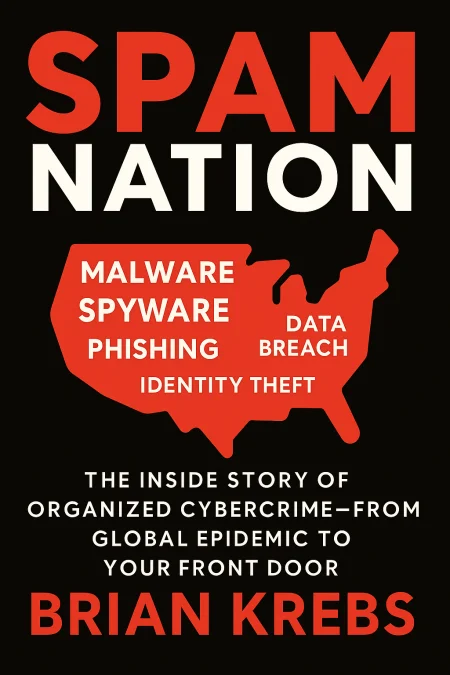
Spam Nation
The Inside Story of Organized Cybercrime – From Global Epidemic to Your Front Door
Book Edition Details
Summary
In the shadowy corridors of cyberspace, a silent war rages—one that could dismantle your financial security and invade your personal life. "Spam Nation" by investigative journalist Brian Krebs is a thrilling exposé into the underworld of digital crime. Here, the faceless architects of chaos orchestrate global spam and hacking operations, siphoning billions from unsuspecting victims. As Krebs journeys from ordinary programmers to infamous cyber-criminals like "Cosma," he lays bare a terrifying reality: we are all potential targets. His meticulous research and gripping narratives unravel the complex web of deceit and theft that fuels this illicit industry. Beyond merely highlighting the threat, "Spam Nation" equips readers with tangible strategies to fortify their digital defenses against these insidious predators. This is not just a story of crime; it's a call to arms against an unseen menace that affects us all.
Introduction
In the early hours of a Moscow morning in 2007, two luxury cars raced through empty streets, their engines roaring against the backdrop of historic buildings. Within moments, twisted metal and tragedy would mark the end of one cybercriminal empire and the beginning of a digital war that would reshape the internet forever. This fatal race involved Nikolai "Kolya" McColo, a young entrepreneur whose family's hosting business had become ground zero for the world's most sophisticated spam operations. The story that unfolds reveals how a handful of Russian cybercriminals built virtual empires worth hundreds of millions of dollars by exploiting the very infrastructure that connects our modern world. Through leaked databases, intercepted communications, and firsthand interviews with the architects of these digital crime syndicates, we witness the rise of organized cybercrime from its chaotic beginnings to its transformation into a mature, ruthlessly efficient industry. This investigation exposes not just the mechanics of spam and malware distribution, but the human cost of our interconnected age. Every day, billions of malicious emails flood inboxes worldwide, carrying everything from fake pharmaceuticals to sophisticated banking trojans. Behind this digital deluge stood real people with names, faces, and motivations that reveal the complex intersection of technology, crime, and geopolitics in the 21st century. For anyone seeking to understand how cybercrime evolved from teenage pranks into a global threat affecting governments, corporations, and individuals alike, this exploration offers unprecedented access to a hidden world that continues to shape our digital lives. The battle between criminals and defenders reveals fundamental truths about power, corruption, and the price of our always-connected civilization.
The Birth of Digital Crime Empires (2003-2008)
The foundations of modern cybercrime were laid not in shadowy underground bunkers, but in legitimate-looking office buildings across Eastern Europe. During the mid-2000s, a new breed of criminal entrepreneur emerged, combining technical sophistication with business acumen to create what would become the first truly global digital crime syndicates. At the heart of this transformation stood bulletproof hosting providers like the Russian Business Network, operated from St. Petersburg by a former police academy dropout named Alexander Rubatsky. These services offered cybercriminals something unprecedented: reliable, high-speed internet infrastructure that could withstand pressure from law enforcement agencies worldwide. The concept was deceptively simple yet revolutionary. Traditional criminals had always been limited by geography and physical constraints, but bulletproof hosting providers offered a virtual sanctuary where digital crimes could be planned, executed, and monetized on an industrial scale. The economic model that emerged during this period would define cybercrime for the next decade. Rather than operating as lone wolves, criminals began organizing themselves into sophisticated partnerships called "partnerkas." These arrangements allowed specialists to focus on their particular expertise whether that was writing malicious software, managing infected computer networks, or handling financial transactions while sharing profits across the criminal ecosystem. A spam operation might involve a botmaster controlling thousands of infected computers, a pharmaceutical supplier in India, payment processors in Azerbaijan, and customer service representatives in Russia, all working together seamlessly despite never meeting face-to-face. What made these early digital empires particularly dangerous was their ability to evolve and adapt. When traditional law enforcement shut down one hosting provider, the criminals simply moved to another. When email filters became more sophisticated, the spam evolved to bypass them. This arms race mentality fostered rapid innovation, but it also created an environment where only the most technically skilled and organizationally sophisticated criminal groups could survive and thrive. By 2008, the stage was set for the emergence of two rival empires that would transform cybercrime from a fragmented cottage industry into a unified, global threat.
The Pharma Wars and Underground Expansion (2008-2011)
The golden age of spam reached its zenith through an unlikely product: counterfeit prescription medications. Two competing criminal organizations, SpamIt-GlavMed and Rx-Promotion, transformed the illegal pharmacy business into a sophisticated operation that generated hundreds of millions of dollars while fundamentally changing how cybercrime operated worldwide. Igor Gusev and Pavel Vrublevsky, former business partners who had cofounded the payment processing company ChronoPay, found themselves on opposite sides of an increasingly bitter rivalry. Gusev's SpamIt operation attracted the world's most skilled spammers by offering reliable payments and technical support, while Vrublevsky's Rx-Promotion distinguished itself by selling highly controlled substances like hydrocodone and Valium to customers worldwide. Their competition drove innovation across the entire spam ecosystem, as each organization sought to outdo the other in terms of technical sophistication, customer service, and profit margins. The infrastructure these organizations built was staggering in its scope and complexity. The Cutwail botnet alone, operated by a programmer known as "Gugle," controlled over 125,000 infected computers and could send sixteen billion spam messages daily. These weren't simple operations run from basement apartments, but legitimate businesses with offices, employees, and organizational charts. Dmitry Nechvolod, the man behind Cutwail, posted job advertisements seeking programmers with competitive salaries and benefits, competing directly with legitimate technology companies for talent. What made this period particularly significant was how it demonstrated the maturation of cybercrime as an industry. The spam kings weren't just sending random advertisements; they were conducting market research, optimizing conversion rates, and providing customer support that rivaled legitimate e-commerce operations. They processed millions of credit card transactions, managed complex supply chains spanning multiple continents, and maintained detailed databases of customer preferences and purchase histories. The success of these operations also revealed a uncomfortable truth about consumer behavior. Millions of Americans, driven by high prescription drug costs and inadequate healthcare coverage, were willingly purchasing medications from these criminal enterprises. The spam ecosystem existed because it served a real market demand, creating a symbiotic relationship between criminals and consumers that would prove remarkably difficult to disrupt. This period established cybercrime not as a technical curiosity, but as a fundamental challenge to law enforcement, public health, and international commerce.
Takedowns and the Collapse of Spam Kingdoms (2011-2014)
The downfall of the spam empires began not with law enforcement action, but with the self-destructive tendencies of their creators. Pavel Vrublevsky and Igor Gusev's personal feud escalated into what cybercrime observers dubbed the "Pharma Wars," a costly conflict that would ultimately destroy both of their organizations and reshape the entire underground economy. The war began when Vrublevsky became convinced that Gusev was responsible for a corporate raid that cost him millions of dollars in virtual currency holdings. Rather than resolve their dispute privately, both men began bribing Russian law enforcement officials to open criminal investigations against each other. Leaked chat logs reveal that Gusev paid over $1.5 million to ensure Vrublevsky's prosecution, while Vrublevsky used his connections to tip off spammers when law enforcement was closing in. This internecine conflict exposed the entire spam infrastructure to unprecedented scrutiny from authorities worldwide. As the personal war between the spam kingpins intensified, security researchers and technology companies began developing new strategies to attack the financial foundations of cybercrime. Academic researchers from UC San Diego and other institutions conducted hundreds of test purchases to map the banking networks used by spam operations. Their work revealed that 95 percent of all spam-advertised transactions flowed through just three financial institutions, creating chokepoints that could be systematically targeted. The most effective weapon against the spam economy proved to be economic rather than technical. Microsoft and other companies began working with credit card associations to impose massive fines on banks that processed payments for counterfeit goods. The Global Brand Protection Program launched by Visa in 2011 levied $25,000 fines for every domain containing trademarked terms like "Viagra" or "Cialis." These financial pressures made it increasingly difficult and expensive for spam operations to maintain reliable payment processing, forcing many to shut down or dramatically reduce their operations. By 2014, the combination of personal feuds, law enforcement pressure, and financial system crackdowns had effectively dismantled the massive spam empires that had dominated cybercrime for nearly a decade. Global spam volumes dropped from over five billion messages daily to around one billion, while the remaining operations became far more cautious and sophisticated. However, this victory came with an unintended consequence: displaced cybercriminals began focusing on more targeted and dangerous attacks, including ransomware and corporate account takeovers that would prove even more costly to society than the spam networks they replaced.
Summary
The rise and fall of the spam empires reveals a fundamental truth about cybercrime: it evolves and adapts with the same relentless efficiency as the legitimate technology sector, driven by market forces, competition, and the constant pressure to innovate. The story of Pavel Vrublevsky, Igor Gusev, and their digital kingdoms demonstrates how cybercrime transformed from opportunistic hacking into organized criminal enterprises that rival traditional corporations in their sophistication and global reach. The most sobering lesson from this digital arms race is that the criminals succeeded not through superior technology alone, but by identifying and exploiting genuine market demands that legitimate institutions had failed to address. The hundreds of millions of dollars generated by spam pharmacies existed because real people needed affordable medications, privacy, and convenience that the traditional healthcare system couldn't provide. Similarly, the massive botnets that powered these operations grew because millions of computer users remained vulnerable to attacks that could have been prevented with basic security practices. The eventual collapse of these criminal empires offers both hope and warning for our increasingly connected world. Coordinated action by researchers, technology companies, and financial institutions proved that even the most sophisticated cybercrime operations have vulnerabilities that can be systematically exploited. However, the displacement effect that followed demonstrates that simply destroying existing criminal infrastructure isn't enough. The skills, resources, and market demands that created the spam kingdoms didn't disappear; they evolved into new threats like ransomware and targeted corporate attacks that may prove even more dangerous than their predecessors. True cybersecurity requires not just better technical defenses, but addressing the underlying social and economic conditions that make cybercrime profitable in the first place.
Related Books
Download PDF & EPUB
To save this Black List summary for later, download the free PDF and EPUB. You can print it out, or read offline at your convenience.
By Brian Krebs
