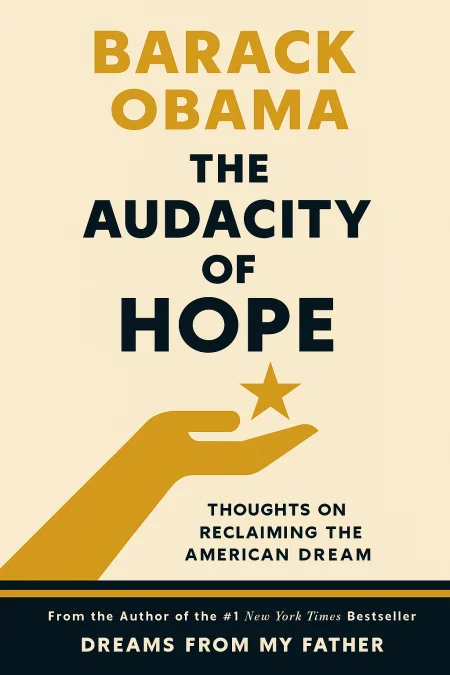
The Audacity of Hope
Thoughts on Reclaiming the American Dream
Book Edition Details
Summary
In "The Audacity of Hope," Barack Obama extends an invitation to envision a renewed political landscape—one where unity and common purpose ignite a collective spirit. This compelling manifesto, drawn from the speech that catapulted him into the national arena, weaves personal anecdotes from his Senate tenure with a candid glimpse into his family life. Obama’s narrative is a beacon of hope, urging Americans to rekindle the optimism that has long been the nation’s lifeblood. He artfully charts a course for a future defined not by division, but by the audacious belief in shared destiny—a message that resonated through his historic 2008 presidential campaign.
Introduction
In a crowded community center in Chicago's South Side, a young organizer sits across from Mrs. Johnson, an elderly woman whose voice trembles as she describes the drug dealers on her corner and the broken streetlights that haven't worked in months. Her weathered hands clutch a worn photograph of her grandson, and her eyes hold both despair and determination. This moment—one person listening to another's struggles and believing that change is possible—captures the essence of what democracy can be at its best. Across America, millions of similar conversations are taking place in living rooms, church basements, and town halls. They reveal a nation grappling with profound questions about its identity, values, and future. How do we bridge the growing divide between rich and poor? How do we honor our diverse beliefs while working toward common goals? How do we maintain hope when institutions seem broken and progress feels impossible? These are not abstract political questions—they are deeply personal challenges that touch every family and community. The journey ahead explores these tensions through the lens of lived experience, from the corridors of power in Washington to the factory floors of the Midwest, from Silicon Valley boardrooms to immigrant neighborhoods. It reveals that behind every policy debate are real people with real dreams, and that the work of democracy is ultimately about expanding opportunity and dignity for all. This is a story about the audacious belief that ordinary citizens, working together, can create extraordinary change.
From Senate Halls to Town Halls: Democracy in Practice
The marble corridors of the United States Capitol carry the weight of history in their very stones. Walking these halls for the first time as a freshman senator, the grandeur is overwhelming—the soaring ceilings, the oil paintings of long-dead statesmen, the hushed reverence that seems to demand whispered conversations. Yet something feels disconnected about this temple of democracy. During floor debates, the ornate chamber often sits nearly empty, with senators delivering passionate speeches to C-SPAN cameras and a handful of staff members. The real business happens elsewhere—in private meetings, fundraising calls, and carefully choreographed media appearances. The contrast becomes stark during a town hall meeting in downstate Illinois. In a high school gymnasium that smells of floor wax and teenage dreams, three hundred citizens have gathered on folding chairs to ask their senator direct questions. There's Maria, a single mother worried about her daughter's college tuition. There's Frank, a farmer facing bankruptcy after a drought destroyed his corn crop. There's Dr. Peterson, a rural physician struggling to keep his practice open as insurance reimbursements dwindle. Their questions are immediate and personal, rooted in kitchen-table concerns that can't wait for the next election cycle. These encounters reveal democracy's true promise and its current dysfunction. In Washington, political success is often measured by one's ability to avoid controversy and stay "on message." But in these town halls, people hunger for something different—honesty, authenticity, and leaders willing to grapple with complexity without offering easy answers. They want representatives who will listen first and speak second, who understand that governing is about serving people, not accumulating power. The gap between these two worlds—the world of political theater and the world of genuine public service—illuminates both what's broken in our system and what's possible when democracy works as intended.
Constitutional Ideals Meet Political Reality: Lessons from Capitol Hill
Senator Robert Byrd rises slowly from his desk, his eighty-seven-year-old frame carrying the dignity of nearly five decades in Congress. In his coat pocket, as always, rests a well-worn copy of the Constitution, its pages marked with decades of study and reflection. As he speaks about the dangerous concentration of executive power and the Senate's duty to provide checks and balances, his voice bridges centuries, connecting the present moment to the founding vision of the republic. Here is a man who has witnessed twelve presidents, countless crises, and the gradual erosion of institutional norms that once seemed unshakeable. Yet Byrd's own biography embodies the Constitution's complex legacy. This eloquent defender of democratic principles had once belonged to the Ku Klux Klan and opposed civil rights legislation. His transformation over the decades—from segregationist to statesman—reflects both America's capacity for growth and the long shadow cast by our original sins. The Constitution he reveres was written by men who owned slaves, yet it contained within it the seeds of its own moral evolution. The document's genius lies not in its perfection, but in its ability to be perfected through the hard work of successive generations. This tension between ideals and reality becomes visceral during debates over judicial nominations and Senate rules. Republicans threaten to eliminate the filibuster for judicial nominees, while Democrats argue that such a move would destroy the deliberative character of the institution. Both sides wrap themselves in constitutional language, but the underlying battle is about power—who will control the courts and shape the law for generations to come. The Constitution provides a framework for governance, but it cannot resolve every dispute or anticipate every challenge. It requires constant interpretation, an ongoing conversation between past and present about what our founding principles mean in practice. When that conversation breaks down, when the rules themselves become weapons in partisan warfare, democracy itself hangs in the balance.
Globalization's Human Cost: Stories from Silicon Valley to the Rust Belt
The gleaming campus of Google in Mountain View represents everything exhilarating about the new economy. Young engineers in jeans and sneakers work on projects that will reshape how humanity accesses information, while company founders barely out of graduate school prepare to become billionaires. The energy is infectious, the sense of possibility unlimited. Free gourmet meals, massage therapists, and volleyball courts create an atmosphere more like summer camp than traditional corporate America. Yet even in this temple of innovation, troubling questions lurk beneath the surface of success. During a tour of the facilities, it becomes impossible to ignore what's missing from this picture of American dynamism. Among the dozens of brilliant new hires being introduced, virtually none are African American or Latino. The company is recruiting the best graduates from the top engineering programs in the country, but those programs themselves reflect deeper inequalities in American education and opportunity. Meanwhile, an increasing number of the innovative minds driving technological progress are foreign-born students who may not be able to remain in the country after graduation due to visa restrictions. The contrast with Galesburg, Illinois, could not be more heartbreaking. In this former railroad town where Lincoln and Douglas once debated the future of democracy, the Maytag plant is preparing to close, taking sixteen hundred jobs with it to Mexico. The workers gathered in the union hall are skilled and experienced, but their expertise in manufacturing appliances cannot compete with the economics of global wage arbitrage. Dave Bevard, the union president, speaks with resignation about the impossibility of competing with workers earning one-sixth their wages, while his members face the prospect of retraining for service jobs that pay little more than minimum wage. These two scenes—separated by geography but connected by the forces of globalization—capture the fundamental challenge of our time: how to ensure that technological progress and economic integration benefit all Americans, not just those fortunate enough to ride the wave of change.
Faith, Values, and Civil Discourse in Public Life
The email arrives just days after winning the Democratic primary, and its contents are both challenging and humbling. A doctor from the University of Chicago describes himself as a Christian whose faith leads him to oppose abortion and gay marriage, but also to question the idolatry of free markets and the rush to military solutions. What troubles him is not necessarily the candidate's positions on these issues, but the language used to describe those who disagree—dismissing opponents of abortion as "right-wing ideologues" driven by a desire to control women. This exchange forces an uncomfortable moment of self-reflection. In the heat of political combat, it becomes easy to caricature opponents, to assume the worst about their motives, to treat complex moral questions as simple matters of political positioning. But the doctor's letter serves as a reminder that many people who disagree on specific issues share deeper values about justice, compassion, and human dignity. They deserve to be engaged with respect, not dismissed with slogans or reduced to stereotypes that make political fundraising easier. The challenge becomes even more personal during encounters with anti-abortion protesters at campaign events. Rather than the angry extremists expected from media portrayals, these are often families who stand in quiet vigil, holding handmade signs and speaking with genuine conviction about their beliefs. When approached with openness rather than defensiveness, the conversations are civil and thoughtful, even as fundamental disagreements remain. Their parting words—"I will pray for you. I pray that you have a change of heart"—linger long after the event ends, a reminder that democracy requires space for people of all faiths to participate fully in public life while respecting the beliefs and dignity of others. The task is not to banish religion from politics, but to create a more thoughtful and humble engagement with the role that faith plays in shaping our common life.
Summary
The journey through America's political landscape reveals a nation struggling to reconcile its highest ideals with the messy realities of democratic governance. From the marble halls of the Capitol to the factory floors of the Midwest, from the innovation centers of Silicon Valley to the community centers where neighbors gather to solve problems, the same fundamental tension emerges: how do we balance individual liberty with collective responsibility, honor diverse beliefs while working toward common goals, and ensure that America's promise remains within reach for all its citizens? The stories encountered along this path—of workers facing economic displacement, of families grappling with healthcare crises, of communities torn between tradition and change—point to a deeper truth about effective democracy. Behind every policy debate are real people with real struggles, real hopes, and inherent dignity that demands respect. Progress requires not just good intentions or clever political strategies, but a genuine commitment to listening, to understanding different perspectives, and to finding practical solutions that serve the common good rather than narrow interests. Perhaps most importantly, these experiences suggest that the antidote to political cynicism is not to retreat from public engagement, but to deepen it with humility and hope. When we take time to truly listen to one another, when we approach disagreement with curiosity rather than hostility, when we remember that our opponents are fellow citizens rather than enemies, we create the possibility for the kind of politics our democracy deserves. The work is difficult and progress often slow, but the stakes could not be higher. The future of American democracy depends not on perfect leaders or perfect solutions, but on ordinary citizens willing to do the hard work of citizenship, to bridge divides, and to keep faith with the ongoing experiment in self-government that began more than two centuries ago.
Related Books
Download PDF & EPUB
To save this Black List summary for later, download the free PDF and EPUB. You can print it out, or read offline at your convenience.
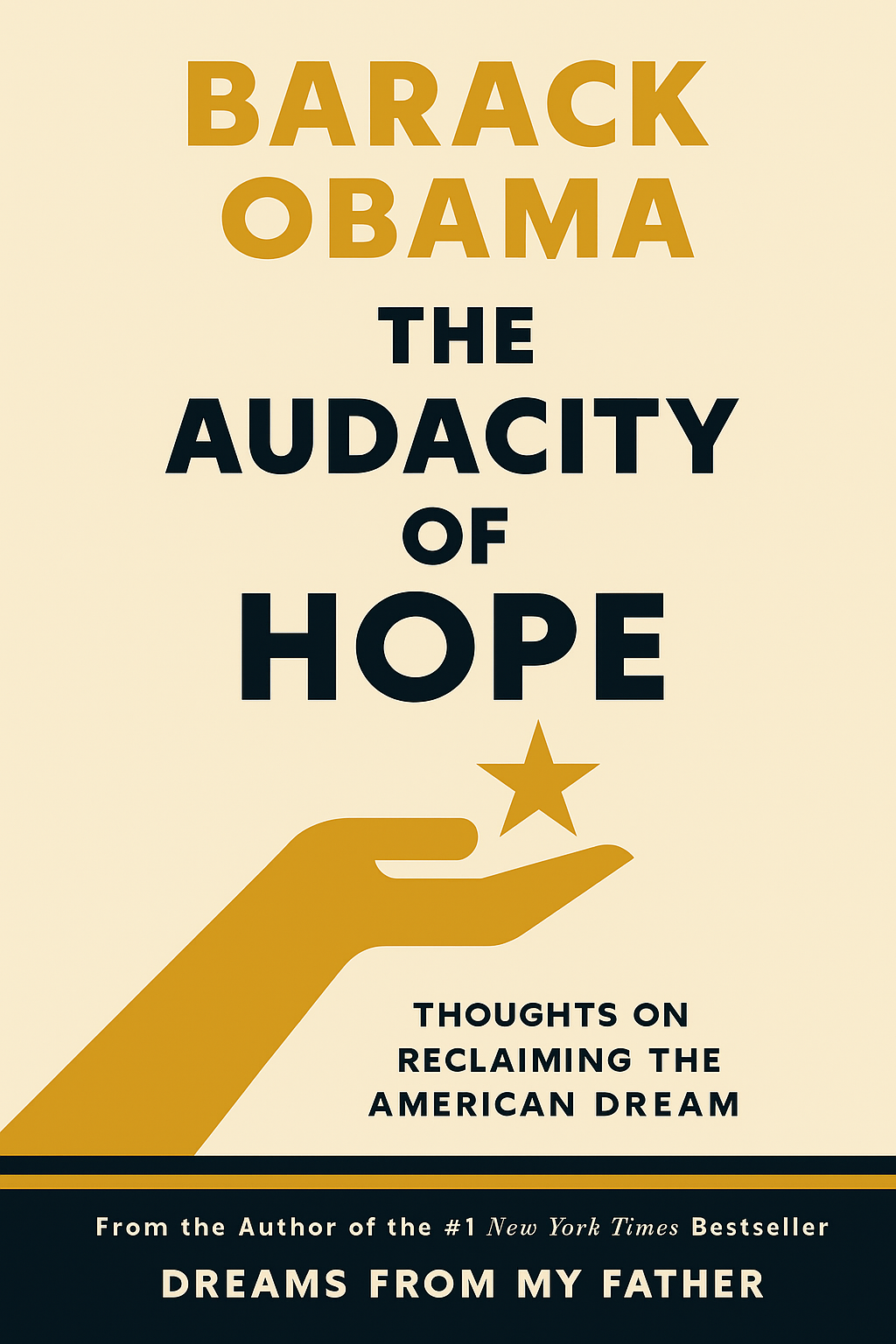
By Barack Obama
