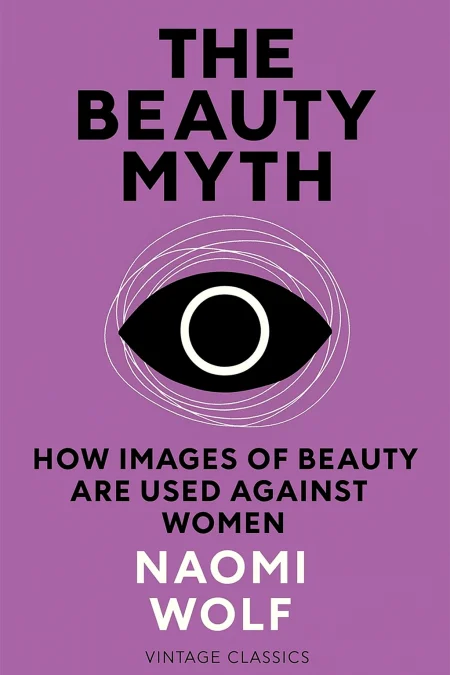
The Beauty Myth
How Images of Beauty Are Used Against Women
Book Edition Details
Summary
In a world where mirrors become battlegrounds and beauty is a relentless dictator, Naomi Wolf's "The Beauty Myth" shatters illusions with unflinching clarity. This distilled version of her seminal work dives headlong into the societal obsession that ensnares women in a web of unattainable standards. Unveiling the sinister machinations behind the allure of youth and beauty, Wolf exposes the patriarchal puppetry and economic motivations that fuel this oppressive narrative. With piercing insight, she equips readers with the tools to dismantle the myths and forge a future where women can transcend superficial confines. Prepare to confront the tyranny of the beauty myth and emerge empowered to rewrite the rules.
Introduction
Contemporary Western society presents a paradox: women have achieved unprecedented legal rights, educational opportunities, and professional advancement, yet many report feeling less free than their predecessors. This contradiction emerges from a sophisticated system of social control that has evolved to replace traditional constraints on female autonomy. Where once women were confined by explicit legal and economic barriers, today they face a more insidious form of limitation through the relentless pursuit of an impossible physical ideal. The mechanism operates through the systematic deployment of images and standards that create perpetual dissatisfaction with one's natural appearance. This cultural apparatus functions as a political weapon, redirecting women's energy and resources away from collective advancement toward individual self-improvement projects that can never be completed. The analysis reveals how beauty standards serve economic interests while maintaining gender hierarchies through psychological manipulation rather than overt oppression. The examination proceeds through multiple domains where these dynamics operate, from professional environments to religious-like rituals of self-transformation. Each sphere demonstrates how apparent personal choices about appearance actually represent responses to carefully constructed social pressures designed to limit female power and solidarity.
Beauty Standards as Political Backlash Against Women's Progress
The contemporary beauty ideal functions as a backlash mechanism against women's liberation, intensifying precisely as women gain political and economic ground. This inverse relationship reveals the myth's true purpose: to psychologically undermine advances that cannot be legally reversed. As traditional barriers to female participation in public life crumble, beauty standards become increasingly rigid and demanding, creating new forms of constraint that appear voluntary while remaining coercive. The myth operates by redirecting feminist energy toward individual self-improvement rather than collective action. Women who might otherwise challenge systemic inequalities instead focus their attention on personal physical inadequacies. This redirection serves multiple functions: it isolates women from one another by fostering competition rather than solidarity, exhausts their resources through expensive beauty practices, and creates a perpetual sense of failure that undermines confidence in other areas of life. Historical analysis demonstrates that beauty standards have consistently adapted to counteract women's progress. When women entered the workforce en masse, the standards became more demanding. When they gained reproductive rights, the focus shifted to youth and thinness. Each wave of female advancement triggers a corresponding intensification of beauty requirements, suggesting deliberate rather than coincidental timing. The myth's political function becomes clear when examining its effects on women's behavior and self-perception. Rather than celebrating their achievements, successful women often report feeling fraudulent or temporary in their positions, attributing their success to appearance rather than competence. This psychological undermining ensures that even women who break through barriers remain psychologically constrained, unable to fully claim their power or inspire others to follow.
Institutional Coercion Through Professional and Economic Beauty Requirements
The integration of beauty requirements into professional settings represents a sophisticated form of employment discrimination that circumvents legal protections. By establishing appearance standards that disproportionately burden women, employers can limit female advancement while maintaining plausible deniability about discriminatory intent. These standards function as unofficial qualifications that supplement formal job requirements, creating additional hurdles for women seeking career advancement. Legal precedents have established the Professional Beauty Qualification as a legitimate employment criterion, despite its discriminatory impact. Court cases consistently uphold employers' rights to impose appearance standards on female employees while exempting male colleagues from comparable requirements. This legal framework creates a maze of contradictory expectations where women can be penalized for appearing too feminine, too masculine, too attractive, or insufficiently appealing, leaving no safe position. The economic impact extends beyond individual careers to affect women's collective earning power. Beauty maintenance requires significant financial investment, effectively reducing women's take-home income compared to male peers. Professional women report spending substantial portions of their salaries on appearance-related expenses they consider necessary for career advancement. This creates a self-imposed income penalty that reinforces gender-based pay disparities. The psychological toll manifests in constant self-monitoring and anxiety about physical presentation. Women describe feeling unable to focus fully on work responsibilities while simultaneously managing appearance concerns. This divided attention undermines professional performance and contributes to imposter syndrome, where women attribute their success to superficial factors rather than genuine competence. The resulting insecurity perpetuates the very stereotypes that justify continued discrimination.
Violence and Control Through Medical Beauty Complex
The medicalization of normal female bodies represents the most extreme manifestation of beauty myth violence, transforming healthy women into surgical patients through the redefinition of natural variation as pathology. Cosmetic surgery rates have exploded exponentially, with procedures increasingly marketed to younger women and for increasingly minor imperfections. This trend reflects not improved surgical techniques but rather the successful expansion of medical authority over female bodies, creating profit opportunities from manufactured dissatisfaction. Surgical interventions carry significant risks that are systematically downplayed in marketing materials and media coverage. Death rates, complication frequencies, and long-term health impacts receive minimal attention compared to before-and-after photographs that promise transformation. The medical establishment's participation in this deception violates fundamental principles of informed consent while generating substantial revenue streams. Women undergo dangerous procedures based on incomplete information, often discovering risks only after experiencing complications. The psychological violence operates through the systematic erosion of body acceptance and the normalization of self-hatred. Beauty industries profit from dissatisfaction, requiring constant reinforcement of inadequacy to maintain market demand. This creates a psychological environment where women learn to view their bodies as collections of problems requiring correction rather than as functional, healthy organisms deserving of care and respect. Eating disorders represent the most extreme manifestation of this psychological violence, with rates increasing dramatically alongside beauty industry expansion. The promotion of extreme thinness as an ideal, combined with the moral language surrounding food and weight, creates conditions that trigger and maintain disordered eating patterns. The beauty myth's emphasis on control and discipline provides ideological justification for self-starvation, transforming a serious mental health condition into a virtue to be admired rather than a problem requiring treatment.
Breaking Free from Beauty's False Promises and Constraints
Liberation from the beauty myth requires recognizing that the problem lies not with individual women's choices but with the system that constrains those choices. Women cannot solve this dilemma through better personal decisions about appearance because the myth is designed to make all choices inadequate. The solution involves collective recognition of the political nature of beauty standards and organized resistance to their imposition. This requires distinguishing between genuine aesthetic pleasure and manufactured insecurity. The path forward involves reclaiming female culture and sexuality from commercial manipulation. Women need alternative sources of validation and community that do not depend on appearance-based hierarchies. This means creating and supporting cultural productions that represent women in their full complexity rather than as decorative objects. It also requires developing economic and political power sufficient to challenge the industries that profit from female insecurity. Individual resistance becomes more effective when understood as part of collective action. Women who refuse to participate in beauty culture are not merely making personal choices but engaging in political resistance. However, individual action alone cannot dismantle a system supported by billions of dollars and deeply embedded in social institutions. Systematic change requires organized challenge to discriminatory practices in employment, media representation, and medical ethics. The ultimate goal is not to eliminate all attention to appearance but to restore choice and pleasure to aesthetic expression. When women have genuine alternatives and real security, decisions about appearance can become matters of personal preference rather than survival strategy. This transformation requires fundamental changes in economic structures, cultural values, and political power relations that extend far beyond beauty practices themselves.
Summary
The systematic analysis reveals beauty standards as a sophisticated mechanism of social control that has evolved to replace traditional constraints on female autonomy with psychological ones. The myth operates across multiple domains simultaneously, creating a totalizing system that appears to offer choice while actually limiting it. The genius of this approach lies in its ability to make oppression feel like personal failing, ensuring that women blame themselves rather than challenging the system that constrains them. Understanding these dynamics represents the first step toward reclaiming authentic self-determination and redirecting energy toward genuine liberation rather than endless self-improvement projects that serve others' interests rather than women's own.
Related Books
Download PDF & EPUB
To save this Black List summary for later, download the free PDF and EPUB. You can print it out, or read offline at your convenience.
By Naomi Wolf
